

The Shiva Sutras: Unlocking Ancient Wisdom for Modern Life

Saurabh Tankha
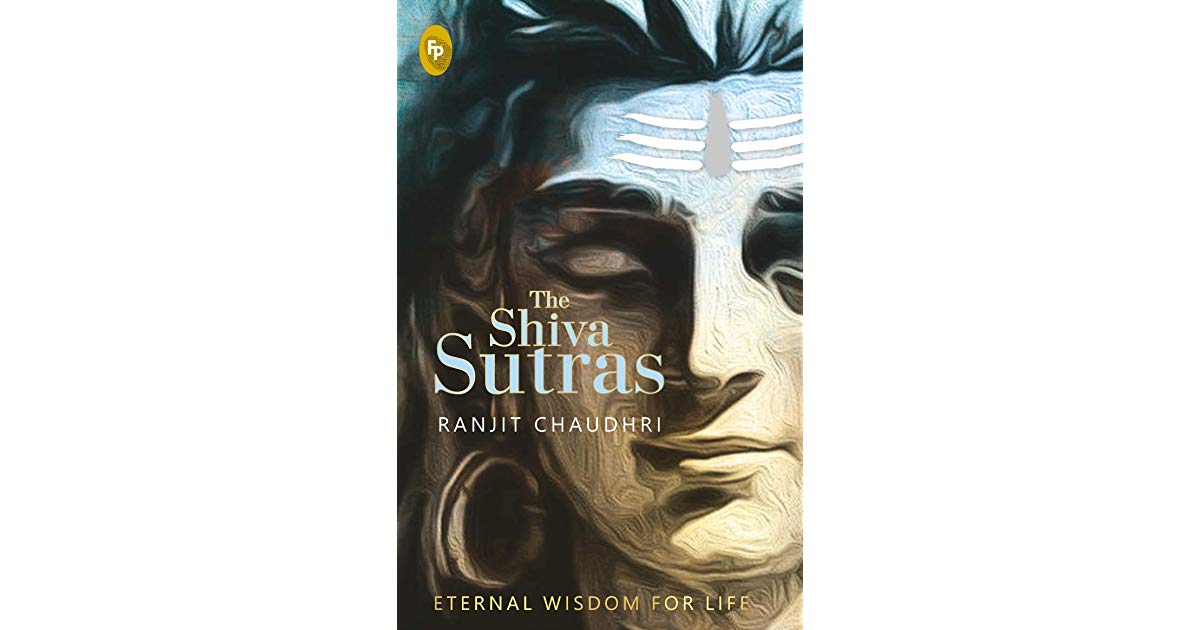
In the introduction to The Shiva Sutras (Fingerprint) author Ranjit Chaudhri writes that these “are aphorisms which, as per the legend, were revealed by Lord Shiva to the sage Vasugupta in the eighth century AD. There are three versions of this came around.
The first version says that Lord Shiva appeared to Vasugupta in a dream and revealed the Shiva Sutras to him. Another version says that an enlightened person revealed the sutras to Vasugupta. The third and most popular version is that Lord Shiva appealed to Vasugupta in a dream and instructed him to go to a particular stone piece. He was told that there was an esoteric teaching under the stone, and he was to study it and reveal it to those who are fit for grace.”
The author goes on to mention that once Vasugupta touched the stone, it turned over and revealed the inscriptions of the Shiva Sutras and once the sage had read them, it turned back over again. That it happened ever is debatable but the stone apparently still exists there and is called Shankarpal and is located in a water stream in Dachigam National Park, a few kilometres from Srinagar.
The Origins of an Ancient Revelation
A few scholars in the region are of the opinion that the Shiva Sutras spread “the philosophy of Kashmir Shaivism in the region of Kashmir in the 8th century AD. Kashmir Shaivism was originally known as the Trika System. It is a form of yoga and tantra that is non-dualistic. Non-dualism teaches that there are not two, there is only One.”
The Shiva Sutras also addresses to questions like “If we are all One, then why do we appear separate? What is covering our real nature? How do we get to experience our true self? What causes us to continue in the path of worldly illusion, and how do we come out of it?”
Some scholars, Chaudhri mentions, consider the Shiva Sutras to be a little cryptic. Through the book, we also get to know that back in the 10th century Kshemaraja (philosopher who was a master of tantra, poetics, yoga and dramaturgy) penned a commentary on the Shiva Sutras, dividing the 77 sutras into three chapters.
Although it is not mandatory to divide the sutras in three parts but the author has followed the same and promises “once you understand them and practice them, they will open a whole new world for you”.
Understanding the Path of Self-Realisation
Removing The Veil (Chapter 1) features 22 sutras that explain how our true self is pure consciousness. It highlights that the Sanskrit word atman can mean both soul and self. The opening sutra, caitanyamatma, explains that the Self is the witnessing presence within us, observing all our actions.
The other sutras explore themes such as:
- Knowledge causing bondage (jnanam banT
- The body creating identity (yonivrgah kalasariram)
- Continuous effort leading to divinity (udyamo bhairavah)
- Dreams being imagined states (svapno vikalpah),
- The world being an extension of one’s own body (drysam sariram).
Chapter Two, Detaching From The Body, contains 10 sutras focused on the mind, body and fulfilment. These discuss how mantra calms the mind, perseverance leads to success. The guru guides the path, the body is a sacrifice, and knowledge is nourishment for spiritual growth.
Awakening Through Practice and Awareness
Chapter Three, Awakening, is the longest them all. It comprises 45 sutras. And, explains how the individual self is the mind, how supernatural powers arise from delusion. It also tells how awareness of breath reveals unity. These teachings, when applied in life, can guide one towards clarity, growth and the right direction.

2 Comments
[…] without Devi is powerless, The Purusha without Prakriti is helpless and the Ishwara without His Shakti is a silent witness who can neither intervene nor help our evolutionary journey, says the author in […]
[…] Ishwara without His Shakti is inactive in creation […]