

Niang Sopi: Bali’s 107-Year-Old Dancing Legend Proves Art Has No Age
- SANDIP SOPARRKAR
 Life&More
- 0
- 7 minutes read


Niang Sopi – Bali’s Oldest Active Dancer
In a quiet courtyard in Bali, where incense curls into the air and gamelan music hums softly in the background, I meet Niang Sopi, who is 107 years old, widely celebrated as one of the oldest active dancers in the world. Her presence is serene, yet powerful. Even before she moves, you feel the dance within her.
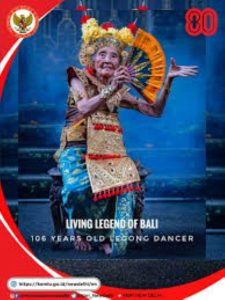
I had a chat with the dancing diva, excerpts from the interview:
You have been dancing for a century. Do you remember your first performance?
(smiles gently) I was very young maybe six or seven. In Bali, we don’t “start” dance like a class, it is part of life. I remember standing in the temple, wearing a costume that felt too big for me. But when the music began, something inside me became very still. I was not afraid. I felt, guided, that was my first performance.
Many people call you the “oldest active dancer.” What does dance mean to you at this stage of life?
Dance is not something I do. It is something I am. When the body becomes old, people think movement becomes less. But for me, dance becomes deeper. Every gesture has memory. Every eye movement carries a story. I don’t dance to show, I dance to connect with something sacred. Remember my dear Sandip, “People stop dancing when they become old but the fact is people become old because they stop dancing.”
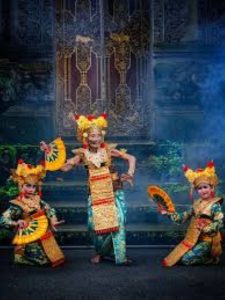
Your expressions are incredibly powerful, especially your eyes and hands. How did you develop that?
In Balinese dance, the eyes speak first. Before the body moves, the eyes must feel. My guru (teacher) would say, “If your eyes are empty, your dance is empty.” We practiced in front of mirrors, but also in front of nature, trees, temples, the ocean. You learn to listen, not just to music, but to silence.
In India, we speak of abhinaya, expression. Watching you feels very similar. Do you relate to that idea?
Yes, very much. Even though Bali and India are different, our roots are connected through spirit. Expression is not about showing emotions, it is about becoming the emotion. When I dance sorrow, I don’t act sad. I remember sadness, I breathe it, and then I let it go through my body. Same happens with all types of emotions.
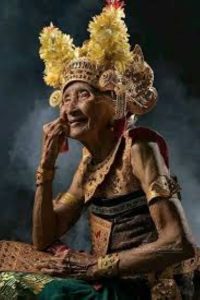
Your performances are often connected to temple rituals. How is dancing in a sacred space different from stage performance?
In the temple, you are not performing for people, you are offering to the divine. There is no ego. Even if nobody is watching, the dance must be complete. On stage, people clap. In the temple, the gods are silent. That silence teaches humility.
Many young dancers today focus on technique, speed, and social media visibility. What would you like to tell them?
Technique is important, yes. But dance is not gymnastics. If you dance only for the outside world, you will become tired very quickly. Dance must feed your soul. Even if you dance for one person, or no one, you must feel full inside. Social media shows the body, but not always the spirit.
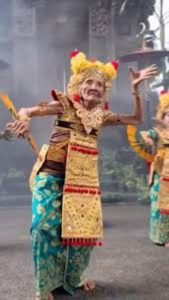
You have continued dancing even in your later years. What keeps you going physically and mentally?
Discipline. Every day, I move. Maybe not big movements, but small ones. I stretch, I breathe, I sit in stillness. Also, gratitude. When you are grateful, the body listens to you more kindly. Pain comes, yes, but I don’t fight it. I dance with it.
Has dance changed for you over the years?
Yes. When I was young, dance was energy, fast, sharp, precise. Now, dance is space. I take more time. I allow pauses. I feel the air between movements. Earlier, I wanted to impress. Now, I want to express truth.
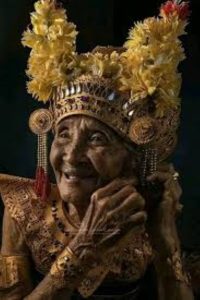
Watching you, one feels that dance is timeless. Do you think age matters in dance?
Age changes the body, but not the spirit. A young dancer has strength. An older dancer has depth. Both are beautiful. The problem is when we think dance belongs only to youth. Dance belongs to life, and life has many ages.
Finally, what is your message to dancers across the world?
Do not chase applause, chase honesty. Respect your teachers, respect your body, and respect the art. Dance is not just entertainment; it is a bridge between the human and the divine. If you understand this, your dance will never leave you.
As our chat ends, Niang Sopi rises slowly. The gamelan begins again. Her fingers unfold like petals, her eyes sharpen with intensity, and for a moment, time dissolves. You are no longer watching an elderly dancer, you are witnessing something eternal. And perhaps that is her greatest lesson: Dance is not about age. It is about presence.
Sandip Soparrkar holds a doctorate in world mythology folklore from Pacific University USA, an honorary doctorate in performing arts from the National American University, He is a World Book Record holder, a well-known Ballroom dancer and a Bollywood choreographer who has been honored with three National Excellence awards, one National Achievement Award and Dada Saheb Phalke award by the Government of India. He can be contacted on sandipsoparrkar06@gmail.com
