

The 20-Day Summer Miracle Fruit That Outprices Apples: Inside the Hidden World of Phalsa

Mohit Sharma
Every summer, India’s fruit markets turn into a living archive of seasonal abundance—mangoes take the crown, watermelons flood the carts, and chilled cucumbers become a daily ritual. But tucked quietly within this seasonal rush exists a fruit so fragile, so fleeting, and so intensely cooling that it almost feels like nature designed it to disappear as quickly as it arrives.
It is called phalsa—a small, berry-like fruit that rarely gets the spotlight it deserves, yet commands prices that can surpass apples and pomegranates in some local markets.
And perhaps the most astonishing part? It survives for barely 10 to 20 days in the entire year.
A fruit that refuses to last
Phalsa is not built for permanence. Unlike most fruits that travel well and store easily, phalsa has an extremely delicate structure. It cannot tolerate heat or direct sunlight for long. Within one to two days of harvest, it begins to spoil.
This fragility shapes everything about its journey—from orchard to market stall. In many places, vendors are seen covering it with cloth, carefully shielding it from the harsh summer sun. It is not a marketing trick; it is survival.
What reaches the consumer is not just fruit, but a race against time.
A taste that defines summer
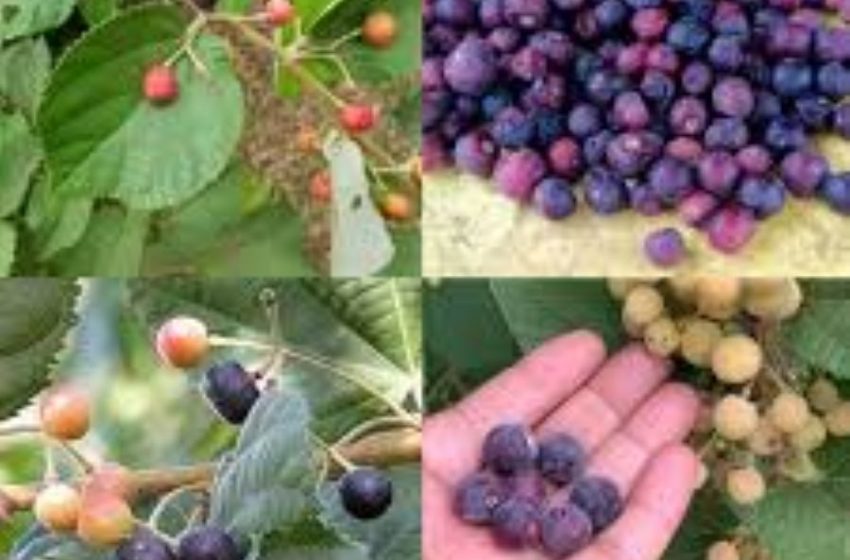
Visually, phalsa resembles the Indian jujube (ber), small and round with a deep purple hue. But its taste is distinctly its own—an intense sweet-sour burst that feels instantly refreshing in peak summer heat.
The first bite is often described in almost immediate terms: cooling, energizing, and restorative. In traditional understanding, phalsa is considered a natural coolant, consumed specifically to counter the rising internal heat of the body during summer months.
It is this sensation—quick, sharp, and cooling—that has kept it quietly cherished across generations.
Why it disappears so quickly
The short availability window of phalsa is not accidental. The fruit ripens rapidly and deteriorates just as fast. Its shelf life rarely extends beyond a couple of days, making storage and long-distance transport extremely challenging.
As a result, phalsa appears in markets for only a brief seasonal stretch, typically in May and early June, before vanishing completely until the next year.
This scarcity is what makes it both precious and expensive.
A fruit that can cost more than apples
In several local markets, including regions like Karauli, phalsa has been reported to sell at premium rates—sometimes around ₹240 per kilogram. Traders often note that its price remains consistently high due to its perishability and limited supply.
The irony is striking: a humble-looking fruit, often overlooked due to its size and appearance, ends up competing with—and sometimes exceeding—the price of apples and pomegranates.
It is a reminder that value in food is not always about appearance or fame, but about rarity and handling difficulty.
The nutritional argument behind the price
Beyond its fleeting nature and market value, phalsa carries a strong nutritional profile. Ayurvedic practitioners highlight its cooling properties and nutrient density.
It is known to contain vitamin C, magnesium, potassium, iron, and carbohydrates, along with a high water content. This combination makes it particularly beneficial during intense summer conditions when dehydration and heat-related fatigue are common.
Some traditional health perspectives also associate phalsa with blood sugar regulation, making it a recommended fruit for individuals managing diabetes, though such claims are best understood within broader dietary contexts.
The quiet luxury of seasonal eating
What makes phalsa truly remarkable is not just its taste or price, but its philosophy of existence. It cannot be stored, stocked, or stretched beyond its season. It demands immediacy.
In an age where almost everything is available year-round, phalsa is a reminder of an older rhythm—one where food arrived, stayed briefly, and left on nature’s schedule, not ours.
Perhaps that is why it continues to draw quiet admiration from those who encounter it each summer. It is not just a fruit. It is a fleeting experience—one that asks to be noticed before it disappears.
And then, just like that, it is gone again for another year.
Mohit Sharma is a resident of Karauli
