

And They Lived… Ever After: Rewriting Fairy Tales Through Disability and Inclusion


Rajkumari Sharma Tankha
Rising Flame, an NGO working in the disability inclusion space, has published And They Lived… Ever After. The book reimagines 13 popular fairy tales with a powerful and inclusive twist. These stories are written by authors living with disabilities, who weave their lived experiences into each narrative.
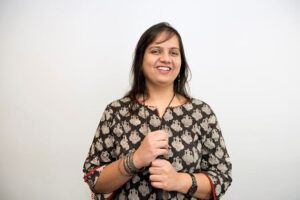
In conversation with Life & More, Founder and Executive Director Nidhi Goyal speaks about the inspiration behind the book, representation, and her journey. Excerpts:
What’s the idea behind coming up with this book, And They Lived… Ever After?
Persons with disabilities rarely find representation in stories. When we say we are invisible, we mean invisible in data, policy, society, and storytelling. Lack of representation—or incorrect representation—reinforces stigma. It deepens exclusion.
Think about popular books or films. Villains often have a physical disability—a hunchback, a prosthetic limb, an eye patch. Disability is used to signal fear. Sometimes, it becomes a source of humour.
Neurodivergence is also misrepresented for comic effect. Persons with disabilities are shown as objects of pity, fear, or charity. We wanted to change this narrative. That is how the idea of the book emerged.
What was the criteria behind selecting the authors?
The selection was a detailed and inclusive process. We wanted a South Asian collection by disabled women and gender-marginalised persons. Such a collection did not exist. Reclaiming storytelling spaces—especially fairy tales—was important.
We organised a creative writing workshop. Award-winning author Aditi facilitated it. We invited applications from across South Asia. The aim was to bring authentic, intersectional voices into storytelling.
Shortlisted candidates joined a second workshop. It was fully accessible. It included sign interpreters, live captioning, and structured breaks. The workshop was held online during the pandemic in 2020. Finally, 13 women were selected. They wrote their stories, which went through peer review and editorial processes. The book was later published by HarperCollins.
The entire process took over three years.
Who is your target audience with this book?
Everyone is our audience, especially young adults. Fairy tales are universal. They are part of our growing years. Seeing them through a new lens is important. This book allows readers to learn and unlearn. It explores disability, identity, and belonging.
It also reflects universal emotions—loneliness, resilience, independence, and the need to belong. These are experiences everyone relates to.
Do you plan to bring more books from the disability space?
Yes, absolutely. We will continue to amplify unheard voices – through books, research, social media, and digital platforms.
So far, we have published stories on the #MeToo movement from the perspective of women with disabilities. We have also worked on themes like love, relationships, and rejection. One such collection is Dil Vil Pyaar Vyaar, also known as From Shadows to the Centre.
Why was Rising Flame set up?
Rising Flame was born out of community need. I acquired a disability as a teenager. Over time, I understood the gaps faced by people like me, especially women.
I started working closely with the community and founded Rising Flame in 2017. The name reflects change and leadership. “Flame” symbolises transformation—from stigma to awareness. “Rising” represents growth and leadership of persons with disabilities.
What initiatives has Rising Flame undertaken?
In seven years, Rising Flame has made a significant impact. We focus on leadership, inclusion, and rights of persons with disabilities—especially women and youth.
We run programmes, publish research, and engage in policy advocacy. One key initiative is the I Can Lead programme—the first national leadership programme for women with disabilities in India.
What kinds of disabilities do you cater to?
We are a cross-disability organisation. Our team is self-led. Many members live with disabilities or chronic conditions. We believe in “nothing about us without us.”
What kind of discrimination do people with disabilities face?
Discrimination exists at multiple levels—social, institutional, and legal. It starts at home. It continues in schools, workplaces, and public spaces. Access to education, jobs, and opportunities remains limited. Even laws sometimes use outdated and discriminatory language. We must address all levels of discrimination together.
Is there gender-based discrimination within disability?
Yes, and it is more complex. Women with disabilities struggle for basic recognition. Society often fails to see them as women first. Gender stereotypes add to the challenge. There are assumptions that disabled women cannot be caregivers, mothers, or professionals.
Many families hide girls with disabilities. Data collection often ignores them. Women with disabilities remain among the most marginalised.
How has the scenario changed over the years?
There has been some progress. The Rights of Persons with Disabilities Act, 2016, was a step forward. Awareness is growing.
However, accessibility remains limited. Even today, many platforms and services do not consider disabled users. Inclusion is still incomplete.
How much support comes from the government?
Efforts exist, but they are not enough. Inclusion must become a commitment. Exclusion of persons with disabilities can cost up to seven per cent of a country’s GDP. Inclusion is not just a social issue. It is an economic necessity.
What are your expectations from the government and society?
Both must commit to inclusion. Persons with disabilities must be recognised as equal citizens. Inclusion should reflect in everyday systems—business, infrastructure, and social interactions.
Your experience as India’s first disabled female stand-up comedian?
I did not initially see myself that way. When it was pointed out, I realised how rare representation is. Performing comes with challenges. Audiences often start with doubt.
I use humour to challenge stigma. I share real experiences. One audience member once said she laughed and reflected at the same time. Another called me “bold”—a reaction that revealed underlying bias. Comedy helps start conversations. It makes people think while they laugh.
