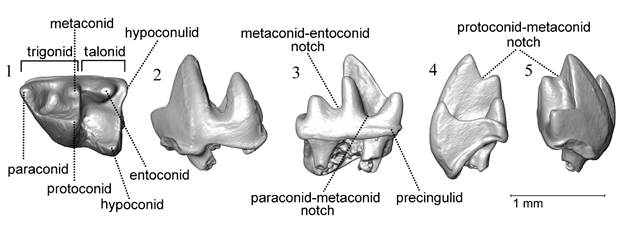
Scientists have discovered fossils of a treeshrew—a small mammal resembling a squirrel—from Ramnagar in Jammu & Kashmir that belong to a new genus and species. This rare find marks the oldest known record of fossil tupaiids in the Siwalik region, extending their evolutionary timeline by approximately 2.5 to 4 million years.
The discovery also helps refine the geological age of the Ramnagar fossil site in Udhampur district, placing it more precisely within the Middle Miocene period (around 12.7 to 11.6 million years ago). The newly identified specimens have been preserved in the repository of the Wadia Institute of Himalayan Geology in Dehradun.
The research highlights how Siwalik sediments preserve a rich record of mammalian evolution spanning from the Middle Miocene to the Pleistocene epoch. These deposits have yielded fossils of diverse groups such as treeshrews, hedgehogs, and rodents, offering critical insights into ancient ecosystems. However, treeshrews remain among the rarest fossil mammals in the Cenozoic record.
The study, conducted by scientists from the Wadia Institute of Himalayan Geology. It is an autonomous institute under the Department of Science and Technology (DST). The team identified the new species as Sivatupaia ramnagarensis. The fossils were recovered from a Middle Miocene site in Ramnagar, Jammu & Kashmir.
Insights into Ancient Diet and Ecology
Dietary analysis suggests that this newly discovered treeshrew likely had a fruit-based diet. It was adapted to less mechanically demanding food compared to modern and other fossil tupaiids. Alongside this discovery, new hedgehog and rodent fossils were also identified from the same site.
The murine rodent fossils are particularly significant because their dental patterns are considered time-sensitive markers. Similar fossil evidence from the Siwalik sequence in Pakistan has previously helped establish precise geological timelines. These findings together strengthen the age estimate of the Ramnagar site.
International Collaboration in Research
The study was led by Dr Ramesh Kumar Sehgal, Dr Ningthoujam Premjit Singh, and Abhishek Pratap Singh from the Wadia Institute of Himalayan Geology, in collaboration with researchers from Panjab University, City University of New York, University of Southern California, Arizona State University, and the American Museum of Natural History.
The research has been published in the Journal of Paleontology.
Significance of the Discovery
This finding adds a new species to the fossil record. It also enhances understanding of mammalian evolution in the Siwalik region. Also, it provides crucial evidence for reconstructing ancient ecosystems. And, refining the timeline of species evolution in the Indian subcontinent.
As more fossils emerge from these sediments, scientists continue to uncover how ancient life adapted to changing climates and environments in the Himalayan foothills.