

Netaji Bose Mystery Revisited: Rajesh Talwar Questions the Air Crash Narrative

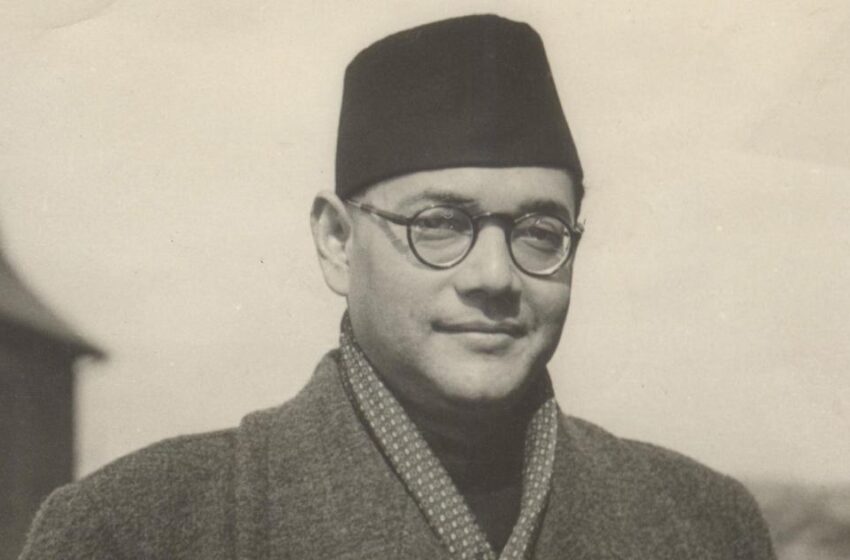
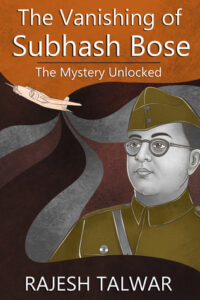
As the nation kick-starts the year-long celebrations of the 125th birth anniversary of Subhas Chandra Bose today (Jan 23, 2021), we bring you an interview with author Rajesh Talwar, who challenges the long-held narrative of Bose’s alleged death in an air crash. In his book, The Vanishing of Subhash Bose: The Mystery Unlocked (Kalpaz Publications), Talwar argues that the crash story was fabricated, offering a fresh and controversial perspective on one of India’s greatest historical mysteries.
Saurabh Tankha
What made you pen a book on Netaji?
A book on Subhas Chandra Bose’s disappearance, and his relevance and that of the Indian National Army (INA), had been brewing in my mind for a long while. Since childhood, Bose and the INA have fascinated me. My great grandfather, Sardar Kripa Ram, fought for the British Indian Army, and we even have a photograph of him with US President Dwight D. Eisenhower. However, his son—my great-uncle Bhisham Chopra—served in the INA. I grew up with memories of this mysterious figure who had fought for India’s Independence.
In 2007, when an all-women Indian contingent went to Liberia for a UN mission, I felt proud—but also saddened. I was reminded of the brave women of the INA, especially those in the Rani of Jhansi Regiment, many of whom were never honoured. I recall meeting a taxi driver in Myanmar who showed me photographs of his grandmother, who died fighting for the regiment. It enrages me that such patriots were ignored for decades, almost as if they had vanished from history.
Why do you call it “vanishing”?
In my book, the term “vanishing” operates on two levels. First, the mystery of Bose’s disappearance after the alleged Taipei air crash. Second, the erasure of Bose and the INA from our collective memory.
There are many reasons why this book was necessary. One of the central arguments is that we must give due credit to Bose and the INA while also honouring leaders like Mahatma Gandhi and Jawaharlal Nehru. There is enough credit to be shared. Importantly, the book demonstrates that the alleged air crash was a fabricated story.
I also argue that Nehru, a great lover of the arts, in a sense “directed” a real-life production—the narrative of Bose’s death in an air crash. It was an elaborate story involving multiple actors and international dimensions, but one with serious flaws. Like The Mousetrap, it has run for decades—perhaps it is time for the curtains to fall.
The Mousetrap, a famous English play, based on an Agatha Christie novel, has been running in a British theatre for 60 years, and is considered to be the world’s longest running play. The play staged by Nehru has been running for as much time, but people have not noticed. Perhaps it is now time for the curtains to finally fall.
How different is your narrative from other authors?
Extremely different. My legal background as an international lawyer helped me analyse all three official inquiries into Bose’s disappearance—something not attempted before in such depth.
The first inquiry, the Shah Nawaz Committee, concluded that Bose died in an air crash. I dismantle this conclusion logically. I also highlight how the dissenting report by Suresh Bose, Netaji’s brother, was unfairly dismissed, despite being far more rigorous.
In the book, I demonstrate that Nehru was withholding information. This is supported by historical evidence, including surveillance of the Bose family by the Intelligence Bureau for decades—an undeniable fact.
In your opinion, what exactly happened – did Netaji die in that crash?
There should be no doubt that there was no crash at Taipei on the alleged date. The government of Taiwan has categorically denied any such incident. I personally visited Taiwan and examined archival records. The Taiwanese are meticulous record-keepers, and there is no evidence of a crash on August 18, 1945.
Justice Mukherjee also examined these records during his inquiry and found no mention of any crash in contemporary newspapers. Interestingly, Taiwanese newspapers did report even minor updates about Bose’s family shortly after the alleged crash. This raises a crucial question: how could such a major event go unreported while lesser news was published?
To illustrate, imagine a prominent global leader dying in an accident in Delhi, yet no Indian newspaper reports it—while smaller, unrelated stories about their family appear. Would that not seem implausible?
The Taiwanese archives even document another crash in September 1945 involving a US aircraft—showing their thoroughness. But there is absolutely no record of the alleged August crash.
In simple terms: if there was no crash, there was no death in that crash.
