

Beyond Clean Streets: How Swachhata Is Creating Livelihoods and Opportunities for Inclusion
- NATURE SUSTAINABLE LIVING
 Life&More
- 0
- 9 minutes read


Upasana Kaura
In Loni, Uttar Pradesh, a group of women has found an unusual use for a material that often creates a waste-management problem — cow dung. Around gaushalas and dairies, accumulated cow dung can clog drains and sewage channels. In Krishna Vihar Colony, however, women began using it to make incense sticks and Loban cups, turning a waste challenge into a source of livelihood.
The initiative began with around eight to ten women and gradually expanded. A woman officer of the Loni Nagar Palika Parishad helped connect the producers with gaushala owners, ensuring a more consistent supply of cow dung. The Nagar Palika Parishad also earns up to 25% revenue from the sale of the products.
The production process also reduces dependence on wood sawdust. Around 30–35% dry cow dung powder is mixed into the material used for making the incense products, reducing the quantity of wood sawdust required. And the buyers live beyond Loni. They are selling to people in Delhi, Mumbai, Punjab, Gujarat and Hyderabad, and even abroad.
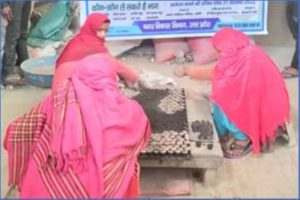
The women are now exploring other possibilities like making fuel from cow dung for cremation grounds and havans, and developing cow-dung flower pots. The Loni women have shown that waste does not always have to end its journey in a landfill or drain – it can become the raw material for something useful.
Loni Women Are Not The Only Ones
Loni women are not the only ones doing this. Across several Indian cities, women are finding new ways to earn through waste, lead neighbourhood cleanliness initiatives and encourage more sustainable practices. Transgender community members are also taking on professional roles in sanitation services, including the operation and maintenance of treatment facilities.
This is also where the livelihood dimension of the Swachh Bharat Mission becomes visible—not simply in the removal of waste, but in finding productive uses for materials that would otherwise become a sanitation burden.
Swachhata Hi Seva 2026, launched last month, reflects this broader idea. “Swachhata Mein Sahbhag; Swachh Bharat, Viksit Bharat” puts participation and collective responsibility at the centre of the cleanliness campaign. The approach also reflects the wider objectives of the Swachh Bharat Mission, where citizen participation and community-led action remain important to improving sanitation and waste management.
Now, lets see what women in other cities are doing:
Patna’s Women Take Charge of Waste Management
In Patna, women are taking a more direct role in the city’s waste-management system. The Pink Material Recovery Facility (MRF) was created specifically to provide women with opportunities in the waste-management sector. Operated primarily by women and led by a female supervisor, the facility processes both dry and wet waste.
It can handle two tonnes of dry waste and 1.5 tonnes of wet waste every day. The facility was established with support from the Patna Municipal Corporation and became operational within three months. The initiative also connects waste management with citizen participation through a ‘Cash for Waste’ programme. Residents can bring dry waste to the facility and receive payment according to prescribed rates.

Another Patna initiative demonstrates the potential of reuse in a very visible way. Old, unusable vehicles have been converted into mobile Pink Toilets, giving discarded vehicles a second life while addressing a basic sanitation requirement. Together, these initiatives bring the principles of Reduce, Reuse and Recycle into everyday urban life.
From Cleanliness Ambassadors to Community Leaders
Women are also playing an important role outside formal waste-processing facilities.
In Bhopal, 250 women brand ambassadors have worked with the municipal corporation on cleanliness and waste management. They have also established Bartan Banks across 25 wards, providing reusable utensils for community events and reducing the dependence on single-use plastic.
Another initiative, the 60-member Swachhata Kitty Group, demonstrates how small contributions can support community action. Each member contributes ₹100 every month to create a common fund for cleanliness activities.
In Uttarakhand, the Bainni Sena, or ‘Army of Sisters’, has created another model of community participation. Across 57 groups, 570 women monitor cleanliness activities in their wards.
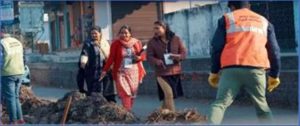
Their responsibilities include interacting with residents, communicating complaints, conducting awareness programmes and helping coordinate between municipal authorities and sanitation workers.
In Shillong, the Iynnehskhem Self-Help Group has built a livelihood around composting. The women collect wet waste from households and convert biodegradable material into compost. The group emerged after its members received training through a rehabilitation initiative.
These examples show that community participation does not always require large infrastructure. It can begin with a neighbourhood group, a shared fund, a composting unit or a simple effort to reduce plastic waste.
Creating Space for Transgender Professionals in Sanitation
The sanitation sector is also opening up opportunities for members of the transgender community.
In Cuttack, Odisha, the municipal corporation organised transgender persons into a Self-Help Group, provided training and entrusted the group with the operation and maintenance of a Septage Treatment Plant. The approach later expanded, with Urban Local Bodies partnering with Self-Help Groups in faecal sludge and septage management as well as solid waste management.
In Bhubaneswar, the Swikruti Self-Help Group operates and maintains a 75-KLD Faecal Sludge Treatment Plant at Basuaghai. Members received technical and managerial training before taking up their responsibilities.
For Meghna Sahoo, President of Swikruti, the opportunity has significance beyond employment. “Now, we can proudly embrace our identity and participate in the professional space,” she says.
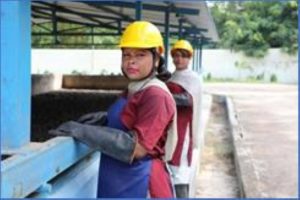
The Bhubaneswar Municipal Corporation has also involved transgender groups in operating and maintaining seven cesspool vehicles. Drivers and helpers are to receive applicable minimum wages along with training in health, hygiene, personal protective equipment and desludging protocols.
The initiative illustrates how sanitation work can become a pathway towards professional recognition for communities that have historically had fewer formal employment opportunities.
A Broader Meaning of Swachhata
The stories emerging from Loni, Patna, Bhopal, Uttarakhand, Shillong and Odisha point to a broader understanding of urban cleanliness. Waste management is not simply about collecting and removing waste. It can create livelihoods, and encourage entrepreneurship. And when sanitation systems deliberately create space for people from different social groups, they can also become avenues for greater participation and professional recognition.
For the women making incense from cow dung, the residents participating in ‘Cash for Waste’, the groups converting wet waste into compost and the transgender professionals operating sanitation facilities, Swachhata is not an abstract campaign. It is part of everyday work and livelihood.
The Swachh Bharat Mission can therefore be viewed not only through the lens of sanitation infrastructure and cleanliness outcomes, but also through the people who make these systems work on the ground. The real story, therefore, is not only about cleaner streets or better-managed waste. It is about what becomes possible when people are given an opportunity to participate in creating cleaner communities.
A cleaner city may be the visible outcome. But dignity, livelihood and inclusion can be part of the transformation taking place behind it.
