Yuge Yugeen Bharat Museum: Delhi’s Historic North and South Blocks to Get a New Cultural Identity


 Team L&M
Delhi is set to add a significant cultural landmark to its architectural and historical landscape. The Union Cabinet has approved the development of the Yuge Yugeen Bharat Museum at the iconic North and South Block Complex, opening a new chapter in the history of two of the capital’s most recognisable government buildings.
Envisioned as a landmark institution showcasing India’s civilizational journey, the museum will bring together the country’s diverse heritage, traditions, knowledge systems, artistic expressions and cultural practices under one roof. More than a conventional museum, it aims to offer visitors an immersive understanding of India’s past and the many influences that have shaped its identity over centuries.
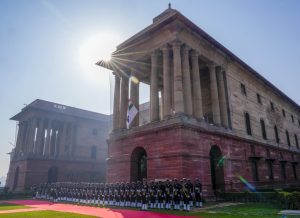
The project also marks an important shift in the use of the historic North and South Blocks. With government offices relocating from these buildings, their adaptive reuse offers an opportunity to preserve their architectural character while giving them a new purpose as a public cultural institution.
A museum celebrating India’s civilizational journey
Announced by the Prime Minister on May 18, 2023, the Yuge Yugeen Bharat Museum is envisioned as a comprehensive representation of India’s civilizational continuity, diversity and richness.
Spread across a proposed built-up area of approximately 1,78,509 square metres, the museum will bring together tangible and intangible aspects of Indian heritage through carefully curated galleries, exhibitions and interactive experiences. It will incorporate contemporary museum practices, immersive technologies and visitor-friendly interpretation methods to make India’s history and cultural legacy accessible to audiences of different ages and backgrounds.
The proposed museum is also expected to have the world’s largest display area among museums, positioning it as a major international cultural destination.
Its galleries will explore several dimensions of India’s heritage, including architecture and cityscapes, mathematics and astronomy, languages and scripts, faith and spirituality, and the country’s historical connections with the world through trade and the exchange of ideas.
The first gallery, based on the theme of ‘Adornment’, is expected to open to visitors in the North Block in the latter part of 2027. A modular development approach is being planned to allow additional galleries to be introduced in phases.
Bringing India’s heritage collections together
One of the most significant aspects of the project is the scale of its proposed collection.
The project team has identified approximately 1.8 million objects for potential display. These include collections from the National Museum and other museums under the Ministry of Culture, 52 Archaeological Survey of India (ASI) site museums, state museums and private collections.
Bringing together such a vast range of objects could offer visitors an opportunity to explore India’s history through its material culture, artistic traditions and everyday objects. The museum’s approach will extend beyond displaying artefacts to explaining the social, cultural, intellectual and historical contexts in which they emerged.
The project will also include dedicated facilities for collection storage and conservation, exhibition development, visitor amenities, landscaping, intelligent building systems and supporting infrastructure. Technology-driven interpretation and immersive experiences will help the museum present complex historical narratives in engaging ways.
Giving historic buildings a new lease of life
The choice of North and South Blocks gives the project an additional layer of historical significance.
Designed by British architect Herbert Baker, these imposing buildings form an important part of the architectural landscape of New Delhi. The museum will demonstrate how we can repurpose historic structures without compromising their architectural identity or heritage value.
Adaptive reuse has increasingly become an important approach to heritage conservation across the world. Instead of allowing historic buildings to become underutilised, the approach gives them a meaningful contemporary function while retaining their original character.
The Yuge Yugeen Bharat Museum seeks to follow this principle by combining heritage conservation with modern museum infrastructure, sustainable cultural management and international exhibition standards.
A boost to cultural tourism, research and employment
The museum has implications beyond heritage preservation. With its scale and proposed international positioning, it could become a major attraction for domestic and international tourists visiting Delhi.
A museum of this nature can also serve as an important educational and research resource. Students, historians, scholars, researchers, artists and cultural practitioners will have opportunities to engage with India’s diverse traditions and knowledge systems.
The project is will create jobs during construction and operations. Opportunities are likely to emerge for artisans, craftspeople, researchers, museologists, designers, conservation specialists, performers and other creative professionals. The hospitality and tourism sectors could also benefit from increased visitor movement.
The project further aims to support the Make in India initiative through domestic vendor development. This could create opportunities for Indian manufacturers, artisans, conservation professionals and technology providers involved in developing museum materials, exhibition infrastructure and related products.
A ₹3,230-crore cultural investment
The total estimated cost of developing the Yuge Yugeen Bharat Museum is ₹3,230 crore. The estimate takes into account architectural and exhibition design, engineering requirements, museum planning and technical assessments.
The museum aims to accommodate up to one crore visitors annually. It expects to generate revenue through ticket sales, guided tours, food and beverage facilities, retail outlets, events, venue rentals and digital experiences.
The project will roll out in phases from FY 2026-27 to FY 2030-31. The Public Investment Board appraised the proposal on July 27, 2026, and the Ministry of Culture concurred with its recommendations.
A national institution with a global audience
Although the museum will be physically located in New Delhi, its proposed reach extends across the country. The institution aims to serve visitors from every state and Union Territory, as well as international tourists..
Its success, however, will depend also on how effectively it communicates India’s complex and diverse history. A meaningful museum experience must go beyond displaying objects. It must provide context, encourage curiosity and allow visitors to understand the connections between different periods, communities, traditions and ideas.
The Yuge Yugeen Bharat Museum has the potential to become an important space for this cultural engagement.
The museum would offer a deeper understanding of the country’s civilizational journey. This is because it brings together India’s artistic achievements, intellectual traditions, spiritual thought and historical experiences together.
The conversion of North and South Blocks into a public museum sends a larger message. Heritage buildings need not remain frozen in time. Conservation, combined with thoughtful public use, can give these structures a new purpose and relevance.
As the project moves towards phased implementation, the museum must do justice to India’s extraordinary heritage. It must also make this rich diversity accessible and meaningful to future generations.