

Kashi’s Enduring History: Destruction, Revival, and Temple Heritage

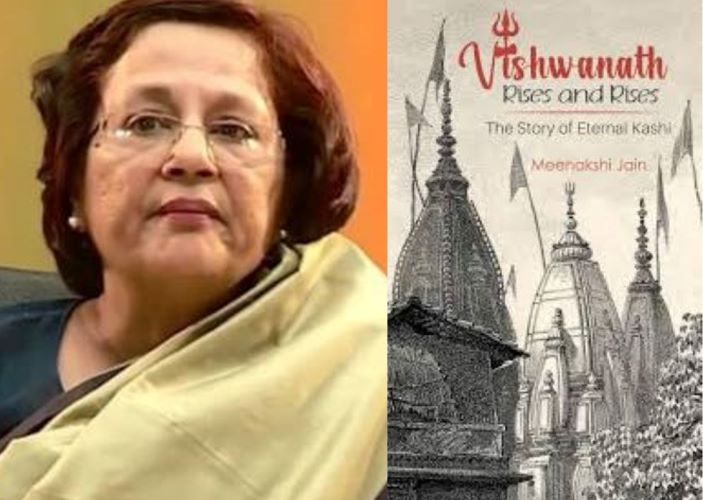
Rajkumari Sharma Tankha
Kashi and Its Civilisational Heritage
Kashi is intricately linked to Hindu civilisational heritage, the Sanatana Dharma, and is one of the oldest cities on the planet. And Vishwanath Rises and Rises provides a historian’s perspective on the antiquity of the city and its importance to Hindus, reminding us in no uncertain terms, of our duty towards the preservation and enrichment of The City of Light.
Early History and Temple Significance
Most of us know that Aurangzeb ordered the demolition of the Kashi Vishwanath Mandir in 1669, but Jain, an associate professor of History at Gargi College, University of Delhi, argues that earlier Islamic depredations had already begun the desecration of Kashi much earlier. Why? Simply because Kashi enjoyed an exalted status among Hindus!
Historical Destruction of Kashi Temples
The first recorded attack was by a son of Mahmud of Ghaznavi, which did not quite impact the key temples, but the following one by Qutbuddin Aibak in the 12th century CE, and the next one more than three centuries later by Sikandar Lodi, was brutal and meant destruction of all symbols of Hinduism, ‘the kafir icons’. Aurangzeb’s was only the third major desecration.
Reconstruction and Cultural Continuity
Tracing the ancient history of Kashi from the Vedic period (Chapter 3, Rediscovering Ancient Kashi) to medieval times, Vishwanath Rises and Rises offers deep insight into what Kashi has endured over the centuries.
It describes how the city faced repeated destruction. It also shows how Hindus reclaimed it each time. This led to changes in its architectural landscape. Whenever the city was destroyed, temples were relocated. Displaced deities found shelter in new shrines (Chapters 10 and 12).
Social and Political Patronage of Kashi
The temples in Kashi shaped a rich social, intellectual, and economic life in the city, as the book explains.
Different sections of society also played a role in Kashi’s history. These included Rajput kings, the Maratha Peshwas, and the zamindars of Bengal. Raja Patnimal also supported causes like Shri Krishna Janmabhoomi in Mathura in 1832.
They all fought for Kashi and never gave up on the city of Mahadev. The Marathas under the Peshwas worked especially to restore Kashi to Hindu ownership. Ahilyabai Holkar built the current Kashi Vishwanath temple.
A Historical Reading of Kashi
Most of us know that Aurangzeb ordered the demolition of the Kashi Vishwanath Mandir in 1669. Jain, an associate professor of History at Gargi College, University of Delhi, says the desecration of Kashi began much earlier. She links it to earlier Islamic depredations.
Vishwanath Rises and Rises is a must read for all Bharatiyas, not just those battling in the courts, because it is factual and can sooth many a frayed nerves, for truth alone has the ability to bring respite.
