

From Waste to Wealth: How India Is Turning Discarded Materials into Valuable Resources
- NATURE SUSTAINABLE LIVING
 Life&More
- 0
- 7 minutes read


Upasana Kaura
For years, waste has largely been seen as something to be collected, transported and discarded. But that mindset is gradually changing across India. From kitchen scraps and coconut shells to invasive aquatic plants and discarded metal, materials once considered worthless are increasingly being viewed as resources that can be recovered, reused and put back into productive use.
This shift is closely linked to the evolution of the Swachh Bharat Mission (SBM). Launched in 2014, the mission began with a strong focus on cleanliness and sanitation but gradually expanded into a wider movement around waste management, citizen participation and behavioural change. Initiatives such as Swachhata Hi Seva (SHS), launched in 2017, further encouraged citizens to participate in cleanliness drives and take greater responsibility for the spaces around them.
Today, the conversation is moving beyond simply keeping streets and public spaces clean. It is increasingly about what happens to waste after it is collected — and whether something that is discarded can instead be recovered and given a second life.
This is where the idea of Waste to Wealth comes in. The approach connects waste management with resource efficiency and the principles of a circular economy. Now, it is not just source segregation and waste processing but also the recovery of value from discarded materials.
And this is happening not just at large waste-processing facilities, but also in homes, neighbourhoods and local communities.
A Compost Bin Brings the Change Home
The simplest examples of Waste to Wealth begins in the kitchen. More and more households are composting vegetable peels, fruit scraps and other organic waste. Municipalities across cities are looking for ways to reduce the amount of wet waste reaching landfills.
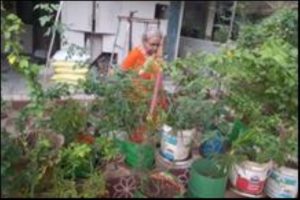
In Vijayawada, Andhra Pradesh, senior citizen K. Subbalakshmi has demonstrated how such a practice can become part of everyday life. Her kitchen waste is converted into compost and used in her garden, turning what would normally be thrown away into something that helps plants grow. Chandigarh resident Kamaljeet Kaur Deol started composting wet kitchen waste at home during Covid 19. Today, many in her neighbourhood are doing the same.
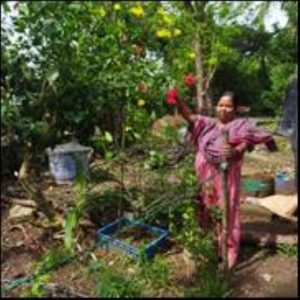
These two examples show that waste management does not require sophisticated infrastructure. It begins with a sincere intent and concern towards environment.
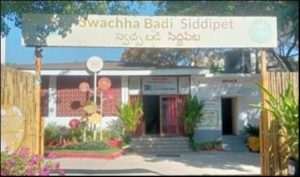
In many places like Siddipet, Telangana, people have taken to spreading awareness about waste management. ‘Swachh Badi’ in Siddipet provides people with practical exposure to waste management as also home and community composting. The project will soon spread to 141 municipal areas.
A compost bin may be small, but the habit it creates has a much larger impact. Organic waste is diverted from the landfill, compost is returned to the soil and households become more conscious of what they throw away.
When a Weed Becomes an Opportunity
Waste to Wealth is not limited to household waste. At some places, materials that are viewed as environmental problems are transformed into sources of livelihood. Like In Borchila village in Assam’s Morigaon district, women are selling handicraft items they make from pani meteka (water hyacinth), earning handsome revenue. The Assam State Rural Livelihoods Mission supports this initiative.
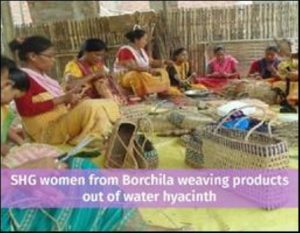
Water hyacinth is an invasive aquatic plant that spreads rapidly across water bodies. It interferes with fishing, transportation and recreation activities. This shows that circular economy is not only about technology and large processing plants. It can be built around local knowledge, community participation and small-scale businesses too.
Coconut Waste Finds a New Market
Another example comes from Patna, where coconut waste is being given a new economic life. The city generates about 25–30 metric tonnes of coconut shells every day. Earlier, all this went to landfill sites.
Seeing this problem, the Patna Municipal Corporation set up a coconut waste processing facility in the Danapur area. It has a processing capacity of 10 tonnes per day. And thanks to this plant,coconut fibres are now processed into coir ropes and cocopeat. Coir ropes are used in construction, packaging, mats and handicrafts. Cocopeat, is used in agriculture and horticulture, nurseries and rooftop gardens
That is the essence of Waste to Wealth — extending the useful life of a material instead of treating disposal as its final destination.
When Waste Becomes a Public Space
Perhaps some of the most visible examples of this changing approach can be found in public spaces.
Across the country, discarded metal, machinery and other materials are being transformed into sculptures, installations and attractions. Waste to Wonder parks represent one such approach, combining creative reuse with public spaces.
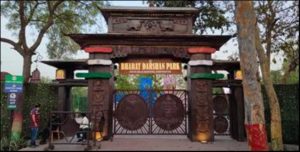
Chandigarh’s Rock Garden is a well-known example of how industrial and household waste can be creatively incorporated into an urban attraction. The city has also developed a Waste to Wonder Park spread across 1.75 acres, where structures have been created using discarded materials such as iron sheets, rods, fans and automobile parts.
Delhi also adopted a similar concept with its Waste to Wonder Park, where industrial waste, scrap metal and discarded automobile parts sourced from landfill sites have been repurposed to create replicas and other structures.
Delhi’s Waste to Wonder Park also incorporates renewable energy infrastructure, including solar trees and rooftop solar panels with a combined capacity of 50 KW. This adds another dimension to the idea — combining material recovery with clean-energy generation. This shows how public infrastructure can incorporate multiple sustainability principles.
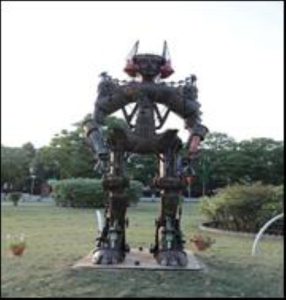
Waste to wealth projects have managed to shift the conversation from “Where do we throw this?” to “What can this become?” And this is one of the most important changes in India’s evolving waste-management story.
