

From Wastewater to Resource: How Indian Cities Are Reusing Every Drop
- NATURE SUSTAINABLE LIVING
 Life&More
- 0
- 5 minutes read


Upasana Kaura
India’s cities are increasingly looking at wastewater not as something to simply treat and discard, but as a resource that can be recovered and reused. At the centre of this shift is Used Water Management (UWM) under the Swachh Bharat Mission-Urban (SBM-U), which focuses on treating sewage, preventing untreated wastewater from entering water bodies and promoting safe reuse.
Sewage Treatment Plants (STPs) are central to this effort, helping cities conserve freshwater and recover water for non-potable uses. The Water Plus certification further encourages better management of wastewater generated by households and commercial establishments.
But there is no one-size-fits-all solution. Cities are developing their own models based on their infrastructure, water requirements and local circumstances. Treated wastewater is being used for everything from agriculture and horticulture to industrial processes, road cleaning and lake rejuvenation.
Jaipur, Indore, Surat, Navi Mumbai and Tirupati offer examples of how treated water is finding a second life, a step towards sustainable infrastructure and urban services.
Jaipur: Water Reuse at Scale
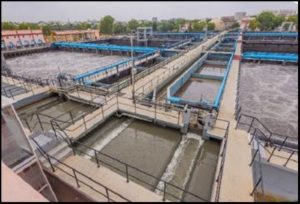
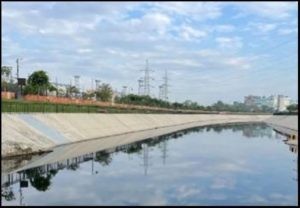
The Dehlawas Sewage Treatment Plant in Jaipur, built over 22.50 hectares has a treatment capacity of 215 MLD, the highest in Rajasthan. The plant treats wastewater for reuse, supporting water conservation and the principles of a circular economy. Treated water is also discharged into the Dravyavati River, highlighting the role that improved sewage treatment can play in protecting urban water systems.
Indore: From Treatment to Reuse
Indore became the first city to receive Water Plus Certification, after focusing on preventing untreated wastewater from entering the environment. Today, untreated wastewater no longer flows through the city’s rivers and stormwater drains. Instead, it is used for gardens, roadside plantations, horticulture, road washing and cleaning sewer machines. Rainwater harvesting has further strengthened its water conservation efforts.
Surat: Wastewater With Economic Value
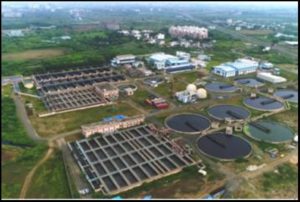
Surat has established four tertiary treatment plants to reduce dependence on freshwater. Treated wastewater is being used for industrial applications, lake rejuvenation, agriculture, mass plantation and sewer cleaning through service lines and tanker-filling stations.
Navi Mumbai: Reuse in Everyday Services
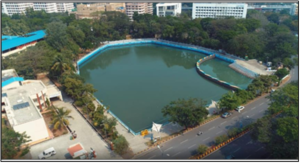
Navi Mumbai has achieved Water Plus Certification and 100% mechanised cleaning of sewer lines and septic tanks.
More than 30% of treated wastewater is reused across more than 30 city gardens. But its applications extend beyond horticulture. Treated water is also used to wash solid-waste vehicles, compactors and city transport buses, as well as for sprinklers and road dividers.
It shows how treated wastewater can become part of everyday municipal operations, replacing freshwater in activities that do not require drinking-quality water.
Tirupati: Making Reuse Sustainable
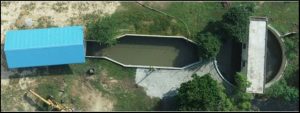
Tirupati offers another dimension to the wastewater story by linking reuse with the financial sustainability of sewage treatment infrastructure.
The city has developed a self-sustaining model for operating its sewage treatment plant at Thukivakam. It has also been declared Water Plus. Treated water is used for watering road medians, parks and gardens across the city.
Tirupati’s approach seeks to address not just wastewater management but also the long-term sustainability of STP operations.
The Bigger Shift
These examples point to a changing urban water story. Instead of treating wastewater as the end of the water cycle, cities are increasingly putting treated water back to work.
Whether it is used for horticulture, agriculture, industry, road cleaning or lake rejuvenation, wastewater reuse helps reduce pressure on freshwater resources. As cities grow, using available water more than once could become an increasingly important part of sustainable urban development.
