

Delhi’s New Urban Forest at ITO: A Green Solution to Rising AQI Levels
- NATURE SUSTAINABLE LIVING
 Life&More
- July 5, 2020
- 2
- 12 minutes read

Team L&M
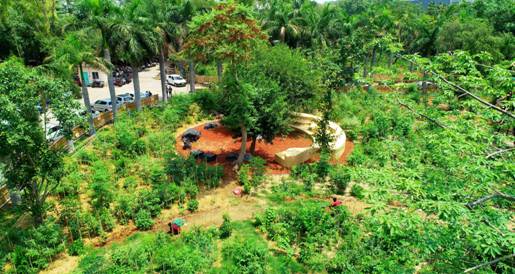
The next time you pass through ITO, one of Delhi’s busiest intersections, don’t be surprised to spot a thriving green forest amid the city’s concrete landscape.
Located inside the office park of the Comptroller and Auditor General (CAG) of India on Bahadur Shah Zafar Marg, this newly developed urban forest in Delhi is a major step toward combating the city’s worsening Air Quality Index (AQI) and restoring ecological balance.
A Green Initiative to Combat Delhi’s Air Pollution
ITO has long been identified as one of Delhi’s most polluted hotspots, often recording alarming AQI levels.
To address this growing environmental challenge, the government has developed this dense urban forest as part of its broader environmental responsibility and sustainable urban development efforts.
Spread across more than one acre, the forest features a carefully designed ecosystem of:
- Shrubs
- Small and medium-sized trees
- Tall canopy trees
These have been strategically arranged to create peripheral and core plant communities, ensuring dense vegetation coverage and maximum ecological benefits.
Built Using the Miyawaki Method
The forest has been developed using the globally recognised Miyawaki afforestation method, a Japanese technique known for creating dense, fast-growing native forests in urban spaces.
According to Union Environment Minister Prakash Javadekar, the forest will evolve into a thriving ecosystem with 12,000 saplings of 59 indigenous species within a year.
The Miyawaki method offers significant environmental advantages, including:
- Reducing surrounding temperatures by up to 14 degrees Celsius
- Increasing moisture levels by over 40 percent
- Faster forest growth compared to conventional methods
- Enhanced carbon absorption
Why This Urban Forest Matters
Unlike conventional lawns, this multi-layered urban forest ecosystem offers over 30 times greater surface area and significantly higher environmental protection capabilities.
It helps:
- Improve air quality
- Reduce urban heat
- Prevent soil degradation
- Support biodiversity
- Strengthen climate resilience
A Haven for Birds, Bees and Butterflies
This urban forest is not just about greenery—it is designed to restore natural habitats.
The ecosystem supports:
- Birds
- Bees
- Butterflies
- Micro-fauna
These species play a crucial role in pollination, biodiversity conservation, and maintaining ecological balance.
Self-Sustaining by Design
One of the biggest advantages of this project is its low maintenance requirement.
After initial watering and de-weeding, the forest is expected to become fully self-sustaining, making it an efficient long-term environmental investment for Delhi.
Rare Native Species Planted in the Forest
The project includes several rare and indigenous tree species best suited to Delhi’s climate and soil, including:
- Dhonk (Anogeissus pendula)
- Bistendu (Diospyros cordifolia)
- Chamrod (Ehretia laevis)
- Doodhi (Wrightia tinctoria)
- Kaim (Mitragyna parvifolia)
- Palash (Butea monosperma)
- Khejri (Prosopis cineraria)
- Arni (Clerodendrum phlomidis)
- Falsa (Grewia asiatica)
- Khajoor (Phoenix sylvestris)
- Marodphali (Helicteres isora)
These species form part of Delhi’s natural vegetation profile, and planners selected them for their adaptability and ecological value.
A Model for Sustainable Urban Development
The CAG office believes this initiative can inspire similar urban reforestation projects across Indian cities.
As Delhi continues to battle pollution and shrinking green cover, projects like this demonstrate how thoughtful urban planning can restore ecological balance.
A Small Forest with a Big Message
Delhi’s new urban forest sends a strong message:
Cities can grow without sacrificing nature.
This green initiative stands as a powerful reminder that reclaiming lost forests and restoring biodiversity is not just possible—it is essential for the future of urban India.

2 Comments
[…] the new cafe, The Earth at Ranthambore within its premises also boasts of the unique Miyawaki Forest, a Japanese afforestation technique for cultivating fast-growing groves of native plants, with the […]
[…] as a safari-based zoological park, it will provide animals with larger, more natural habitats while offering visitors an immersive wildlife […]