

Rajon Ki Baoli Reopens in Delhi After Restoration Preserving Lodi-Era Water Heritage

Team L&M
The 16th-century stepwell, Rajon Ki Baoli, located in Mehrauli Archaeological Park, New Delhi, has officially reopened to the public after a major conservation effort. The Archaeological Survey of India (ASI), in collaboration with the World Monuments Fund India (WMFI) and the TCS Foundation, successfully completed the restoration of this historic structure, strengthening India’s commitment to preserving cultural and environmental heritage.
Part of Global Heritage and Climate Initiative
The project forms part of WMFI’s Historic Water Systems of India initiative, funded by the TCS Foundation and aligned with the World Monuments Fund’s Climate Heritage Initiative. The restoration highlights the importance of reviving traditional water systems as sustainable solutions for water management in the context of climate change.
Restoration Using Traditional Techniques
The conservation work included cleaning, desilting, structural repair, and water quality improvement. Experts used traditional materials such as lime plaster and mortar to maintain the original architectural character of the stepwell.
The team carefully desilted the baoli and integrated it with proper drainage systems. They introduced fish into the water body to help maintain ecological balance and improve water quality. The restoration team followed historical records to preserve the authenticity of its Lodi-era design.
Community Engagement and Awareness
Alongside physical restoration, ASI and its partners engaged local communities to raise awareness about the cultural and ecological importance of Rajon Ki Baoli. Educational programs and participatory conservation activities were introduced to ensure long-term protection and public involvement in heritage care.
A Glimpse into Lodi-Era Architecture
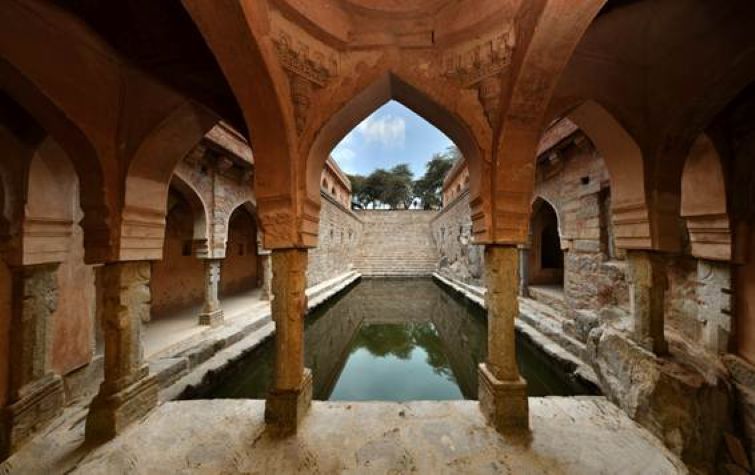
Builders constructed Rajon Ki Baoli around 1506 during the Lodi dynasty. It stands as a remarkable example of traditional Indian water engineering and architecture. Architects designed the four-tiered stepwell not only for water storage but also as a resting space for travellers.
Its structure features elegant arched colonnades, ornate stucco medallions with floral and geometric motifs. Finely carved stonework reflects the artistic excellence of the era. It spans 1,610 square meters and has a depth of 13.4 meters, with a main tank measuring 23 by 10 meters.
Preserving Heritage for the Future
The restoration of Rajon Ki Baoli reinforces the value of traditional water systems in sustainable urban planning. It stands as a monument of history. And, alson a living example of how heritage conservation can support climate resilience and environmental sustainability.
The project ensures that this architectural treasure continues to inspire future generations. AND, also contribute to the preservation of Delhi’s rich cultural landscape.
