

Sonal Mansingh Calls for Indian Heritage Service to Protect India’s Cultural Legacy
- SANDIP SOPARRKAR
 Life&More
- 0
- 6 minutes read


In an era where rapid development often overshadows cultural preservation, iconic Bharatanatyam and Odissi exponent, former Rajya Sabha Member, and Padma Vibhushan awardee Dr. Sonal Mansingh has made a compelling appeal for the creation of an Indian Heritage Service (IHS)—a specialised cadre dedicated to protecting and promoting India’s rich cultural heritage. In this exclusive conversation, Dr. Mansingh shares her vision, concerns, and hopes for India’s cultural future.

What inspired you to propose the creation of an Indian Heritage Service (IHS)?
India is not merely a geographical entity; it is one of the world’s oldest living civilizations. Our temples, monuments, performing arts, languages, traditions, manuscripts, crafts, and knowledge systems together form the soul of this nation.
While we have dedicated civil services like the IAS, IPS, and IFS to manage administration, law enforcement, and diplomacy, our cultural heritage deserves equally focused institutional attention. An Indian Heritage Service would ensure that preserving our civilisational wealth becomes a national responsibility rather than an occasional initiative.
Why do you believe the existing system is insufficient?
Many departments work sincerely towards conservation, but their efforts are often fragmented. Heritage preservation requires professionals who possess deep knowledge of archaeology, history, conservation science, museum management, performing arts, architecture, and cultural policy. nA specialised service would bring together trained experts capable of making informed decisions while ensuring continuity and long-term planning.
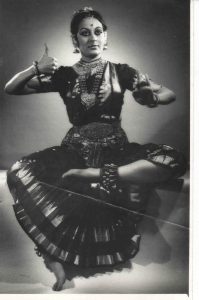
How do you envision the Indian Heritage Service functioning?
Just as the IAS administers governance and the IPS safeguards security, the Indian Heritage Service should become the backbone of cultural preservation. Its officers would work towards protecting monuments, preserving traditional knowledge, documenting intangible heritage, strengthening museums and archives, promoting indigenous art forms, and ensuring that India’s cultural identity is preserved for future generations.
You often describe heritage as India’s identity. Could you elaborate?
What role can such a service play in bridging policy and practice?
There is often a gap between policy formulation and implementation. A specialised heritage cadre would bridge that divide by combining administrative efficiency with subject expertise. Only those who understand both governance and culture should make decisions concerning heritage conservation. This balance is essential for meaningful preservation.
How important is heritage conservation in today’s rapidly modernising India?
Development and heritage conservation are not opposing ideas—they complement each other. A nation that values its roots builds a stronger future. Modern India must continue progressing economically and technologically while remaining deeply connected to its cultural foundations. Heritage gives us continuity, confidence, and a sense of belonging.
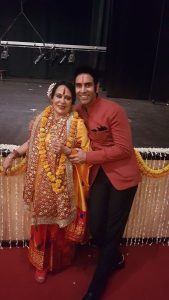
What message would you like to give to policymakers and young Indians?
I urge policymakers to recognise cultural heritage as a national priority deserving institutional support and professional leadership. To the younger generation, I would say: know your heritage, celebrate it, and become its guardians. Our civilisation has survived for millennia because every generation accepted the responsibility of preserving it. That responsibility now belongs to us.
Sandip Soparrkar holds a doctorate in world mythology folklore from Pacific University USA, an honorary doctorate in performing arts from the National American University, He is a World Book Record holder, a well-known Ballroom dancer and a Bollywood choreographer who has been honored with three National Excellence awards, one National Achievement Award and Dada Saheb Phalke award by the Government of India. He can be contacted on sandipsoparrkar06@gmail.com
