

Inked Identity: Why Tattoos Have Become More Than Just a Trend
- L&M SPECIAL
 Life&More
- 0
- 7 minutes read

Raghav Mehta
Tattoos are often mistaken for a modern obsession — a trend fuelled by celebrity culture, social media aesthetics and the endless pursuit of self-expression. But tattoos are far older than Instagram reels and urban tattoo studios.
Long before body art became fashionable, tattoos were deeply woven into human civilisation. Across ancient cultures, they were not casual decorations but powerful markers of identity, spirituality, protection, courage and belonging.
From Polynesian tribal markings to Egypt’s sacred symbols, from Japanese body art traditions to India’s own godna practices, tattoos once carried cultural legitimacy and profound social meaning. They told stories, marked rites of passage, and represented memory, status and faith.
Then modernity intervened. As social norms hardened and ideas of “respectability” narrowed, tattoos slowly became associated with rebellion and nonconformity. For an entire generation, they were viewed as impulsive acts of defiance. Parents warned against them. Employers judged them. In many Indian households, tattoos were seen less as self-expression and more as recklessness.
But culture has a way of circling back. Today, tattoos have returned — not merely as fashion statements, but as one of the strongest symbols of personal identity in contemporary culture.
The New Language of Self-Expression
There was a time when tattoos belonged almost exclusively to rockstars, sailors, bikers and those who consciously lived outside convention. Today, they are everywhere.
Walk through a college campus, airport lounge, café or co-working space in any urban Indian city and tattoos reveal themselves in countless forms — delicate scripts on wrists, mandalas on shoulders, coordinates etched on forearms, minimalist line art behind ears, spiritual symbols, portraits and elaborate full-sleeve compositions.
Tattoos are no longer confined to subculture. They have entered the mainstream — and with that shift has come a profound transformation in meaning.
The biggest transformation in the tattoo industry is not artistic — it is psychological. People don’t just come to get inked anymore. They come searching for meaning, clarity and sometimes even peace.
That shift says something significant about our times. In a world where so much of life feels temporary — disappearing stories, fleeting trends, ever-changing digital identities — tattoos offer permanence.
They say: This mattered enough to stay.
Why Tattoos Are Having Such a Big Moment
The tattoo boom did not happen overnight. Globally, celebrities helped normalise body art. Athletes, musicians and actors transformed tattoos into aspirational style statements. Then social media accelerated everything.
Instagram turned tattooing into a global visual art movement. Artists became creators with international audiences. Designs travelled across continents in seconds. Inspiration became limitless.
And as visibility increased, so did acceptance. There was a time when tattoos were hidden beneath formal shirts, judged in interviews and associated with rebellion.
Today, if half the corporates around you rolled up their sleeves, you would probably discover stories inked into their skin — stories of survival, ambition, heartbreak, spirituality and transformation. Tattoos are no longer marks of defiance; they are becoming mirrors of identity in a world where people are desperately trying to reconnect with themselves.
That perhaps explains why tattoos resonate so deeply with younger generations. They are deeply personal in an era of constant public performance.
More Than Ink
At their core, tattoos satisfy a deeply human need: the need to define ourselves. For some, a tattoo commemorates survival — a reminder of resilience after heartbreak, grief or personal loss.
For others, it honours memory: a parent’s handwriting, the coordinates of home, a meaningful date, a phrase that carried them through their darkest season.
And sometimes, there is no dramatic backstory. Sometimes it is simply about beauty. That, too, is valid. Not every tattoo needs philosophy attached to it. Art itself can be enough reason.
Yet increasingly, tattoo artists are noticing a move toward conceptual storytelling. “Gone are the days when tattoos were limited to random anchors, roses or cars placed without context,” says Raghav.
Modern tattooing focuses on body flow, symbolic placement and fragmented storytelling. Artists are creating designs that move with the anatomy of the body — almost like visual poetry.
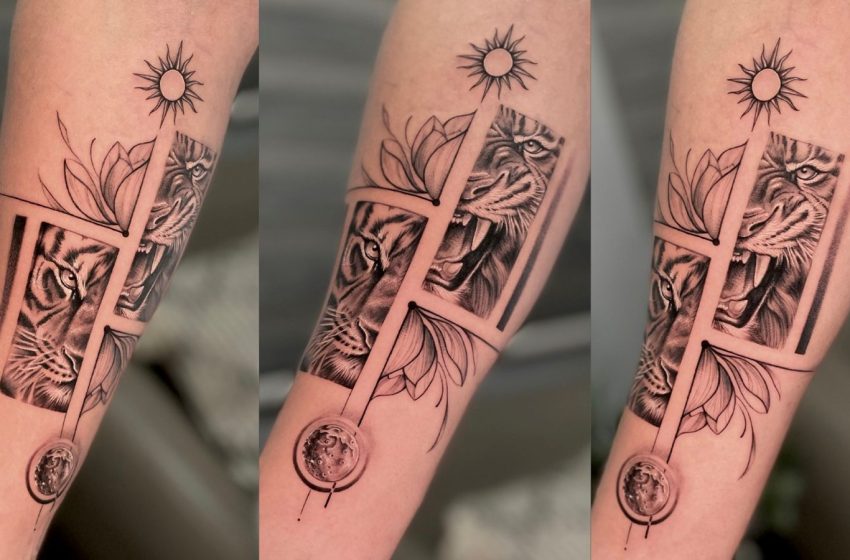
I remember one client who walked into our studio wanting to “just get something inked.” But the conversation evolved. We studied his personality deeply, even explored his astrological chart. He described himself as emotionally intense, powerful and impulsive, but wanted balance.
The final artwork became a symbolic map of his inner self: a tiger with two faces representing duality, lotuses symbolising emotional grounding and growth, with the sun and moon reflecting opposing yet complementary forces.
It wasn’t decoration. It was philosophy on skin.
The Tattoo Chair as Therapy
Perhaps one of the least understood aspects of tattoo culture is the emotional space it creates. For many clients, the tattoo chair becomes more than a seat for body art. It becomes a place of introspection. Hours spent during a tattoo session often turn into conversations people have never had before.
Clients open up about heartbreaks, insecurities, ambitions, traumas and battles they have hidden for years. In that sense, the tattooing process becomes almost meditative. The rhythmic sound of the machine, the discomfort of the needle, the stillness required — all of it forces presence.
A tattoo session becomes a rare pause from the chaos of life. People sit with themselves. And often, they leave with more than ink. They leave with emotional release, confidence and a clearer understanding of their own story.
The Pain Is Part of the Story
Despite the glamour attached to tattoo culture, tattooing is not effortless. It is, quite literally, controlled injury. Needles repeatedly puncture the skin to deposit ink into the dermis. It hurts — though pain levels vary depending on placement, size and individual tolerance.
Areas with thinner skin or proximity to bone — ribs, spine, ankles, hands and collarbones — tend to be more painful. Fleshier areas like the upper arm, thigh or calf are usually easier to tolerate.
But pain, for many, is part of the ritual. It transforms the tattoo into an experience rather than mere ornamentation. Still, experts stress that tattooing is a medical-grade skin procedure and should never be approached casually.
Poor hygiene can lead to infections. Certain pigments may trigger allergic reactions. Improper aftercare can cause scarring or uneven healing. Choosing a reputable studio remains essential.
The Future of Tattooing
If the past decade made tattoos mainstream, the next may make them more meaningful. This shift reflects a larger truth about modern life. Everyone is exhausted from constantly performing for the world while silently battling their own thoughts within.
Perhaps that is why tattoos feel different today. Because somewhere between the sound of the machine, the pain on the skin and the silence of the session, people are finding a rare moment of honesty with themselves.
The real power of a meaningful tattoo lies not in how many people notice it. It lies in how deeply the person wearing it understands it. And maybe that is the future of tattooing — not louder designs, but deeper stories.
Raghav Mehta is a Tattoo Artist & Founder,
Raghav.ink Tattoo Studio, Raja Garden, New Delhi
