

Manjari Chaturvedi on Reviving Courtesan Heritage Through Sufi Kathak
- PERFORMING ARTS
 Life&More
- 2
- 10 minutes read

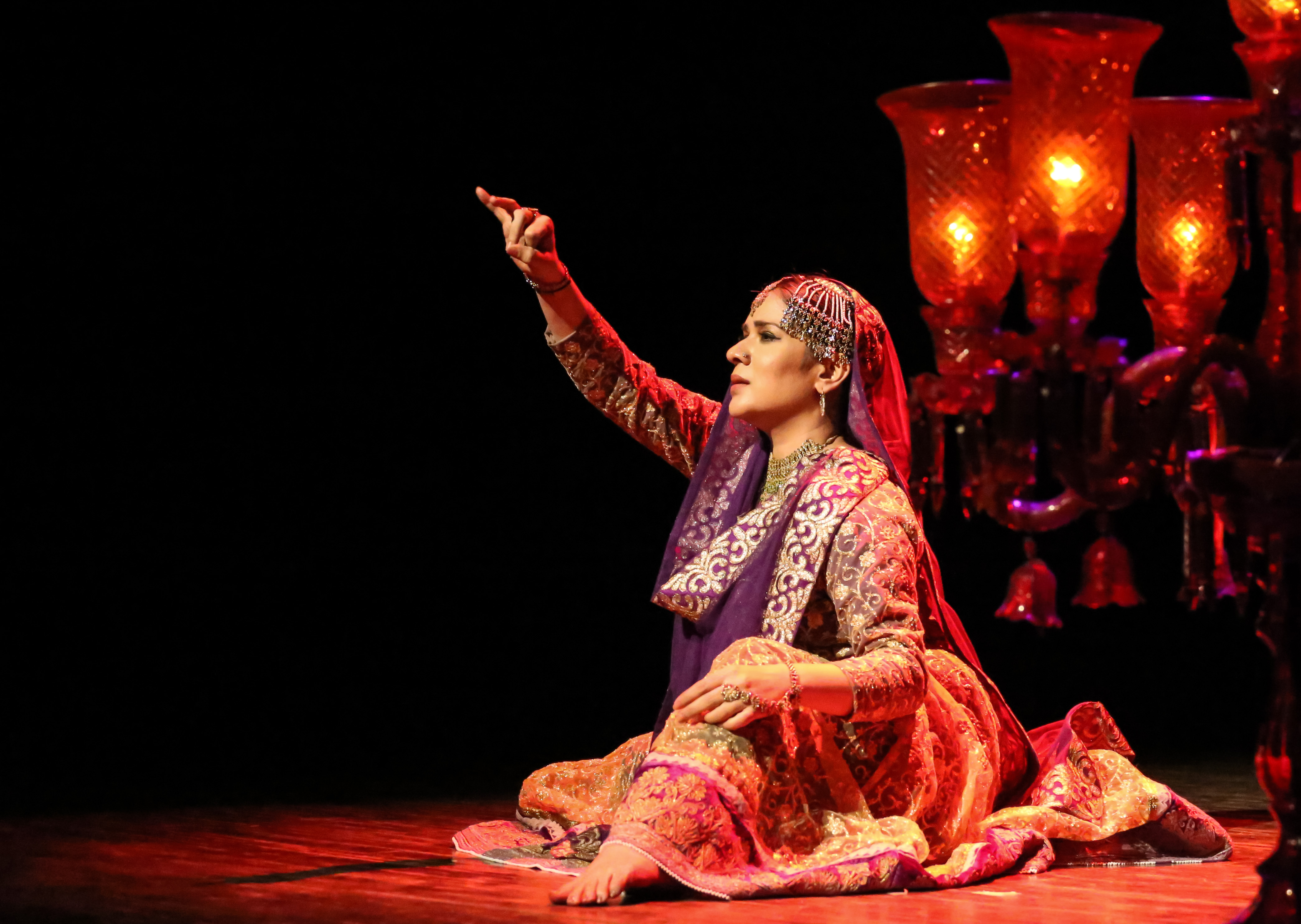
It was around a decade ago that Sufi Kathak exponent Manjari Chaturvedi decided to challenge the perception of tawaifs (courtesans). She believes these women were extraordinary singers, dancers, and poets. To bring their stories and artistic legacy back to life, she presents the show Uff Malka Jaan & the Velvet Courtesans at Showsaa, Kingdom of Dreams, Gurugram, on September 30 and October 14.
Over to Manjari Chaturvedi, who shares her experiences of working on courtesans, their lives, and the stigma attached to them.

On the idea of changing perceptions about tawaifs
Since 1998, I have been developing my spiritual and mystical dance form, which later became my signature style. In 2009, I performed at Kamani Auditorium, Delhi, in a production titled Nazo – An Ode to the Courtesan. For this, Zareena Begum from Lucknow sang compositions rooted in the tradition of Awadh’s mirasins and tawaifs, and I performed on them.
At that time, I did not fully realise how deeply rooted the stigma around courtesans was.
In 2014, I met Zareena ji again after she suffered a stroke that left her paralysed. Through my Sufi Kathak Foundation, we extended her medical and financial support. When I visited her, she expressed her wish to perform again on stage in a Banarasi sari. I left her home in tears and promised myself I would make it happen.
However, when I began seeking sponsors, I encountered a subtle but clear disdain for the performance traditions of tawaifs. People often responded with uncomfortable laughter or dismissive remarks. I was struck by this contradiction—while my own classical dance is respected today, similar art forms performed by courtesans are looked down upon.
This led me to deeper research. Eventually, I not only performed for Zareena ji but also organised a seminar titled The Last Song of Awadh, dedicated to the art of tawaifs and baijis. It was a full house, and she received immense appreciation, leaving the stage in tears of joy.
On gender bias in the history of performing arts
The more I researched, the more I realised how unfairly history has treated women performers. In many cases, men practicing the same art were honoured as ustads, while women were labelled as nautch girls.
Today, male descendants of court dancers proudly speak of their lineage, while women often hide theirs due to shame. This reflects a deep-rooted gender bias that has never been addressed.
Women performers were pushed to the margins of society and treated as “lesser” artists compared to men who practiced the same art forms.
Difficulties in bringing this change
My aim is to restore dignity to courtesans and recognise them as exceptional artists. As a dancer with an academic approach, all my projects are research-based.
The most challenging among them is The Courtesan Project, an archival and performance-based research initiative. It is difficult because it deals with a subject burdened by social stigma. These women were labelled as “fallen,” not because of their art, but because of societal prejudice.
There is also very little authentic visual documentation of their performances. Most existing representations come from Bollywood, which often distorts their art. As a result, public perception is shaped more by cinema than by historical reality.
Despite resistance and warnings to stick to conventional work, I continued because I felt strongly about it. I questioned why we are ashamed of our own history and why gender determines how art is judged.
About Darbari Kathak and courtesan traditions
This project primarily features Darbari Kathak, a refined style of Kathak that originated in royal courts. It is known for expressive hand gestures, facial expressions, and detailed abhinaya.
Courtesans, also known as mehfil singers, performed seated on stage, interpreting ghazals, thumris, and dadras through expressive dance. Today, this rich tradition is rarely seen in classical performances.
The performing art of courtesans represents a valuable cultural legacy that has been largely forgotten due to social stigma.
On changing perceptions over time
For the past five years, I have consistently performed and spoken about the art of tawaifs and courtesans. I am now seeing a shift—audiences are beginning to question old assumptions.
People often say, “We never knew this before,” which shows growing awareness.
My work is based on documented historical research, not fiction. It aims to correct misconceptions and highlight the artistic depth of these women.
I have always used the words tawaif and courtesan deliberately in my work so that the terminology itself is reclaimed rather than avoided.
On research and lost history
Sadly, very little authentic documentation exists on courtesan performance traditions, especially Darbari Kathak. One key reference is Pran Nevile’s The Nautch Girls of India, which provides valuable insight into their lives and artistry.
Courtesans were once central to India’s cultural landscape but were later erased from mainstream history. This exclusion also meant the loss of a rich artistic ecosystem of poetry, music, and dance.
Their performances blended Persian and Awadhi influences, expressed through ghazals, dadras, and thumris, accompanied by intricate dance movements that gave life to poetry.
On absence of living memory
Unfortunately, I arrived too late to meet most of the courtesans. Very few are alive today, and many families hesitate to acknowledge their lineage due to stigma.
My understanding comes from research, archival material, paintings from the British era, and conversations with elderly individuals who witnessed that era.
I have also worked closely with Zareena Begum, recording her music and documenting her life.
On connection with courtesans
I feel deeply connected to all the courtesans I have studied—nearly 200 of them. On stage, I feel their presence guiding my movements and expressions. Their stories are not just history; they live through performance.
On Bollywood’s portrayal of courtesans
Bollywood has played a dual role. While it has brought courtesans into popular imagination, it has also reduced them to stereotypical or distorted portrayals, often equating them with sex workers.
This has overshadowed their true identity as highly trained artists and cultural icons of their time.
Courtesans were once comparable to today’s film stars, yet modern perception often denies them that respect. This imbalance needs to be questioned.
Final reflection
We celebrate film stars today, but courtesans who once shaped cultural expression are often dismissed. If advertising and media had existed a century ago, courtesans would have been among the most celebrated cultural ambassadors.
It is time we reclaim their stories and restore their rightful place in history as extraordinary artists.
