

1 in 3 Indians at Risk: India’s Silent Health Crisis Is No Longer Silent

Team L&M
India is sitting on a health paradox. While the country celebrates economic growth, digital acceleration, and rising life expectancy, a far more dangerous trend is unfolding quietly inside millions of bodies.
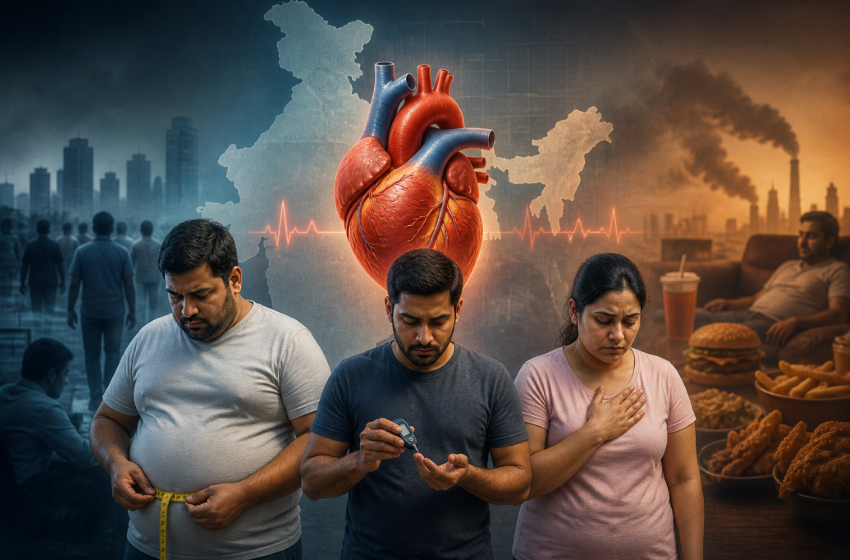
According to ekincare’s India’s Silent Health Crisis Report (2023–2025)—based on data from over 4 lakh health check-ups—more than one in three Indians is already showing early signs of lifestyle-driven diseases such as diabetes, heart disease, and obesity.
This is not a projection. It is already happening.
What makes it more alarming is not just the scale of the risk, but the fact that most people feel perfectly healthy while these conditions silently progress.
A Nation Under Metabolic Strain
The findings paint a consistent and troubling picture of widespread metabolic imbalance:
- Over 36% of Indians are vitamin deficient, pointing to deep nutritional gaps despite food availability
- 1 in 3 individuals shows obesity markers, signalling long-term lifestyle risk accumulation
- 31.7% have abnormal cholesterol levels, increasing cardiovascular disease risk
- Nearly 1 in 3 Indians is at risk of diabetes, based on HbA1c and fasting blood sugar indicators
- 16.4% suffer from iron deficiency, while liver, thyroid, and kidney stress markers continue to rise
Taken together, these are not isolated health issues. They represent a systemic shift toward chronic disease at a population level.
The Silent Transition: From Health to Disease
The most concerning insight from the report is not any single statistic—but the pattern they form.
India is moving from a symptom-driven health model to a silent-risk model, where diseases develop long before diagnosis. By the time clinical symptoms appear, significant damage is already underway.
This shift is why experts are calling it a “silent crisis”—not because it is small, but because it is largely invisible in everyday life.
“Warning Signs Most People Ignore”
Commenting on the findings, Kiran Kalakuntla, CEO & Co-founder of ekincare, warned that India is dangerously underestimating early health signals:
“Millions of people are going about their lives without realising that their bodies are already sending out warning signs. One in three people don’t get enough vitamins, cholesterol levels are crossing dangerous thresholds, and diabetes risk is steadily rising. These are not hospital numbers—these are everyday people who currently feel fine. That is what makes this a silent crisis.”
He further stressed that prevention must replace reaction in India’s healthcare approach:
“The best time to help someone is before they become a patient. Preventive healthcare is not a privilege anymore—it is an obligation for employers, policymakers, and individuals alike.”
India Is Not One Health Story—It Is Many
The report also exposes deep regional disparities, revealing that India’s health crisis is uneven but widespread.
- Vitamin deficiency hotspots: Rajasthan (43.9%), Karnataka (39.9%), Gujarat (39.9%)
- Diabetes risk zones: Andhra Pradesh (56.9%) and Odisha (42.5%)
- Cardiovascular risk clusters: Haryana (34.9%) and Karnataka (33.7%)
Andhra Pradesh’s diabetes risk—nearly 57%—is particularly striking, almost double the national average.
These numbers highlight a critical truth: India’s health risks are not uniform, and neither can be its response.
The Real Crisis Is Delayed Detection
The report’s most important conclusion is also its most uncomfortable one: India is not lacking treatment capacity—it is lacking early detection.
Vitamin deficiencies, cholesterol imbalances, and early diabetic markers are all preventable or manageable if caught early. Yet, they are largely going unnoticed until they become full-blown chronic diseases.
This delay is quietly driving India’s healthcare burden upward—both medically and economically.
A Preventive Future or a Chronic Burden
India now stands at a crossroads.
One path leads to a preventive healthcare ecosystem built on screening, early intervention, and continuous monitoring. The other leads to a growing chronic disease burden that strains families, employers, and the healthcare system.
The data suggests that the shift has already begun. The question is whether India can respond fast enough to reverse it.
Because this crisis is not waiting for symptoms.
It is already inside the system.
