

Finding Meaning in the Ordinary: Sanjana Saksena Chandra on The Universe Is Explosive

Saurabh Tankha
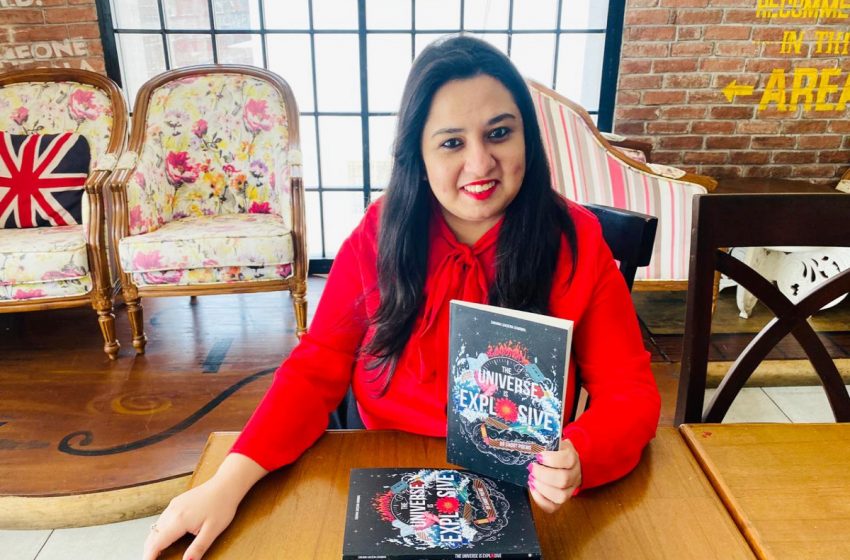
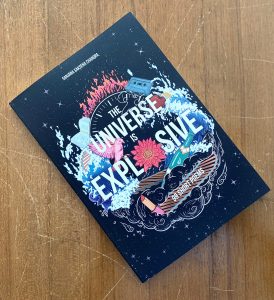
From lights, fans, keys, lipstick and handbags to metaphysical like love, dreams and death are all a part of Sanjana Saksena Chandra’s new collection of poems in a poetry book titled The Universe is Explosive. Launched digitally yesterday, the book is a collection of 99 short poems, each no longer than eight to 10 lines, which brings out the life lessons that surround us, that are hidden in plain sight.
Says Sanjana, “The Universe Is Explosive is a collection of poems inspired by everyday items. Things that are so ordinary that we don’t think twice about them. Through these poems, the message I primarily try to give is everything has a deeper meaning if we change the way we look at it. The poems are a tribute to perception. I have deliberately kept the format short. The objects include keys, fans, lights, candles, grocery stores among other more intangible and profound things such as love and death. Each poem is designed to make one think and look beyond the obvious.” More from her:
What or who was the inspiration behind writing this book?
Many of the poems have been are inspired by objects at home. They all became themes in the book and all of them were born while I was either cooking or cleaning or fixing my cupboard. I have a tendency to overthink and while this is not ideal, it does help when you have an active imagination. The book was already in the works when lockdown began but many of the poems were written, rewritten during it because just being at home and in societal isolation helped me think deeper. My earlier book had long-form poetry based largely on mythology or social issues, this one is entirely different though you might see glimpses of those messages as well.
How and when did writing poetry happen to you?
I grew up in a family of avid readers, where my dadaji and father nurtured my love for books through bedtime stories. That early exposure sparked my passion for storytelling, and I began writing at nine—mainly poetry, along with stories and articles.
I’ve always been drawn to the simplicity and depth of verse. Studying English literature deepened my understanding of poetry across eras, while journalism sharpened my observation and storytelling skills. Both shaped my voice as a poet.
Though I worked in journalism and later marketing, I always wanted to be a published poet. In 2019, I finally made that shift, publishing Sisyphus is Happy, followed by The Universe Is Explosive, and I continue to write more.
Any poet who inspired you to write?
Poetry and storytelling come from the soul, not just the head or heart. For writing to truly connect, it needs a “soul”—a balance of thought, emotion, character, and experience. Whether fiction, non-fiction, or poetry, a strong work is one where all these elements come together in harmony.
The word “creative” to you is…
…freedom. Creativity is beyond boundaries. One need not limit their imagination, thoughts or ideas while being creative.
What does it take to be a good poet?
Poetry, for me, is deeply personal and emotional rather than intellectual. Unlike prose, it doesn’t follow a fixed structure or promise a story. Instead, it reflects a poet’s perception, emotions, and thoughts, aiming to evoke feeling in the reader.
While traditional poetry may not be widely read today, it thrives in pop culture through songs, rap, and slogans. Its strength lies in its freedom—there are no fixed rules or limits to how words can be used.
Future plans…
Right now, I’m focussing on bringing this book to the readers in as many ways as possible. I’m also working on a fiction novel which I have been researching and developing for around a year now. Hopefully, I’ll be able to finish that soon and initiate the process of getting it published. I’m also keen on influencing children to read more. I want to help them develop creative writing skills.
