

Debeshi Gooptu’s Gurgaon Diaries Captures the Quirks and Contradictions of Gurugram

Rajkumari Sharma Tankha
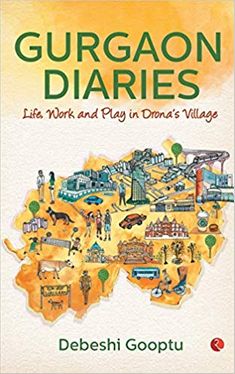
Lest you are mistaken, Debeshi Gooptu’s Gurgaon Diaries (Rupa, 226 pages, Rs 295) is not in a diary format despite its title. Rather it is a collection of small stories, anecdotes to be precise, presented randomly — each one driving home the point that in spite of being an IT hub sporting multi-storied buildings and MNCs, Gurgaon (now Gurugram) is still a ‘village’ at heart as it was before the IT boom happened.
A Humorous Portrait of Gurugram’s Contradictions
Though the author has not been able to portray the city in its full esteem, she sure has managed to weave in a hilarious narrative, taking potshots at almost everything that happens in the Millennium City. Nothing has escaped her eye, be it shoppers or fitness freaks, young enthusiastic entrepreneurs or the nouveau rich flaunting their greens at restaurants while being totally oblivious of their unruly kids. With her wry sense of humour, Debeshi has taken a dig at almost every one who lives here.
Gurgaon, just like Noida, its cousin from UP, is a story of contradictions. So you have swanky malls and skyscrapers standing tall on the sides of pothole-ridden roads, battery and cycle rickshaws vying with hi-end cars on the roads and roadside chhole-bhaturewalaas competing with branded eateries in plush malls. The Millennium City is indeed a paradox in itself and this is something the author has managed to portray, and very well at that.
A Sharp Yet Relatable Slice of City Life
Debeshi has been living in the city for long (she moved to Gurugram after her marriage 25 years back) and this book is a product of her keen sense of observation.The author divides the book into three sections — Life, Work and Play — and fills each one with short stories about life in the city. One good thing about the book is that you can open any page and begin reading. Each story is independent of the others, and is equally interesting.
Through her stories written in simple and direct language, the author has highlighted many serious issues as well like the influence of immigrants on the local population and culture, invasion of the foreign culture and lack of basic amenities in the city.
Though I feel the residents of Gurgaon or Gurugram cannot be all bad, it is a fact that writing about goody, goody people (which I am sure Gurugram has in plenty) wouldn’t have made such an interesting read.
Every resident of Gurugram should read this book, if only to discover whether Debeshi Gooptu has featured them in it, and pull up their socks if she has.

1 Comment
Great