

Kumar Sharma: The Kathak Dancer Bringing Classical Dance Closer to Today’s Youth
- SANDIP SOPARRKAR
 Life&More
- 0
- 8 minutes read


One of my favourites, today’s youth dancing icon, Kumar Sharma is a gifted and versatile dancer whose artistry reflects both deep-rooted tradition and a vibrant contemporary spirit. His graceful movements, expressive abhinaya, and powerful stage presence have earned him appreciation from audiences and connoisseurs alike. With dedication, discipline, and an unwavering passion for dance, he continues to explore new dimensions of his artistic journey. Kumar Sharma stands as an inspiring example of how commitment and creativity can elevate dance into a deeply moving form of expression. Excerpts from his interview:
How did your dancing journey begin?
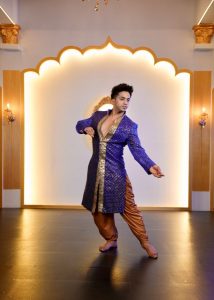
Singing and dancing have always been inseparable parts of my life. Initially, I focused on vocals because that was what my parents wanted for me. My journey into dance began in the fifth grade when my school dance teacher, Pt. Shri SitaRam ji, noticed my voice and started casting me as a background singer and harmonium player for his Kathak choreographies.
Watching him teach while providing the music made me curious about dance. Around the same time, I watched Madhuri Dixit ji in Devdas and suddenly realised that this was the same art form my teacher performed. That was the moment I fell in love with Kathak. I trained under SitaRam ji for six years until his passing, while continuing my vocal training with Smt. Shakuntla ji and Shri Sanjeev Sharma ji. Later, Pt. Divyang Vakil ji blessed me with knowledge of Taal Vidya. I consider myself a product of the combined wisdom of all my gurus.
You pursued higher education in both Kathak and Music. How did that happen?
I came to Mumbai with the single-minded ambition of pursuing my Master’s in Dance. However, the restrictions at Nalanda meant I could not perform in outside shows or television, opportunities that were extremely important to me at that stage. My father had given me two years to establish myself in Mumbai before returning to Punjab.
My close friend and guide, Jazim Sharma, suggested that I pursue a Master’s in Music at Mumbai University instead. I auditioned by singing Raag Bihag, secured admission and received hostel accommodation. At the same time, I completed my Visharad in Kathak from Pracheen Kala Kendra, Chandigarh. Those two years taught me how to balance music, dance, education and professional ambition.
You are known for your physique and appearance. Is having a sculpted body an advantage for a male dancer?
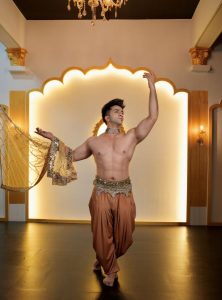
I have always believed that a male dancer’s body is his primary ornament. While female dancers have makeup and jewellery as part of their stage presentation, a male dancer’s physical presence becomes especially important. Your body is your makeup and reflects your discipline.
As performers, we want the audience’s eyes to remain on us. Therefore, everything matters—from physique and posture to costume and presentation. My experience in reality television reinforced this belief. Looking the part can certainly complement the performance, but ultimately, the body must serve the art.
You have been part of several reality shows. Which one remains closest to your heart?
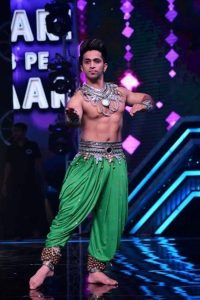
Dance Deewane remains the most significant chapter of my reality-show journey. Television had enormous power when I started, and I feel fortunate to have been at the right place at the right time.
For three months, I lived a childhood dream of performing before my idol, Madhuri Dixit ji. By then, I had built a reputation through earlier shows, so the creative team trusted my artistic vision and gave me considerable freedom. I was even able to perform with live musicians on stage every week. Many of my performances received standing ovations, making it one of the most memorable phases of my career.
Do reality shows still help dancers build their careers?
Absolutely, but the landscape has changed. A decade ago, reaching the Top 10 of a reality show could completely transform a dancer’s career. Television was one of the strongest platforms for creating recognition.
Today, OTT and social media have changed that equation. Television remains prestigious, but appearing on a reality show no longer guarantees sustained popularity or work. Artists now have to become their own PR managers and digital creators. Unless you are already established in Bollywood, social media plays a major role in building and maintaining visibility. The work continues even after the cameras stop rolling.
Critics often say reality shows contain scripted emotions and drama. What is your view?
I always say that the only true ‘reality’ in a reality show is the dance itself. When the cameras start and the music begins, there are no retakes. If you lose your breath, trip or even get injured, you still have to continue performing. That moment is completely real.
The stories, jokes and emotional narratives may be created for television, but the talent and performance on stage are genuine. If you watch for the dance, you are seeing the reality; if you watch only for the drama, you are seeing only one side of it.
Do you feel the focus on lifts, stunts and ‘wow moments’ is making audiences miss real dance?
I respect every genre, whether Bollywood, Hip-Hop, Latin or Western dance. However, I do feel that risk factors sometimes overshadow artistry. Lifts, gymnastics and stunts can be spectacular, but they should not replace the soul of dance.
I have always tried to remain committed to dance-heavy performances. Even in an environment where tricks often attract attention, I have been fortunate that audiences appreciate performances rooted in pure dance. For me, the integrity of the art form should always come first.
You have built a successful dance company, Kathak Rockers. Where do you see yourself five years from now?
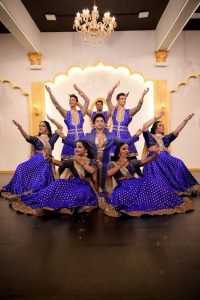
Kathak Rockers is the heartbeat of my mission. My so-called Kathak Fusion is actually a ‘honey trap’—my way of bringing young people back to our roots. I realised that if I wanted the younger generation to connect with Kathak, I had to meet them where they were.
Whenever I conduct a workshop, I teach Kathak first and then introduce Kathak Fusion. When I am booked for a fusion performance, I often present pure classical Kathak first. Surprisingly, audiences frequently become more captivated by the traditional performance and later ask me for a classical recital.
My dream is to take Kathak Rockers across the world, to the biggest stages and most iconic festivals, while inspiring young people to discover India’s heritage. I feel I am already living my dream and leave the rest in Krishna ji’s hands.
What is your advice to young dancers who dream of becoming reality-show stars?
Social media has made talent more visible, but it has also created the illusion that success can come without a strong foundation. I always tell young dancers that content without craftsmanship is temporary.
Do not simply copy what you see online. Understand the riyaaz behind it. True art cannot be rushed. If you dedicate yourself to your craft with sincerity and discipline, the world will eventually recognise you. A slow journey often creates a longer, more respected career than overnight success.
Sandip Soparrkar holds a doctorate in world mythology folklore from Pacific University USA, an honorary doctorate in performing arts from the National American University, He is a World Book Record holder, a well-known Ballroom dancer and a Bollywood choreographer who has been honored with three National Excellence awards, one National Achievement Award and Dada Saheb Phalke award by the Government of India. He can be contacted on sandipsoparrkar06@gmail.com
