

The Good Indian Guide to Surviving a Lala Company: A Humorous Take on Workplace Reality

Sukriti Tankha
It is the unusual name that drew me towards the book – The Good Indian Guide to Surviving A Lala Company. But another reason is that a couple of older relatives have worked in such companies, and I often heard them sharing anecdotes from their offices—some hilarious, others downright frustrating. At times, I wondered whether those were real incidents or exaggerated tales. So when I got a chance to read this Lala Company, I more than welcomed it. Having read it, I can truly empathise with my uncles!
Straightforward Account of a Lala Company Culture
The book is a straightforward account of the happenings in a Lala Company—that is, a family-run business in India. Not just this, author Rajiv Gupta also shares practical ways to cope when you are employed in such a work environment.
Divided into chapters based on key stakeholders in a family-run business, the book clearly lays out the power dynamics between the lalaji, munimji, chamcha, professionals, heirs, and others. It instantly reminds one of old Hindi movies, often woven around similar characters and hierarchies.
Humour Meets Workplace Reality
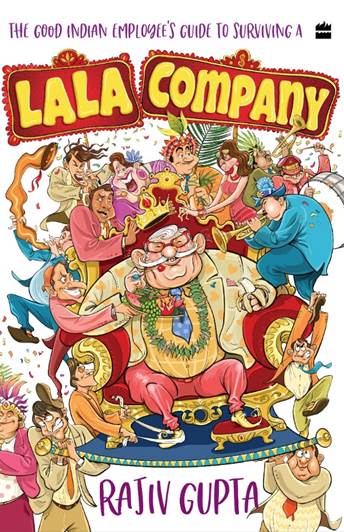
Lala Company is a hilarious take on Indian family businesses. The quirky cartoons that accompany the text make it even more engaging. While the book makes you smile and laugh, it also nudges you to reflect on how people in positions of authority can sometimes act unfairly, even at the cost of someone’s career. It raises an important question—why don’t such individuals realise that every action has a reaction? Karma, after all, has its own way of balancing things out.
Fiction, Exaggeration or Reality?
Honestly, some situations did feel slightly exaggerated—perhaps the author took creative liberty to add drama. But that is pardonable. What deserves appreciation is how the author presents even toxic workplace situations in a humorous and digestible manner. That, in itself, is a skill he handles well.
What stands out are the ‘wisdom nuggets’ at the end of each situation. These insights help readers process the scenario in a more wholesome and practical way, making the book not just entertaining but also useful.
The book is a must-read for all working professionals, whether or not they are part of a Lala Company. Such workplace dynamics can exist anywhere—even in large corporate offices and MNCs. After all, human behaviour remains the same across environments. Your boss could very well be a mix of Bauji and Munimji—wielding authority while controlling your growth and incentives. Chamchas, as we know, are omnipresent, and heirs can easily be compared to the most-favoured employees in any organisation.
In fact, even aspiring entrepreneurs can take away valuable lessons on the kind of people they should—or shouldn’t—have in their inner circle.
So you see, while the book presents itself as a guide to surviving a Lala Company, in reality, it teaches you how to navigate workplace dynamics anywhere. As I said, people are the same everywhere—and so are their behavioural patterns.
