

Reclaiming Shikhandini: Ashwini Shenoy Retells the Untold Story of Mahabharata’s Warrior Princess

Saurabh Tankha
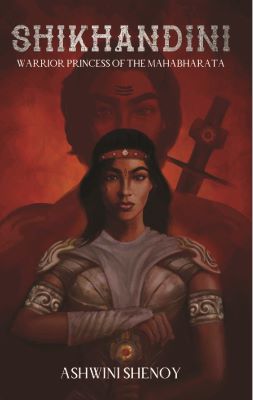
History would have been written differently if she wouldn’t have been there. The firstborn of King Drupada, she was trained to be a warrior from early childhood. A Rathi, and then an Athirathi, a warrior of unmatched valour and skill, the princess of Panchal singlehandedly defeated the hundred Kaurava brothers in a battle. Though centuries have passed since then, her name is still uttered in hushed tones – eunuch, hijra, neither man nor woman…
In modern era when the third gender is finally gaining acceptance and identity, author Ashwini Shenoy felt it was time Shikhandini’s story was retold in all its tragic glory. Through her first full length book, Shikhandini: Warrior Princess of The Mahabharata (Platinum Press; Rs 249), Shenoy retells the epochal events. Excerpts from an interview with the author…
Why Shikhandini?
Having read several retellings of the Mahabharata, I often felt that some of the characters never got the limelight that they deserved. Shikhandini is one such character. In fact if not for her history would have been very different from what we know today. Why then was she not celebrated? Why was her story forgotten over the centuries?
Was it because she was not born a man? Or was it because she chose to make such an ultimate sacrifice for the sake of Dharma? Or was it because she belonged to the third gender and did not fit into the societal framework that we have today? This is what triggered the idea behind the book.
When did the idea of creating a book on Shikhandini strike?
It was nearly three years ago. While reading one of the many versions of the epic, I realised that like all other retellings, here too Shikhandini’s part was kept minimal, just a couple of lines at the end while narrating the downfall of Maharathi Bheeshm in the Great War. I also realised that the story of her transformation from a woman to a man was always told in a very magical, unrealistic way.
How did you get access to authentic information?
It took me over a year to go through everything available on Shikhandini and her role in the Mahabharata. Apart from reading different retellings and identifying the common facts, my main source was answers from Indian mythology enthusiasts on Quora and other platforms. The only filter I had in mind was to retain rational information. While this was the foundation of the book, most of the content is my interpretation of what might have been her story and not just a collection of what is already known about her.
Why has no one ever attempted to write or written about Shikhandini?
I know of one other book that has spoken about Princess Amba of Kashi and Shikhandini who is believed to be the reincarnation of the former. It is a short story by Devdutt Patnaik in Shikhandi: Ánd Other ‘Queer’ Tales They Don’t Tell You. Apart from this, I do not know of any other novels solely dedicated to Shikhandini and her life.
I think it is mainly because “the third gender” is still a very sensitive topic. And, it’s not just in India across the world. Writing a book with a character belonging to the third gender as the protagonist is quite challenging. Also, it may or may not draw the attention of all groups of readers.
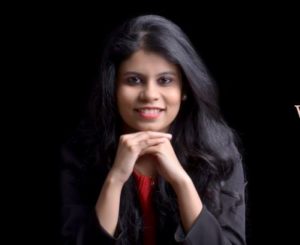
An engineer and a writer. How do you manage time between the two ?
Most of my writing happens while commuting to and fro office. I spend nearly three hours a day commuting and most of this time I am either reading or writing. I make it a point to write at least 300-500 words per day. On weekends, I outline the chapters that I would be working on for the next five working days.
Do you prefer writing about mythology or are there other genres too that interest you?
I like to write about intriguing characters regardless of the genre. My first published short story Serendipity spoke about love, forgiveness and second chances. The book I am currently working on is not of the Mythology genre either.
In your opinion, what is that one thing which is the most important part of a book?
To me, the most important part of any book is the ability to hook the reader till the very end. Everything else is secondary. There is nothing like the feeling that remains with you once you put down a book after reading it.
