

Rameshwar Broota: Master of Technique and Reinvention
- INTERVIEW VISUAL ARTS
 Life&More
- 2
- 6 minutes read

Saurabh Tankha
Spend half an hour with artist Rameshwar Broota and the iconic Hindi film song from Shor—jeevan chalne ka naam, chalte raho subah aur shaam—inevitably comes to mind.
While Rajkavi Inderjit Singh Tulsi originally wrote these lyrics for a struggling father on screen, they perfectly capture Broota’s relentless artistic journey in real life.
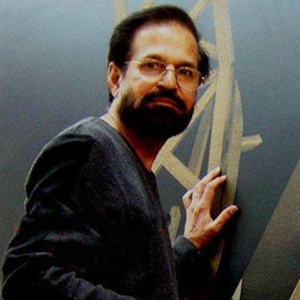
The life and works of the 1941-born artist echo another line from the same song: samay se haath mila mitra. Like celebrated filmmaker-lyricist Gulzar, Broota has continuously reinvented himself over decades. He has evolved with time, experimenting with mediums and techniques while refining his distinctive artistic voice.
A graduate in Fine Arts from the Delhi College of Arts in 1963, Broota currently serves as the head of department at New Delhi’s Triveni Kala Sangam.
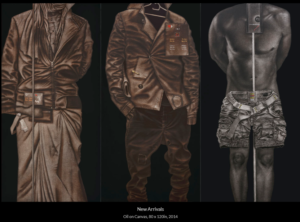
“After graduation, I worked as a part-time lecturer at Delhi College of Art, taught at a government school on Janpath, and at Jamia Millia. I used to leave my Rajouri Garden home at 5:30 am and change three buses to reach my first destination,” recalls Broota. Known for his striking depictions of the male body—both muscular and emaciated—his work reflects themes of time, decay, and human existence.
Over the years, Broota has perfected a unique technique: he applies multiple layers of coloured paint and then meticulously scrapes away the surface using a sharp knife to reveal luminous, textured images beneath.
When Triveni Kala Sangam offered him a teaching position in 1967, he accepted immediately. “It allowed me to stay in one place as classes were held in the mornings and evenings. I left everything and moved here,” he says.
He was also offered accommodation on the premises. “Earlier, there were four quarters where the new block stands today. When American architect Joseph Allen Stein redesigned Triveni in the mid-1970s, residences were built on the top floor,” he adds.
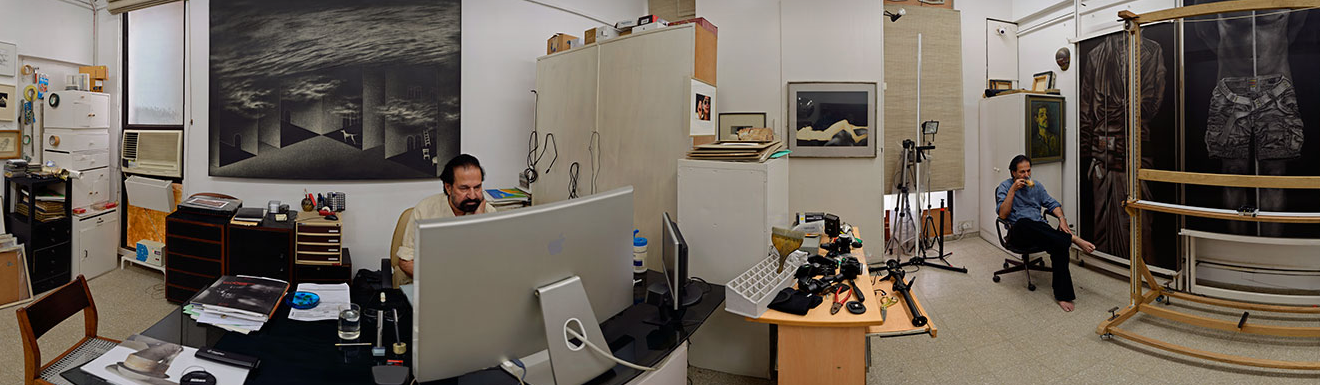
Even today, Broota’s routine revolves entirely around art. He finishes classes around 9 pm, returns after dinner and a brief news break, and works in his studio until midnight or beyond. “During my college days, I often came here and wished I could work in such a creative environment. And it happened,” he reflects.
How has his five-decade-long association with Triveni been? “Very fruitful, very satisfying, very creative,” says Broota. Despite his success, he remains humble. He credits his elder brothers as better artists who could not pursue art due to family constraints.
“I was fortunate that they convinced our father to let me study art,” he says. “Although, I once aspired to join the defence forces,” he smiles.
At 77, Broota’s energy rivals that of a young artist. His studio houses a blank black canvas awaiting his next creation, alongside experimental glass-like objects scattered across tables. A large Mac computer—his “creative associate”—also plays a central role in his process.
“I love experimenting with mediums. In the 1990s, I bought a computer, scanner, and printer to test colour schemes digitally. Over time, I upgraded my tools,” says Broota. He has also explored filmmaking, creating short films such as The Body, Biography of Life, and Shabash Bete.
The intriguing glass-like forms in his studio reveal yet another layer of innovation.
“I once used a paper shredder and liked the resulting shapes. I wondered how to preserve them. After researching, I discovered epoxy resin—a liquid that solidifies while remaining crystal clear. I began layering resin with paper and text, building forms with up to 30 layers,” he explains. These creations, often sculptural, reflect his continued experimentation with materials and form.
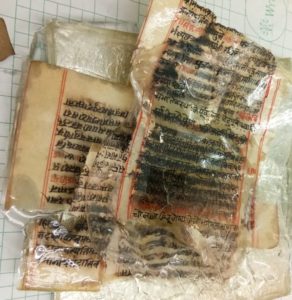
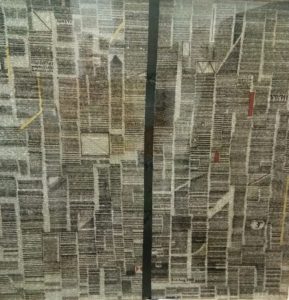
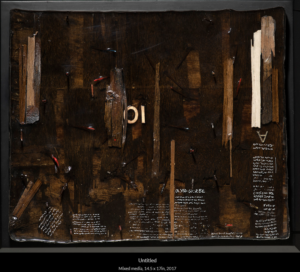
As I prepare to leave, I can’t resist capturing a few glimpses of Broota’s work. These are the pieces that the world will see later this year at an upcoming exhibition.

2 Comments
Wow👌👌Quite inspiring write up on a great super senior artist.. Salutes to him👍👍
Are these d pics of epoxy sculptures mentioned in d article?
yes