

Why a Fire Extinguisher Isn’t Enough: The Complete Fire Safety Guide for Modern Homes
- L&M SPECIAL
 Life&More
- 0
- 7 minutes read


Subodh Bhardwaj
Most people think they have fire safety covered because there is an extinguisher somewhere in the house. That single cylinder of pressurised foam has become a symbol of fire preparedness. But, the fact is it is just one small piece of a much larger picture.
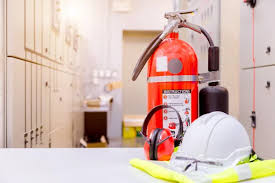
Residential buildings today carry a very different set of fire risks than they did two decades ago. Dense apartment towers, shared electrical infrastructure, LPG cylinders tucked in tight kitchen corners, inverter batteries in enclosed spaces, and buildings where dozens of families share a single stairwell. A proper fire safety approach for these spaces cannot start and end with an extinguisher. It has to be a full ecosystem.
The Detection Layer
The first line of any serious fire safety setup is detection. Smoke alarms and heat detectors are the reason families survive fires, not because they fight the fire, but because they give people time to get out. In residential buildings and apartments, interconnected alarm systems are particularly valuable. When one unit detects smoke, every alarm in the building should sound.
For individual homes, a basic ionisation or photoelectric smoke detector in the kitchen, bedroom corridors, and near the main electrical panel is a reasonable starting point. Apartments need to think about this at the building level, which means the housing society committee and the builder both have a shared responsibility to maintain functional alarm systems, not just install them and forget.
Smart fire detection systems are also becoming relevant in modern homes and high-rises. IoT-based smoke and heat sensors can now send real-time alerts directly to mobile phones, even when residents are away. Some systems also link with emergency contacts or facility management teams, helping cut response time and improve coordination.
Modern Fire Risks
Homes today use far more electricity than before, with constant charging loads, inverter systems, and high-powered appliances running for long hours. A growing concern is lithium-ion battery incidents from e-bikes, EV charging points in parking areas, laptops, and devices left charging overnight.
Unlike conventional electrical fires, lithium-ion fires escalate quickly, produce extreme heat, and are difficult to contain with standard extinguishers. This makes early detection and isolation even more important. It also requires building-level planning for EV charging safety, thermal monitoring in parking areas, and proper ventilation in spaces where batteries are stored or charged.
Equipment That Actually Works When You Need It
Extinguishers do matter, but only if they are the right type, in the right place, and in working condition. A dry powder extinguisher in a kitchen with a grease fire can do more harm than good. An ABC-rated multipurpose extinguisher handles most residential fire types and is worth having near the kitchen entrance, not inside it. The inside of the kitchen is where fires start; the entrance is where you stand to fight one safely.
Extinguishers need annual servicing. The pressure gauge might look fine but the seal, the hose, and the internal charge all degrade over time. Housing societies that manage bulk servicing for their entire building end up with far better compliance than those that leave it to individual flat owners. A fire safety audit, even a basic one, will flag expired equipment before it becomes a problem during an actual emergency.
Beyond extinguishers, fire blankets are an underrated piece of equipment for kitchens. They are cheap, simple, and extremely effective for containing a small pan fire or wrapping around a person whose clothes have caught flame. Every kitchen should have one within arm’s reach of the stove, not buried in a cabinet.
Exits Are Infrastructure
Exit planning is where most residential fire safety falls apart. In a single-family home, this means knowing that every person, including children, elderly family members, and domestic help, understands how to get out of every room. It means the window grilles in bedrooms have an emergency release. It means the front door lock can be opened in the dark, half-asleep, with smoke in the air.
In apartment buildings and housing societies, this problem scales up. Emergency staircases that are used as storage spaces, fire exit doors propped open with bricks for ventilation, or corridors where families have placed shoe racks and bicycles, these are not minor conveniences. They are obstacles in an evacuation route. When panic sets in and visibility drops, people move through muscle memory. If that path has obstacles, people fall.
Emergency signage and floor lighting matter too. A lit exit sign that residents walk past every day without noticing becomes the only guiding light during a power failure. Societies that have invested in low-level emergency lighting along stairwells report significantly smoother evacuation drills. It is a small investment with a disproportionate impact.
Drills Are a Must
A well-run evacuation drill for a housing society covers several aspects. It identifies the people who will need assistance, the elderly resident on the third floor who has a hard time with stairs, the family with a toddler who takes longer to mobilise. FurtherIt reveals the real bottlenecks in the building’s exit flow. It also gives residents a mental map they can fall back on when they are frightened and not thinking clearly.
Housing societies should conduct at least one full evacuation drill every year, ideally facilitated by trained fire safety professionals. The value is not just the exercise itself but the debrief afterward, where the gaps get identified and fixed before they matter.
For individual homes, a simpler version works just as well. Walk the family through what to do if the kitchen catches fire at night. Where do they go? Who calls for help? What is the meeting point outside the building? Children especially benefit from this kind of grounded, practical conversation.
What Housing Societies Need to Own
The management committee of a housing society carries more responsibility here than most realise. Fire safety compliance in multi-storey buildings in India is governed by state fire service regulations and the National Building Code, which have clear requirements for sprinklers, hydrants, alarm systems, and exit widths beyond certain building heights. Regular audits by certified professionals help societies stay compliant and identify problems before they show up during an inspection or, worse, an actual emergency.
Annual maintenance contracts for fire systems are another practical step that many societies skip to cut costs. Fire alarm panels, hydrant systems, and sprinkler networks all need regular testing and servicing. A fire alarm system that last worked correctly three years ago is not a safety feature. It is a false sense of security.
Increasingly, Building Management Systems (BMS) are becoming the backbone of integrated safety in larger residential complexes. A well-designed BMS can connect fire alarms, smoke detectors, sprinklers, evacuation lighting, and even access control systems into one central dashboard. In the event of an incident, it enables real-time monitoring, automatic system triggers, and faster coordination between security staff and emergency responders.
Subodh Bhardwaj is Chief Operations Officer, Navaratna Concepts
Private Limited – a fire safety solutions company
