

Nagaland Fossil Leaves Reveal Ancient Link Between Antarctic Ice Formation and India’s Monsoon


Team L&M
A new study has established a connection between the formation of Antarctica around 34 million years ago and the early evolution of the Indian monsoon system that allowed lush forests to flourish across the subcontinent.
The discovery of well-preserved fossil leaves from the Laisong Formation in Nagaland, dating back about 34 million years, suggested that the region once had a warm and wet climate.
This led scientists from led by researchers from the Birbal Sahni Institute of Palaeosciences (Lucknow) and Wadia Institute of Himalayan Geology (Dehradun), both autonomous institutes of the Department of Science and Technology (DST) to carry out a detailed climate reconstruction and the results revealed something even more striking—very high rainfall and temperatures. The scientists started exploring what could have caused such extreme tropical conditions at that time.
They found the clue lay in the fossil’s age, which matched the period when massive ice sheets first began forming in Antarctica. This timing pointed to a global connection—suggesting that the growth of Antarctic ice may have shifted wind and rainfall patterns, bringing intense monsoonal rains to Northeast India.
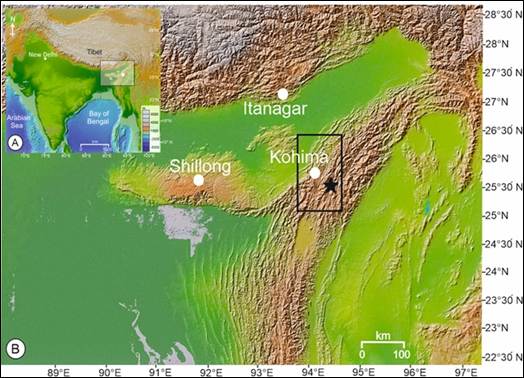
Fig 1 Locality in Nagaland (marked by star) from where the fossil leaves were collected
Study is published in journal
Their research is published in Palaeogeography, Palaeoclimatology, Palaeoecology. It reveals that the growth of Antarctic ice reshaped global wind and rainfall patterns. It shifted the Intertropical Convergence Zone (ITCZ)—a major rain belt—from the South Pole toward the tropics. So, India experienced exceptionally higher rainfall and warmer temperatures. This further resulte din evolution of the India monsoon system.
To uncover this story, scientists turned to an unusual witness: fossilized leaves found in the hills of Nagaland. The scientists used a method called CLAMP (Climate Leaf Analysis Multivariate Program). And they reconstructed past climates by studying the size, shape, and structure of these leaves. Their findings showed that Nagaland once experienced much wetter and warmer conditions than today. Strikingly, these results matched the global timing of Antarctic glaciation—linking ice growth at the South Pole with tropical rainfall in India.
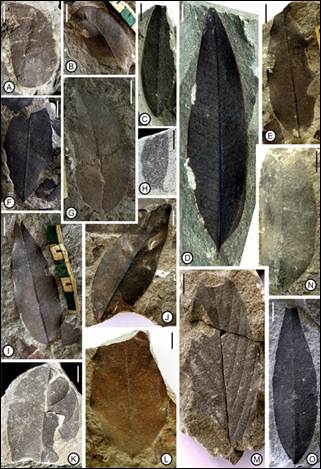
Fig 2 Fossil leaves collected from the Nagaland belonging to ~34 Million-year age used in the study
This discovery is more than just a tale of Earth’s deep past. It carries a warning for our future. As modern climate change accelerates Antarctic ice melt, the ITCZ may shift again, disrupting rainfall across the tropics. For India and its neighbors, this could mean profound changes in the monsoon. Monsoon is the lifeline for agriculture, water supply, and millions of people’s daily lives.
The study highlights that Earth’s climate is a global web. What happens in one corner of the world can reverberate across continents. We can better prepare for the warming future if we know what happened in past.
