

Indian Scientist Develops Low-Cost Automated Train Toilet Waste System for Indian Railways
- NATURE SUSTAINABLE LIVING
 Life&More
- July 17, 2021
- 0
- 8 minutes read

Team L&M
Indian scientist Dr R.V. Krishnaiah has developed an innovative automated toilet waste management system that offers a low-cost, efficient alternative to existing bio-toilets used in Indian Railways.
This new technology simplifies waste collection, reduces maintenance costs, and improves sanitation efficiency in moving trains.
Cheaper and More Efficient Alternative to Bio-Toilets
Current railway bio-toilets rely on anaerobic bacteria to decompose human waste. However, they often fail when passengers dispose of plastic, cloth, and other non-biodegradable materials, making maintenance difficult and costly.
Dr Krishnaiah’s system addresses this limitation by introducing an automated waste collection and segregation mechanism that can handle multiple types of waste more effectively.
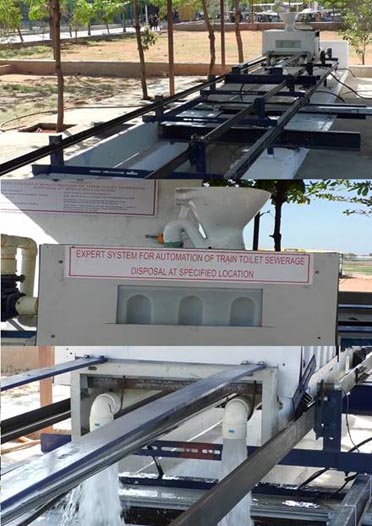
How the Automated Train Toilet System Works
Developed at Chebrolu Engineering College with support from the Department of Science & Technology (DST) under the Make in India initiative, the system uses a smart, sensor-based mechanism:
- A septic tank installed beneath the railway track opens automatically when a train approaches
- RFID sensors and readers installed on the train engine and track coordinate the process
- The system releases waste from onboard toilets into the tank in a synchronised manner.
- The tank closes automatically after the train passes
Waste Segregation and Processing Technology
Unlike traditional systems, this innovation separates waste at the source:
- The system collects human waste in one compartment.
- Plastic, cloth, and non-biodegradable waste are collected separately
- Human waste is processed further into usable outputs
- Recyclable materials are treated independently
This ensures better waste management, reduced environmental impact, and improved reuse potential.
Major Cost Advantage Over Existing Systems
One of the biggest advantages of this technology is its cost efficiency.
- Traditional bio-toilets cost around ₹1 lakh per unit
- Dr Krishnaiah’s system reduces the cost to approximately ₹15,000 per unit
This makes it a highly scalable solution for Indian Railways.
Patents, Testing and Industry Collaboration
The technology has already received five national patents and is currently in the testing phase.
Dr Krishnaiah has also partnered with MTE Industries to support large-scale deployment and commercial expansion of the system.
A Step Towards Cleaner Indian Railways
This innovation represents a significant step toward:
- Cleaner railway infrastructure
- Smarter waste management systems
- Lower maintenance costs
- Sustainable sanitation solutions
With successful implementation, this technology could transform how Indian Railways manages onboard waste, making train travel cleaner and more environmentally responsible.
