In just 47 days, Delhi-NCR recorded five earthquakes, raising concerns among residents about increasing seismic activity in the region. The strongest tremor struck on May 29, 2020, registering 4.5 on the Richter Scale, making it the first medium-intensity earthquake among the recent series. The other four fell under the low-intensity category.
Adding to the concern, seismologists confirmed another 2.9 magnitude earthquake at the same epicentre near Rohtak, Haryana, just 52 minutes later.
This sudden cluster of tremors has sparked an important question: Why are so many earthquakes occurring in Delhi-NCR, and should residents be worried?
Why Are Frequent Earthquakes Happening in Delhi-NCR?
According to Dr Anand Sharma, Deputy Director General of Meteorology at the India Meteorological Department (IMD) and Head of Northern India, there are two major scientific theories regarding repeated low-intensity earthquakes.
One theory suggests that smaller earthquakes release built-up energy from the Earth’s crust, potentially preventing larger tremors. The second theory indicates that multiple small tremors could signal the possibility of a stronger earthquake.
However, Dr Sharma stresses that earthquake prediction remains impossible with current scientific capabilities.
Why Earthquakes Cannot Be Predicted
Dr Sharma cites the example of the devastating 2009 L’Aquila earthquake in Italy, which measured 5.8–5.9 on the Richter Scale and claimed over 300 lives.
The disaster followed thousands of foreshocks and aftershocks, yet scientists could not accurately predict the main quake. This highlighted the limitations of modern seismology.
“We still cannot monitor the deep movements within the Earth’s crust directly,” explains Dr Sharma.
India’s Seismic Monitoring Efforts
The National Centre for Seismology (NCS) plans to drill a half-kilometre-deep borehole in Maharashtra to install instruments that can monitor underground tectonic activity.
This project could significantly improve India’s understanding of seismic movement and earthquake patterns.
Delhi-NCR Falls in a High-Risk Seismic Zone
Delhi lies in Seismic Zone IV, while the Himalayan belt falls under Zone V, making both regions highly vulnerable to earthquakes.
Historical data shows that these regions have experienced major earthquakes in the past, meaning future strong earthquakes cannot be ruled out.
Earthquake-Resistant Buildings Are No Longer Optional
Dr Sharma strongly recommends that all structures in Seismic Zones IV and V—including homes, offices, schools, and commercial complexes—must be designed to withstand earthquakes.
Countries like Japan have implemented advanced earthquake-resistant engineering, including:
Rubberised foundations
Shock absorption systems
Mandatory safety drills
Strict building compliance norms
India, however, still lags behind in seismic preparedness.
Growing Concern Over Construction in Noida and Greater Noida
The rapid construction boom across Noida and Greater Noida, particularly in the Yamuna catchment belt, raises serious concerns.
Many high-rise buildings stand in earthquake-prone zones, but questions remain about whether all developers have followed earthquake-resistant construction standards.
Supreme Court Guidelines on Earthquake Safety
A Supreme Court judgment dated December 5, 2014, directed the National Disaster Management Authority (NDMA) to launch nationwide awareness campaigns on earthquake preparedness.
The judgment also mandates:
Earthquake safety ratings for large buildings
Engraved metal plates displaying seismic resistance category
Real estate advertisements mentioning earthquake-resistant certification
Why Earthquake Drills Matter
Dr Sharma believes that public awareness and regular safety drills are just as important as stronger infrastructure.
Residents should know how to respond during a tremor by:
Taking cover under sturdy furniture
Staying away from windows
Using structural beams for protection
Evacuating safely to open spaces when possible
The Need for Safer Urban Planning
Experts also recommend:
Retrofitting older weak structures
Preventing unplanned construction
Ensuring open evacuation spaces around high-rise buildings
Final Word
While scientists cannot predict exactly when the next earthquake will strike Delhi-NCR, preparedness remains the strongest defense.
With Delhi located in a vulnerable seismic zone, investing in earthquake-resistant infrastructure, public awareness, and stricter building compliance is no longer a choice—it is a necessity.
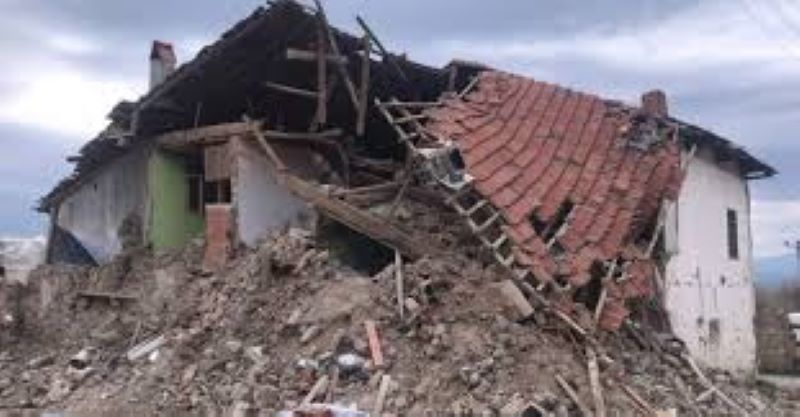
Earthquake photographs are for representational purpose only