

How ancient farmers profoundly changed Earth’s climate

Team L&M
Ancient farming practices led to a rise in the atmospheric emission of the heat-trapping gases. This rise has continued since and has profoundly changed Earth’s climate, claims a stud.
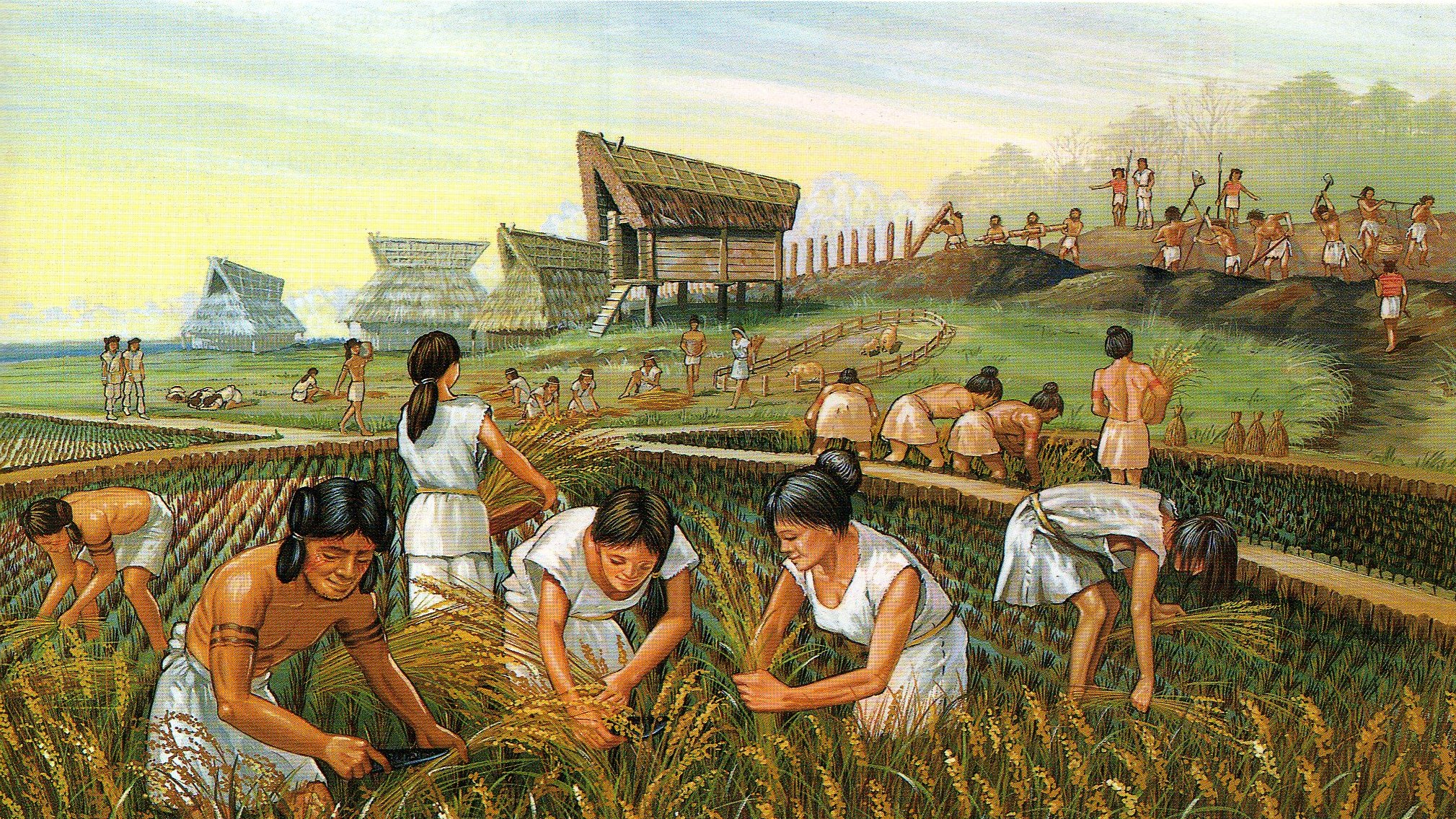
The study is led by researchers from the University of Wisconsin-Madison. It shows that ancient farmers cleared land to plant wheat and maize, potatoes and squash, flooded fields to grow rice and raised livestock. But unknowingly, they altered the climate of the Earth.
Without this human influence the planet would have likely been headed for another ice age, the researchers say.
“Had it not been for early agriculture, Earth’s climate would be significantly cooler today,” says lead author Stephen Vavrus. “The ancient roots of farming produced enough carbon dioxide and methane to influence environment,” he adds.
How Ancient Agriculture Unknowingly Altered Earth’s Climate
The study is published in the journal Scientific Reports. It is based on a sophisticated climate model that compares the current geologic time period (Holocene) to a similar period 800,000 years ago.
The results show that the earlier period, called MIS19, was already 2.3 degrees Fahrenheit cooler than the equivalent time in the Holocene, around the year 1850.
This effect would have been more pronounced in the Arctic. In the Arctic, the temperatures were 9-to-11 degrees Fahrenheit colder, say the scientists.
Human Activity May Have Prevented a New Ice Age, Study Suggests
Using climate reconstructions based on ice core data, the model also showed that while MIS19 and the Holocene began with similar carbon dioxide and methane concentrations, MIS19 saw an overall steady drop in both greenhouse gases while the Holocene reversed direction 5,000 years ago, hitting peak concentrations of both gases by 1850.
The glaciers have long served as Earth’s predominant source of freshwater.
But, climate scientists now agree that the next glaciation period is put on hold for the long, foreseeable future. “Even if we stopped putting carbon dioxide into the atmosphere, what we have now would linger,” says co-author William Ruddiman. He is a paleoclimatologist at the University of Virginia.
“We have maybe stopped the major cycle of Earth’s climate, but we are stuck in a warmer and warmer and warmer interglacial,” he stated.
IANS

1 Comment
[…] snakebites annually, and 50,000 to 60,000 lose their lives. These are not just numbers—they are farmers, daily wage workers, and rural families whose lives are cut short in preventable […]