

Sumeet Raghavan Reflects on Sarabhai vs Sarabhai, Three Decades in Entertainment and the Changing Industry
- ENTERTAINMENT INTERVIEW
 Life&More
- 0
- 7 minutes read

SAURABH TANKHA
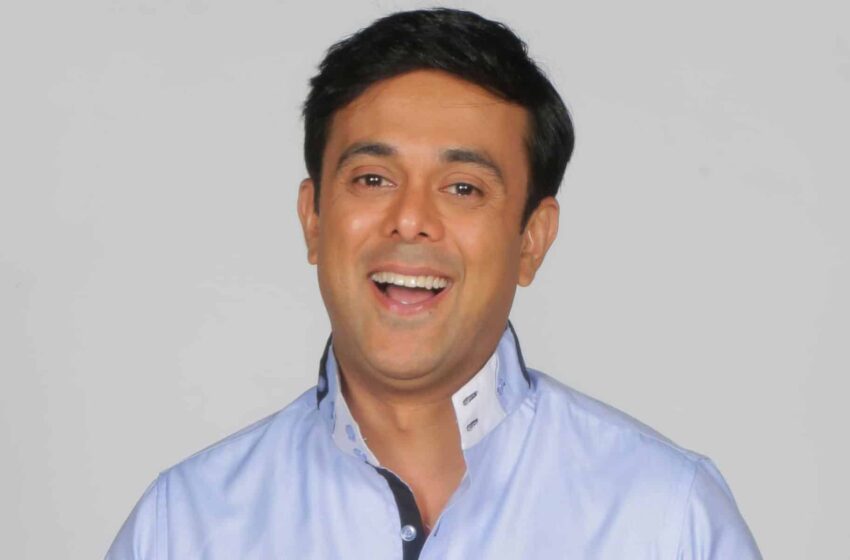
Actor Sumeet Raghavan may be best known as Dr Sahil Sarabhai from the cult sitcom Sarabhai vs Sarabhai, but his journey in the entertainment industry began long before the show became a household favourite. Born to a Tamilian father and a Kannadiga mother, the actor proudly describes himself as a true-blue Mumbaikar.
With over three decades in television, theatre, films and voice acting, Sumeet Raghavan has witnessed the entertainment industry evolve dramatically. In a conversation with Saurabh Tankha, he reflected on his early days, career struggles, the success of Sarabhai vs Sarabhai and the changing face of content creation.
Sumeet Raghavan’s Entry into the Entertainment Industry
Sumeet entered the entertainment world in 1983. Interestingly, acting was not part of a grand plan. As an introverted child, his mother enrolled him in an acting workshop to help him become more confident and social.
“This workshop did wonders to my confidence,” he says.
Soon after, he landed a role in the Marathi television series Faster Fene, based on the popular fictional character created by noted children’s author Bhaskar Ramachandra Bhagwat. The show became hugely popular among Marathi audiences and opened new opportunities for the young actor.
Following its success, theatre veteran Sulabha Deshpande and Madhura Jasraj decided to remake the series in Hindi. Sumeet was retained and went on to shoot 26 episodes between 1986 and 1987.
Career Struggles and Survival in the Industry
Despite an early start, the journey was not always smooth. Like many child actors, Sumeet faced a difficult transition phase when he was no longer a child artist but not yet considered an adult performer.
“There was a lull since I was neither a child nor an adult,” he recalls.
During this period, he immersed himself in theatre. He even shifted from St Xavier’s College to DG Ruparel College because of its strong theatre culture and opportunities in Marathi theatre.
The years between 1991 and 1997 were especially challenging. Work opportunities were limited, and he and his wife, actor Chinmayee Surve, struggled financially.
To sustain himself, Sumeet took up voice-over and dubbing assignments. His voice was heard in several international films, including Blue Streak, Rush Hour 2 and Harry Potter and the Chamber of Secrets, where he dubbed for Tom Riddle and Lord Voldemort.
How Sarabhai vs Sarabhai Changed Sumeet Raghavan’s Career
A major turning point came when writer-producer duo Aatish Kapadia and JD Majethia approached him for a project after Khichdi.
That project eventually became Sarabhai vs Sarabhai.
“I said yes, and hence was born Dr Sahil Sarabhai,” he says.
Ironically, the show did not receive extraordinary ratings during its original run. However, over time it gained a devoted fan base and achieved cult status.
“I think it was way ahead of its times. But today, 17 years later, it is a monster of a show.”
Sumeet says Sarabhai vs Sarabhai was one of the first projects where he genuinely enjoyed every aspect of his work because the role was different from conventional television characters.
Why Sarabhai vs Sarabhai Season 2 Failed to Replicate the Magic
When the second season arrived in 2015, expectations were high. However, audiences did not connect with it in the same way.
According to Sumeet, there were two major reasons.
“The second season was on an OTT platform and we had changed the look of our set,” he explains.
Viewers missed iconic elements of the original Sarabhai home, including the famous Monalisa painting, pillars and clock. The visual familiarity that audiences associated with the show was gone.
Films, Television and Long-Term Contentment
Alongside television, Sumeet appeared in films such as U Me Aur Hum and Holiday. While both projects gave him visibility, he says they did not necessarily open new doors in the film industry.
Instead, he values creative satisfaction over chasing fame.
“Aatish and JD give you a feeling of contentment,” he says. “It is better to be associated with a production house with policy-driven and honest people like them at the helm of affairs.”
Sumeet Raghavan on the Changing Entertainment Industry
Having spent more than 30 years in the business, Sumeet believes the industry has undergone both positive and negative changes.
On the positive side, audiences today have access to an enormous variety of content. However, he also feels that technology has created information overload and reduced meaningful engagement.
“We indulge in everything except learning, which this medium can best get us,” he says.
He also believes society has become increasingly sensitive, making it difficult for creators to explore certain subjects without fear of backlash.
Social Media, Followers and the Future of Casting
One issue that concerns Sumeet deeply is the growing influence of social media metrics in casting decisions.
“Today, we are living for likes and followers. We have become followers of followers,” he says.
According to him, talent is gradually being overshadowed by digital popularity. Casting decisions are increasingly influenced by follower counts rather than acting ability because producers see social media audiences as guaranteed viewership.
“The chances of casting a person with 10 lakh followers are more. And this is quite a scary situation.”
Even after decades in the industry, Sumeet Raghavan remains one of the most respected actors on Indian television. From child actor to theatre performer, voice artist and television star, his journey reflects persistence, adaptability and a deep commitment to the craft of acting.
