

Why Emotional Intelligence Must Become a Core Part of Business Education

Dr Payal Kumar
In today’s fast-changing professional world, technical knowledge and analytical thinking alone are no longer enough to create effective leaders. A growing body of research, often referred to as the affective revolution, highlights that emotional intelligence (EI) is one of the most critical factors in leadership effectiveness and workplace success.
Studies consistently show that leaders with high emotional intelligence deliver better team performance, stronger workplace relationships, and improved decision-making outcomes. Recent neuroscience research further supports this, revealing that effective decision-making depends not only on logic and reasoning but also on the ability to process emotions effectively.
Recognising this, even global organisations such as UNESCO are advocating social-emotional learning as a crucial step toward achieving the United Nations Sustainable Development Goals.
Yet despite overwhelming evidence, emotional intelligence remains significantly underrepresented in business school curricula across the world.
The Overemphasis on Cognitive Intelligence
Most universities and business schools continue to prioritise traditional academic skills such as:
- Data analytics
- Corporate finance
- Strategic management
- Information technology
- Quantitative reasoning
These disciplines focus heavily on cognitive intelligence or IQ.
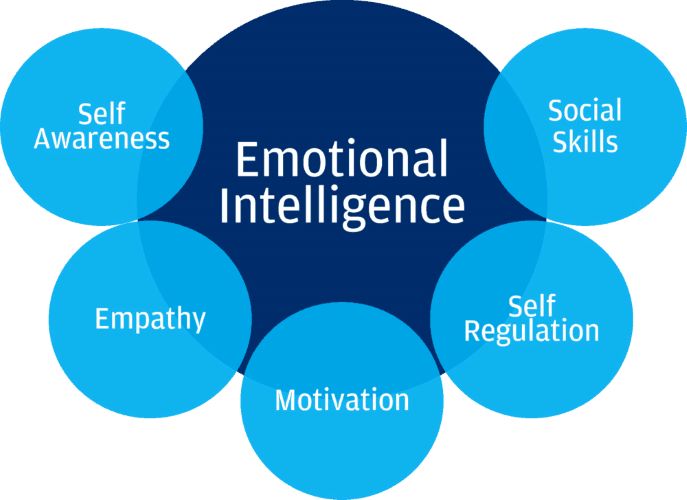
While these skills remain essential, they often overshadow equally important emotional and interpersonal competencies such as self-awareness, empathy, resilience, adaptability, and emotional regulation.
A few institutions have introduced specialised courses focused on well-being and emotional development. For example, Yale University offers The Science of Well-Being, while University of Bristol offers The Science of Happiness.
However, such courses remain exceptions rather than the norm.
Why Emotional Intelligence Matters in Leadership
Leadership today requires far more than technical expertise.
In a VUCA world — one defined by volatility, uncertainty, complexity, and ambiguity — leaders must navigate constant change while managing diverse teams and complex emotions.
Emotionally intelligent leaders demonstrate:
- Greater self-awareness
- Better self-control
- Stronger empathy
- Effective communication
- Improved conflict resolution
- Better decision-making under pressure
These qualities create healthier workplace cultures and improve employee engagement.
Modern employees respond far better to emotionally mature leaders than to outdated authoritarian management styles built on fear or rigid control.
The Need for Curriculum Reform
Management education must evolve.
Noted management scholar Henry Mintzberg has long argued that business schools place too much emphasis on analytical learning while neglecting the emotional, intuitive, and creative aspects of leadership development.
Traditional classroom learning often remains detached and informational. Reading textbooks and attending lectures may build theoretical understanding, but leadership cannot be mastered through theory alone.
Just as reading about swimming does not make someone a swimmer, studying management concepts alone does not create effective managers. Students need experiential learning that develops both sides of the brain — logical reasoning and emotional intelligence.
Integrating Emotional Intelligence into Business Schools
Business schools can foster emotional intelligence through structured practices such as:
Mindfulness and Meditation
Regular mindfulness sessions help students build focus, emotional regulation, and self-awareness.
Reflective Learning
Journaling and guided self-reflection encourage students to understand their emotional responses and leadership style.
Group-Based Emotional Learning
Collaborative projects that focus on empathy, listening, and conflict resolution can strengthen interpersonal skills.
Yoga and Stress Management
These practices improve resilience and mental clarity.
Teacher Training in Emotional Awareness
Educators themselves must develop emotional intelligence to positively influence students.
The concept of emotional contagion is especially relevant here. A teacher’s positive emotional state can enhance classroom learning, while stress, anger, or anxiety can negatively affect student engagement.
Preparing Leaders for the Future
The leaders of tomorrow must be more than analytically competent. They must be emotionally intelligent, socially aware, adaptable, and compassionate. Future workplaces will increasingly value managers who can build trust, inspire teams, and create emotionally healthy environments.
To prepare students for this reality, educational institutions must move beyond narrow academic models and adopt holistic leadership development. Emotional intelligence is no longer optional in management education.
As research continues to demonstrate its impact on leadership effectiveness, business schools must integrate emotional intelligence into mainstream teaching. Developing future-ready leaders requires balancing analytical excellence with emotional maturity.
By embedding mindfulness, self-awareness, empathy, and emotional resilience into business education, institutions can create leaders capable of thriving in an increasingly complex world.
Dr Payal Kumar is Dean, Research & Management Studies
at Indian School of Hospitality, Gurugram, Haryana
