

Lillete Dubey on Theatre, OTT, Television’s Decline and Her Creative Journey
- ENTERTAINMENT INTERVIEW
 Life&More
- 0
- 6 minutes read

SAURABH TANKHA
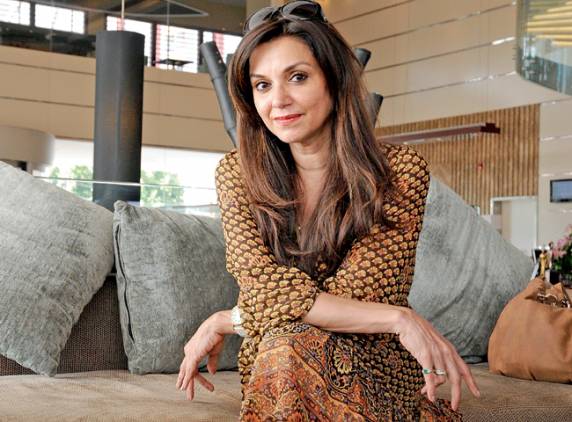
For actor, director and theatre veteran Lillete Dubey, the stage remains the purest form of storytelling. While audiences know her for memorable performances in films such as Zubeidaa, Gadar: Ek Prem Katha and Kal Ho Naa Ho, Dubey says her deepest connection has always been with theatre.
“My heart and soul will always belong to theatre,” she says. “The work and experiments you can do in theatre are unmatched.”
Dubey’s journey into acting began long before films entered her life. She participated in plays during her school and college years, initially as a hobby. Her passion, however, took shape when she joined acting coach Barry John’s theatre group.
“I owe it to Barry John who lit that passion in me when I was a teenager,” she recalls.
Coming from a non-filmi family, Dubey says films were never a natural career choice. In fact, she had not watched a single movie until she was around 10 years old. Even when filmmakers approached her in her early twenties after seeing her stage performances, her father was not enthusiastic about the idea of her joining films.
Instead, she continued with theatre, took up modelling assignments and hosted English programmes on All India Radio.
“Theatre is a human interaction performance art,” she says. “The beauty of performing art is a shared experience. There is energy between people who perform or narrate and people who listen or watch. That energy flow binds them together.”
For Dubey, nothing compares to the experience of watching the curtain rise in a packed auditorium. She believes theatre allows artists to constantly reinvent themselves and push creative boundaries.
“In this profession, you get a chance to perfect yourself not once, but over and over again,” she says. “The day I feel I’ve done my best is when I’ll pack my bags and leave the acting world.”
When preparing for a role, Dubey relies heavily on the script and relationships between characters rather than external references.
“I go by the script and what that character is about,” she explains. “My way is to crack a scene by rehearsing it out with my co-actors a few times. Once I’m doing it on stage or giving a shot, I do it spontaneously.”
She adds that she focuses more on understanding emotions than building a character through imitation.
“I prefer tapping into the emotion rather than the character. I always do it my way and not try to emulate anyone.”
While theatre continues to inspire her, Dubey is far less enthusiastic about the current state of Indian television. She feels the medium has failed to realise its true potential.
“The content created on television back then is seas apart from what is being aired these days,” she says. “As a medium of content, it is mediocre.”
According to her, television could have evolved into a far more powerful storytelling platform but missed that opportunity, while OTT platforms stepped in to fill the gap.
“Television could have been such a fantastic medium and done what OTT is now doing,” she says.
Away from sets and performances, Dubey prefers a quiet and private life. Despite being active in films, theatre and television, she consciously keeps her personal world away from the spotlight.
“I work, come back and switch off,” she says.
An avid reader, she also enjoys playing bridge, solving crossword puzzles and playing Scrabble. She hopes to return to learning classical music, which she studied for several years during her younger days.
The lockdown period also encouraged her to explore writing. After initially declining a publishing proposal, she eventually decided to work on a memoir based on her theatre journey.
“I like to challenge myself by doing different things,” she says.
Balancing professional success with family has been equally important to Dubey. She recalls choosing to stay with her daughter when she joined Yale University instead of attending the Venice Film Festival, where Monsoon Wedding had won the prestigious Golden Lion.
“Everyone told me that I should be in Venice, but I chose to be with my daughter,” she says.
Looking ahead, Dubey remains busy across films and OTT projects. Among the works she is particularly excited about is Tryst With Destiny, directed by Prashant Nair.
“It is an interesting take on the three words uttered by Jawaharlal Nehru during his midnight speech and where we stand almost 75 years later,” she says.
She has also completed work on Blind, alongside Sonam Kapoor, and is looking forward to projects including Call My Agent, Qubool Hai 2 and Divorce Indian Style.
Even after decades in the industry, Lillete Dubey remains driven by the same passion that first drew her to the stage. For her, the pursuit of better storytelling never ends.
“One needs to be true to self and not be afraid of experimenting,” she says. “That’s how you make your mark.”
