

From Odissi to a Global Stage: Yamuna Sangarasivam’s Journey from Black or White to Cultural Scholarship
- SANDIP SOPARRKAR
 Life&More
- April 25, 2026
- 0
- 12 minutes read


A distinguished Odissi dancer and academic, Yamuna Sangarasivam gained international recognition for her appearance in Black or White by Michael Jackson. Trained deeply in the classical Indian dance tradition of Odissi, she has been instrumental in bringing its expressive vocabulary to global audiences.
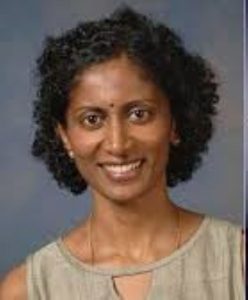
Her brief yet powerful presence in the iconic music video introduced millions to the grace and geometry of Indian classical dance. Beyond performance, Yamuna has also contributed significantly as a scholar, exploring themes of identity, culture, and diaspora. Her journey reflects a seamless blending of tradition and contemporary global expression.
Many remember you as the Odissi dancer from Black or White. How did the opportunity come your way?
At the time, I was pursuing my Master’s degree in dance ethnology at University of California, Los Angeles, deeply immersed in both academic and artistic practices.
I heard about an open call for dancers—specifically those trained in both ethnic and modern forms. It immediately struck me as a rare moment where my scholarly interests and artistic training could intersect. I almost didn’t audition, interestingly, until my mother encouraged me to see it as an ethnographic experience as much as a performance opportunity. That perspective changed everything.
The audition itself was intense—over 3,000 dancers showed up. When I got the call that I had been selected, I remember trying to stay composed on the phone, saying yes politely, and then the moment I hung up, I just screamed with joy. It was surreal.
What do you remember about filming the video?
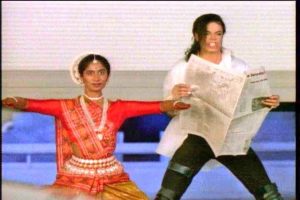
The shoot was unlike anything I had ever experienced. We filmed on a Los Angeles expressway that had been shut down, which in itself was extraordinary. There were stunt drivers weaving through moving cars while we danced—it required a high level of focus and trust in the entire crew. The shoot lasted about 14 hours, and yet there was an incredible energy throughout.
What stands out most, however, is the sense of purpose behind the work. It wasn’t just about dance; it was about representing cultural diversity in a powerful and visible way. The Odissi segment wasn’t treated as decorative—it had integrity, space, and presence.
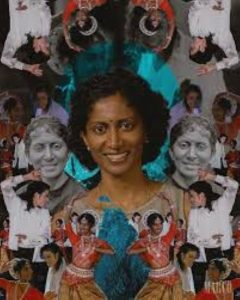
How was your experience working with Michael Jackson?
He was incredibly gracious, humble, and kind. There’s often a mythologizing of iconic figures, but what I encountered was a deeply attentive and respectful artist. He took the time to connect with the dancers, to understand what we brought to the performance.
One small but meaningful memory I often share is how he ensured my mother, who was present on set, was comfortable during the long outdoor shoot. He personally arranged for her to be taken care of, even bringing her a blanket when it got cold. That gesture spoke volumes about his character.
Did that experience influence your academic journey in any way?
Very much so. At the time, I was already studying the anthropology of dance, but being part of such a globally significant production gave me a new lens through which to understand performance. The video became a case study of sorts—an example of how popular culture can engage with themes of race, identity, and transnationalism.
Over the years, I’ve presented analyses of the video at conferences in musicology and performance studies. I continue to return to it as a text that invites critical engagement—how cultures are represented, how authenticity is negotiated, and how global audiences interpret such imagery.

Your work today spans anthropology, gender studies, and cultural analysis. How do you connect your artistic background with your academic research?
For me, there has never been a separation between art and scholarship. Dance, music, and performance are deeply embedded in cultural systems—they are ways of knowing, expressing, and negotiating identity. My training in Odissi and other forms gave me an embodied understanding of culture, which complements the analytical frameworks of anthropology.
In my teaching, I encourage students to question assumptions and to explore the world through multiple perspectives. Whether we’re discussing food, conflict, love, or dance, the goal is to understand the complexities of human experience.
You’ve spoken about having a transnational identity. How has your upbringing shaped your worldview?
I grew up across multiple cultural contexts—Sri Lanka, North Borneo, and later the United States. My father is from Singapore, my mother from Kuala Lumpur, and within our home, there was a constant interplay of languages, traditions, and values.
This kind of upbringing instills a sense of fluidity in identity. You learn early on that culture is not fixed—it is dynamic, negotiated, and lived differently in different contexts. That understanding has been foundational to my work in anthropology, particularly in exploring issues of nationalism, migration, and belonging.
Looking back, how do you see your role in Black or White today?
I see it as part of a larger conversation—one that is still ongoing. The video was, in many ways, ahead of its time in bringing multiple cultural forms into a mainstream global platform. Being part of that moment was both an honor and a responsibility.
At the same time, I also reflect critically on it. Representation is never neutral, and it’s important to ask who is being represented, how, and for whom. These are questions I continue to explore in my work.
What advice would you give to young dancers and scholars today?
I would say: embrace complexity. Don’t feel pressured to fit into a single category—artist, scholar, activist. You can be all of these and more. Allow your passions to intersect and inform each other.
Also, value depth over visibility. In today’s world, there is a strong emphasis on quick recognition, especially through digital platforms. But meaningful work—whether in art or academia—requires time, discipline, and reflection.
Finally, remember that education is not just about career advancement. It is about becoming a thoughtful, compassionate, and engaged human being. That, to me, is the most important journey of all.
