

Exploring Darya Ganj: Delhi’s Historical Heartbeat
- CULTURE & HERITAGE TRAVEL & LEISURE
 Life&More
- 2
- 6 minutes read

Rajkumari Sharma Tankha
Delhi has always been a city of creation, destruction, and rebirth. Each time an old city was destroyed, parts of it survived and merged with the new. This has created a unique juxtaposition of old and new seen today — in lifestyle, buildings, culture, traditions, and cuisine.
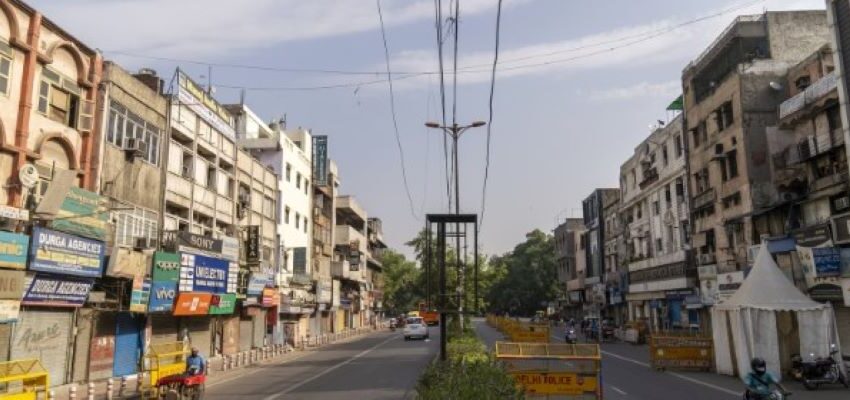
One such area, Darya Ganj, located in the walled city of Shahjahanabad, is a treasure trove of history and heritage. Walking through its wide streets, even with the modern two-lane parking of vehicles, one can experience the grandeur of a bygone era.
Mortello Tower: Guardian of the City
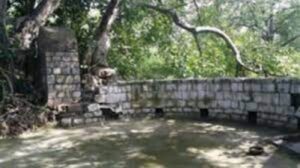
Moretllo Tower
Standing outside the erstwhile city wall is Mortello Tower, a British-built fortification from the early 19th century. Accessible via a bridge and 17 meters wide at the base, the tower served as an effective defense for Delhi’s residents. Historically, it marked the edge of the city where the Yamuna River began.
The area became known as Darya Ganj, or “river market,” because waterways were crucial for transporting heavy goods. Unloading at the Yamuna ghats allowed traders to sell items directly, reducing transportation costs.
Darya Ganj: From Shahjahanabad to New Delhi
Historically, Darya Ganj existed even before Shahjahanabad. It served as a wholesale market, and part of Firozabad. With Shah Jahan’s establishment of Shahjahanabad, it became an integral part of the city.
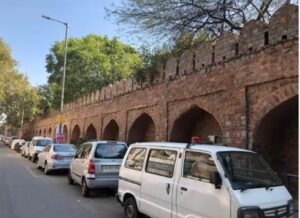
The wall
During British rule, Darya Ganj hosted a cantonment with open spaces. The 1857 revolt emptied much of the area after European residents were killed. Later, in the 1920s-30s, redevelopment linked Darya Ganj with New Delhi, especially to house British staff. Many colonial-style bungalows were built, several still standing today, though some appear dilapidated due to abandonment.
Historical Mansions and Freedom Fighters
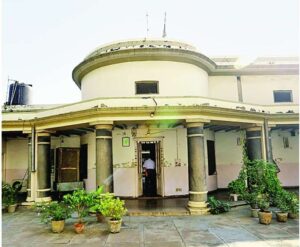
Ansari House
Darya Ganj has been home to several freedom fighters, doctors, and lawyers. Among them, Dr. Mukhtar Ahmad Ansari, a surgeon and political leader, built a mansion here. It hosted meetings of leaders, including Mahatma Gandhi. Dr. Ansari played a pivotal role in the 1916 Lucknow Pact, bridging the Congress and the Muslim League. Today, the mansion is known as Shrimati Krishna Devi Rajkrishna Jain Smriti Bhawan. It is a piece of history known, mainly to historians.
Shroff Charitable Eye Hospital: Heritage in Healthcare
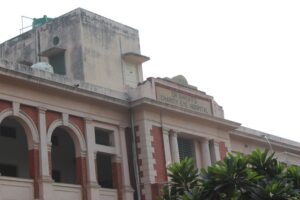
Shroff Charitable Eye Hospital
Another historical landmark is the Shroff Charitable Eye Hospital (SCEH). It was founded in 1926 by Dr. SP Shroff. And, it started as a small clinic in Lahori Bazaar in 1914. This hospital was supported by prominent locals, including Dr. Ansari and Hakim Ajmal Khan.
The hospital retains its colonial architecture and is operated by the third generation of the Shroff family. It is listed as a heritage building and continues to serve thousands of patients. This exemplifies the area’s blend of history and modern utility.
Education and Community in Darya Ganj
During its redevelopment, Darya Ganj became a hub for educational institutions. Schools like the Anglo Sanskrit Victoria Jubilee School, Jain School, and the early Jain orphanage continue to operate till today. Thus, it preserves the area’s cultural and educational heritage.
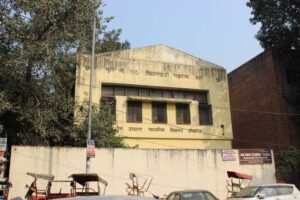
Jain School
Preserving Public Spaces and Heritage
Darya Ganj stands as a testament to Delhi’s evolving cityscape. Yet, many of its buildings, public spaces, and historical mansions remain vulnerable. Protecting these sites ensures that future generations can experience Delhi’s rich history first hand.

2 Comments
these are great piece of information thanks…can you please share or reupload these photos as they are not visible.
[…] The Sunheri Masjids: Golden Domes of Darya Ganj […]