

Parul Agrawal: Reviving Azamgarh’s Black Pottery Through Kabbish Jewellery
- FASHION & BEAUTY INTERVIEWS
 Life&More
- 0
- 9 minutes read


Kabbish Founder Parul Agrawal
Taruna Sharma
Coming from the small town of Azamgarh, Parul Agrawal showed a strong inclination towards creative subjects from an early age. SUPW was her favourite subject, where she could freely express her creativity.
From the beginning, Agrawal was clear about not pursuing a conventional job but instead doing something different. Her entrepreneurial journey began during an interim project while specialising in ceramics and glass at Indian Institute of Craft and Design in Jaipur.
A reserved child, she spent a lot of time with her father, gaining valuable business insights along the way. “He taught me a great deal about investment and the market,” she shares. In 2018, she launched her pot jewellery brand Kabbish, dedicated to reviving Indian handicraft heritage and culture.
How did Azamgarh-born Parul Agrawal reach IICD, Jaipur?
I was always interested in arts and crafts. While studying at Ramswaroop Memorial School in Lucknow, I gained exposure to creative fields and spent most of my time painting and working in art rooms.
After school, I knew exactly what I wanted to pursue. When I came across the prospectus of IICD, I felt an instant connection. After being selected among 60 craft enthusiasts, I visited the campus—and it soon became my second home.
What was the reaction of your parents when you chose jewellery design?
I feel fortunate to have supportive parents. While my father initially doubted whether pot jewellery would succeed, he stood by me through every step.
I remember when he saw my first black pottery prototype—he appreciated it but questioned its market potential. That question only strengthened my belief. Today, he is proud of my work, especially my contribution to supporting local artisans in Azamgarh.
When did the idea of Kabbish come, and what does the name mean?
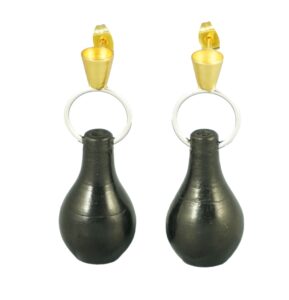
Kabbish started as my diploma project at IICD. I always wanted to work towards reviving Indian crafts, and growing up in Azamgarh, I was deeply connected to black pottery.
The journey officially began in December 2018 with the aim to revive this declining craft. “Kabbish” refers to a clay slip used to give pottery its sheen finish. Since it is an essential part of the process, I chose it as my brand name.
Tell us about your journey of setting up the business.
Initially, I wasn’t sure about turning my diploma project into a business. However, the concept received immense appreciation from mentors and peers.
While others opted for jobs, I took a leap of faith. Despite coming from a business family, jewellery was a new domain. I built Kabbish from scratch—handling design, packaging, branding, and marketing independently. It was challenging but deeply fulfilling.

How much investment went into it?
There isn’t a fixed figure, as the journey began during my college days and continues to evolve. Investment isn’t just monetary—it includes ideas, effort, and dedication.
Alongside my hard work, my parents’ support has been invaluable in shaping Kabbish into what it is today.
Which segment is your jewellery targeted at? How has the response been?
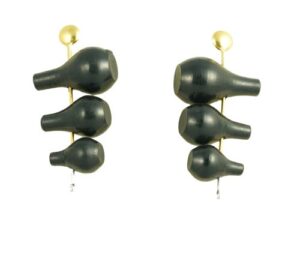
Kabbish focuses on handcrafted fashion jewellery. The concept of pot jewellery is unique, with no direct competitors in the same space.
The response has been overwhelming. From my very first exhibition, I realised the potential of the product. Our customers are those who value craftsmanship and understand the importance of handmade products.
Where are the craftsmen from and how did you connect with them?
The craftsmen are from Azamgarh itself. Black pottery is a GI-tagged craft of the region, and I grew up witnessing it closely.
My design education helped me connect deeply with the craft sector, and my project further strengthened these relationships.
How do craftsmen benefit from Kabbish?
Black pottery was gradually losing its relevance due to machine-made alternatives. Through Kabbish, we have helped revive its visibility and demand.
Today, artisans are receiving consistent work, and many who had shifted away are returning to the craft. The online marketplace has expanded their reach, and Azamgarh is regaining recognition for its black pottery.
We are also planning collaborations with the Uttar Pradesh government to create a display centre for the welfare of craft communities.

What are your future plans?
Kabbish is still a growing brand with immense potential. We plan to participate in more exhibitions, expand globally, and collaborate across industries.
Our goal is to include more traditional crafts in our product line and continue supporting artisan communities across India.
