

How Artificial Intelligence is Transforming Medical Education and Healthcare

Dr Ajay Devidasrao Sambre
Artificial Intelligence (AI) has moved far beyond the futuristic imagination once shown in science-fiction films. Today, AI is reshaping industries across the world, and healthcare is among the sectors experiencing the most significant transformation.
From improving diagnostics to personalising medical education, AI is changing how future doctors learn, train, and deliver patient care.
The integration of AI into medical education is making learning more efficient, personalised, and practical. It is equipping students with advanced tools that prepare them for the rapidly evolving healthcare landscape.
AI and Accurate Medical Diagnosis
One of the most important applications of AI in healthcare is accurate diagnosis. In medicine, timely and precise diagnosis is essential for effective treatment.
AI-powered systems can analyse massive amounts of medical data, including X-rays, MRIs, CT scans, patient histories, research papers, and clinical case studies. These systems process information far faster than humans and identify patterns that may otherwise go unnoticed.
When a patient presents specific symptoms, AI can connect those symptoms with possible medical conditions by analysing factors such as age, gender, medical history, and clinical trends. This helps doctors make informed decisions quickly and reduces the chances of misdiagnosis.
AI is not replacing healthcare professionals. Instead, it acts as an intelligent support system that enhances clinical decision-making and improves patient outcomes.
Personalised Learning in Medical Education
AI is also revolutionising how medical students learn.
Traditional medical education often follows a standardised teaching model. However, every student learns differently. AI-powered learning platforms can assess individual strengths and weaknesses and adapt educational content accordingly.
This personalised learning approach allows educators to tailor lessons to each student’s pace and learning style. Students receive targeted support in areas where improvement is needed, making education more efficient and effective.
Such intelligent systems also help students stay updated with evolving medical knowledge, treatment protocols, and research developments.
The Growing Importance of Simulation Labs
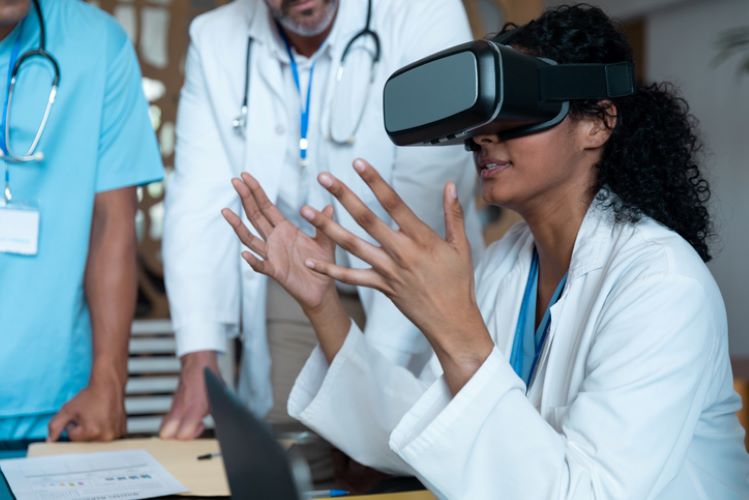
Simulation labs have become essential in modern medical education.
These labs provide students with hands-on learning opportunities in a safe and controlled environment. They simulate real-life medical situations, from routine procedures to emergency scenarios.
Through simulation-based learning, students can:
- Develop critical thinking skills
- Improve clinical judgment
- Refine technical procedures
- Build confidence in handling complex situations
Exposure to simulated healthcare environments prepares students for real-world challenges. It also helps reduce errors when they begin treating actual patients.
Medical institutions and hospitals must invest in advanced simulation labs to strengthen practical training.
AI in Early Disease Detection
AI is proving highly effective in identifying early signs of diseases.
By analysing medical images and patient data, AI can detect abnormalities that may indicate serious conditions at an early stage. Early diagnosis often leads to better treatment outcomes and improved recovery rates.
AI also helps doctors manage the growing volume of medical data by presenting key insights in a simple and actionable format.
This allows healthcare professionals to focus more on patient care and less on administrative analysis.
Future of AI in Healthcare
The future of AI in medicine is highly promising.
AI-assisted robotic surgery is improving precision in minimally invasive procedures. These advancements are reducing recovery times and lowering surgical risks.
AI is also making progress in mental healthcare through tools that monitor emotional well-being, offer therapeutic support, and provide immediate crisis assistance.
As these technologies continue to evolve, they will further strengthen healthcare systems worldwide.
Balancing Technology with Human Care
While AI offers remarkable advantages, healthcare must remain deeply human-centred.
Technology can improve efficiency, accuracy, and learning outcomes, but empathy, compassion, and personal interaction remain irreplaceable in medicine.
The goal should not be to replace human judgment but to empower healthcare professionals with better tools.
Artificial Intelligence is transforming medical education and healthcare in powerful ways. From personalised learning and simulation labs to faster diagnosis and advanced surgical systems, AI is preparing the next generation of healthcare professionals for a smarter future.
Medical institutions must embrace AI-driven learning while maintaining the human values that define quality healthcare.
The future of medicine lies in combining technological innovation with compassionate patient care.
Dr Ajay Devidasrao Sambre is President, CPS Mumbai
