

I came to India for a year, and found a lifetime here, says Ileana Citaristi
- ARTS SANDIP SOPARRKAR
 Life&More
- 0
- 7 minutes read


An internationally renowned dancer, choreographer, and scholar whose life and work bridge Europe and India through classical dance is Ileana Citaristi. Trained in Odissi under the legendary Guru Kelucharan Mohapatra and deeply influenced by Kathakali, she is one of the foremost non-Indian exponents of Indian classical dance. Based in Odisha for decades, she has played a pivotal role in teaching, choreographing, and institutionalizing Odissi through institutions like Art Vision, Bhubaneswar. Her work is known for its intellectual depth, blending Indian movement vocabulary with cross-cultural themes drawn from mythology, literature, and contemporary thought. Recipient of prestigious honours including the Padma Shri, Ileana Citaristi’s journey stands as a testament to lifelong dedication to living artistic traditions. Excerpts from the interview:
Your first journey to India dates back to 1974. What drew you here at that time?
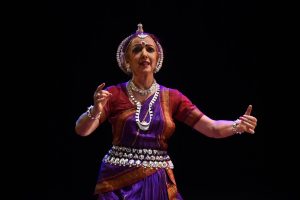
My first trip to India was less about attraction and more about necessity. I was already working in theatre in Europe, but everything seemed to come too easily. I wanted to test myself, to step away from familiarity and comfort. India was completely unknown to me—despite having studied a little Indian art and religion—and that was precisely the point. I travelled overland, without planning, believing strongly in living life day by day. When I returned after six months, I felt I had passed a test. That strength became essential when I was confronted with personal tragedy soon after—supporting a loved one through terminal illness. India had given me resilience.
When did your relationship with the body and movement begin to deepen?
By the time I returned to India in 1978, I had begun a serious exploration of the body. A workshop with Stanislaw Schiesky from Jerzy Grotowski’s group was pivotal. It introduced me to intense physical work and elements of Kathakali training. It wasn’t about learning a technique—it was about discovering an enormous reservoir of energy within the body. Parallel to this, I was studying psychoanalysis and Eastern mythology at university. The body and the mind were on separate paths, searching for meaning in different ways.
Kathakali seems to have been a turning point.
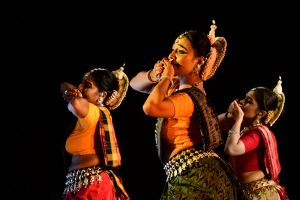
Absolutely. I saw a Kathakali demonstration by Krishna Namboodiri in Bergamo. He explained how every part of the body carries meaning within a precise grammar. It was a revelation. I felt as though he had come just for me. Within months, I was in Srikrishnapuram, Kerala, attending an intensive summer workshop. The training was rigorous—early mornings, abhinaya in the afternoons, eye exercises at night—held in a simple space surrounded by greenery. It was like dancing inside a forest. Only three of us completed the course. On the final day, performing in full costume before the village, I truly became the character. There was no going back after that.
Yet it was Odissi that ultimately became your life’s path. How did that transition happen?
Krishna Namboodiri suggested I study Odissi and directed me to Sanjukta Panigrahi in Odisha. Everything I had learned in Kathakali had to be undone—the feet, the stance, the very way of holding the body. It was disorienting. Before leaving Odisha, I heard about Guru Kelucharan Mohapatra in Cuttack. I went to meet him almost impulsively. Somewhere in that small lane where his house stood, my plans dissolved. The theatre project disappeared. The return ticket was discarded. Only Guruji, Odissi, and learning remained.
You stayed in India for six continuous years. What did that time teach you?
It was like living a second childhood. Life took on a new rhythm, and I barely noticed time passing. Everything narrowed down to reaching Guruji’s house each day. That was enough. When I eventually returned to Italy, it was only briefly, to perform Odissi. Since then, I have moved between India and Europe regularly, always sharing what India has given me, and always eager to return.
Your choreography often bridges Western themes with Indian movement vocabulary. How did this synthesis evolve?
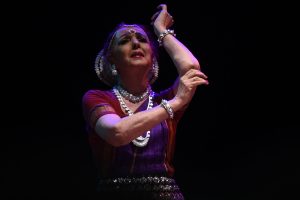
When I first came in 1979, I carried Ovid’s Metamorphoses, especially the story of Echo and Narcissus. Seven years later, that story emerged—not as theatre, but as dance—expressed through Indian technique. This synthesis continues in my work. The themes often belong to my past, while the medium of expression is Indian classical dance. The search for balance between these worlds is ongoing.
You have also choreographed for film. How did that differ from stage work?
Film taught me to rethink space. Dance is usually composed for a central point of view, but the camera shifts constantly. One has to reshape choreography according to angles and locations, often very quickly. It was challenging, but deeply enriching.
Your forthcoming performance explores femininity. Could you elaborate?
The performance examines multiple dimensions of the feminine—from the yogini who leads the seeker to liberation, to women who reclaim justice, such as Amba, Medea, and Draupadi, to the body itself as a site of both oppression and resistance. These themes feel urgent and timeless.
Finally, how do you relate to younger generations of dancers today?
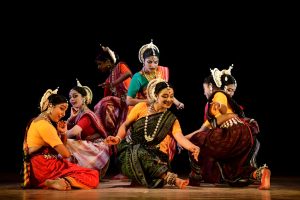
It is not easy. The generational gap feels wider now. I believe the only way forward is to remain faithful to what we believe in, without preaching. Living the values sincerely may be the strongest way to point the path.
Sandip Soparrkar holds a doctorate in world mythology folklore from Pacific University USA, an honorary doctorate in performing arts from the National American University, He is a World Book Record holder, a well-known Ballroom dancer and a Bollywood choreographer who has been honored with three National Excellence awards, one National Achievement Award and Dada Saheb Phalke award by the Government of India. He can be contacted on sandipsoparrkar06@gmail.com
