

A Star Who Never Fades: Remembering Bharatanatyam dancer Kumari Kamala
- ARTS SANDIP SOPARRKAR
 Life&More
- 0
- 7 minutes read


A Tribute to the Legendary Dancer Who Redefined Classical Art for the World
The world of Indian classical dance bows its head in reverence today as it bids farewell to one of its most radiant luminaries. Padma Bhushan Kumari Kamala (Kumari Lakshminarayanan)—the iconic Bharatanatyam virtuoso whose brilliance lit up stage and screen for more than six decades—passed away in California recently, at the age of 91. With her departure ends an era marked by elegance, innovation, courage, and devotion to the divine language of dance.
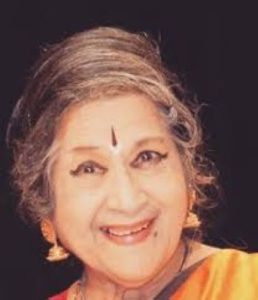
A Child Prodigy Who Became an Institution
Born in Mayuram (now Mayiladuthurai) in Tamil Nadu in 1934, Kamala belonged to a Tamil Brahmin family steeped in cultural values. From the tender age of four, she displayed an uncanny natural grace—something the celebrated filmmaker A.N. Kalyanasundaram Iyer recognized instantly when he witnessed one of her earliest dance recitals. His discovery changed the course of Indian classical dance. Soon Kamala was appearing in Tamil films such as Valibar Sangham (1938) and Ramanama Mahimai (1939), charming audiences as a tiny dancer with extraordinary poise.
Her cinematic career quickly expanded to Hindi films, with roles in Jailor (1938), Kismet (1943), and Ram Rajya (1943). These performances were not merely appearances—they were artistic statements. At a time when Bharatanatyam was still reclaiming its legitimacy in modern India, Kamala’s presence on screen made classical dance accessible, aspirational, and beloved.
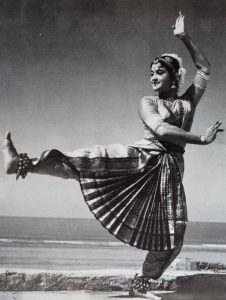
Responding to her daughter’s growing fame, Kamala’s mother moved to Madras so the young prodigy could train under the finest gurus. Under the tutelage of Kattumannarkoil Muthukumara Pillai and the renowned Vazhuvoor B. Ramaiyah Pillai, Kamala blossomed into the foremost exponent of the Vazhuvoor style—known for its fluidity, expressiveness, and dramatic elegance.
Cinema, Patriotism, and a Cultural Wave
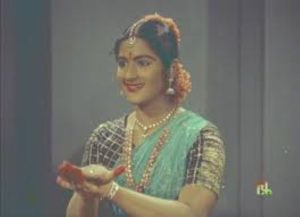
The turning point in Kamala’s cinematic journey—and indeed in the story of Bharatanatyam itself—came with the 1944 film Jagathalapratapan, where her Paampu Attam (snake dance) entranced audiences. This was followed by standout roles in Sri Valli (1945) and the immortal Meera, where she portrayed a youthful Krishna with spellbinding beauty.
But it was Nam Iruvar (1947) that forever stamped her name on the national consciousness. Filled with patriotic fervour and Gandhian themes, the film used Kamala’s dances to articulate a spirit of cultural pride. Its success triggered what many describe as a “cultural revolution” across Tamil-speaking regions. For countless viewers, Kamala was their first encounter with Bharatanatyam—and their gateway into an art form that would enrich modern Indian identity.
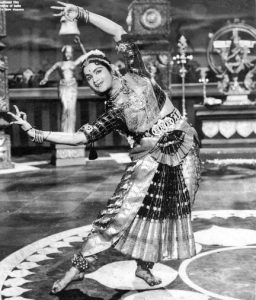
A Global Ambassador for India’s Ancient Art
By the 1950s, Kamala’s virtuosity had already travelled far beyond Indian borders. In 1953, she achieved a rare honour: an invitation to perform during the coronation festivities of Queen Elizabeth II. In the late 1950s, she toured China and Japan, mesmerizing audiences unfamiliar with Indian classical dance. These performances sealed her status as one of the earliest and most influential global ambassadors of Bharatanatyam.
Her journey as a bridge between cultures continued in academia. In 1975, she was awarded the Branta Professorship at Colgate University, where she taught dance, conducted research, and introduced generations of students to the spiritual philosophy behind Indian classical movement.
In 1980, Kamala moved to New York City, eventually founding her school Shri Bharatha Kamalalaya in Long Island. For decades, this institution became a sanctuary for aspiring dancers—Indian and non-Indian alike—who discovered in her a teacher of extraordinary rigor, generosity, and insight.
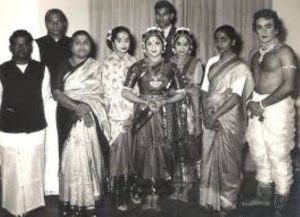
Honours That Marked a Legendary Life
Across her remarkable career, Kamala received honours befitting her stature: Kalaimamani (1967), Central Sangeet Natak Akademi Award (1968), Padma Bhushan (1970), National Heritage Fellowship (2010), Soorya Lifetime Achievement Award (2012)
Yet, for her countless admirers around the world, the real tribute lay not in medals but in the ineffable magic of her performance—the sparkle in her eyes, the eloquence of her abhinaya, the purity of her araimandi, and the spiritual serenity she invoked with every movement.
A Woman of Courage, Individuality, and Spirit
Kamala’s personal life was as remarkable as her public one. In the 1950s, she married the celebrated cartoonist R.K. Laxman, becoming widely known as “Kamala Laxman.” Their marriage ended in 1960—one of the earliest divorces among Hindus in India after the Hindu Marriage Act made divorce legal in 1956. To avoid confusion with Laxman’s second wife, also named Kamala, she adopted the name “Kumari Kamala.”
The second marriage to T.V. Lakshminarayanan defied convention, reflecting her independence and commitment to living life on her own terms. They had one son, Jainand Narayan, who later became an officer in the United States Army.
Her Eternal Legacy
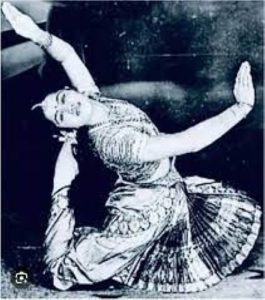
Kumari Kamala was more than a dancer—she was an institution, a revolution, a spiritual force. She took Bharatanatyam from temple courtyards and exclusive sabhas to cinema screens, world stages, and university classrooms.
Her legacy shines every time a dancer dips into a perfect araimandi, every time a young student feels the divine thrill of expressing bhava, every time Bharatanatyam reaches a new corner of the globe. In her light, generations found inspiration. In her shadow, they found guidance. In her art, they found the heartbeat of India.
As we bid farewell to this timeless flame, we rise in gratitude. Thank you, Kumari Kamala, for transforming dance into poetry, devotion, and immortality. Your footsteps on the sacred stage will remain forever.
Sandip Soparrkar holds a doctorate in world mythology folklore from Pacific University USA, an honorary doctorate in performing arts from the National American University, He is a World Book Record holder, a well-known Ballroom dancer and a Bollywood choreographer who has been honored with three National Excellence awards, one National Achievement Award and Dada Saheb Phalke award by the Government of India. He can be contacted on sandipsoparrkar06@gmail.com
