

When Red Speaks – Alaknanda’s Laal Ishq
- ARTS & CRAFT SANDIP SOPARRKAR
 Life&More
- 0
- 7 minutes read


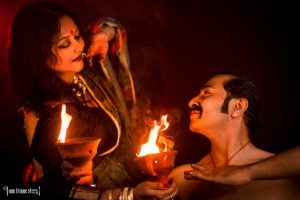
One artist whose journey as a Kathak artist is marked by discipline, excellence, and early recognition of her talent is Alakhnanda. She received a prestigious scholarship from Kathak Kendra at the age of ten and was awarded the same again at eighteen, reflecting sustained artistic brilliance. At eighteen, she was also honoured with the National Scholarship, a significant milestone for any classical dancer in India. She holds a B.A. in Kathak from Gandharva University, Mumbai, grounding her artistry in strong academic and technical training. Together, these achievements affirm Alaknanda’s standing as a dedicated and accomplished torchbearer of the Kathak tradition. Her recent show Laal Ishq has been received with a thunderous applause, excerpts from the conversation with her:
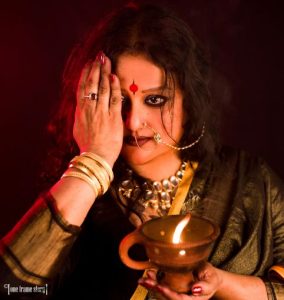
Laal Ishq has clearly struck a deep chord with audiences. What does the title truly mean to you?
Laal Ishq is not just “red love” in a romantic sense—it is the colour of existence itself. Red is blood, passion, power, creation, anger, sacrifice, and divinity. For me, Laal Ishq is love in every shade: fierce like fire, tender like rain, and eternal like the soul. It is śṛṅgār, it is solā, and it is also resistance. It celebrates love between two souls, but equally, love for life, for oneself, and for the Divine.
One of the strongest themes in the production is menstruation and society’s double standards. Why was it important for you to bring this to the stage?
Because silence hurts. We bleed every 28 days, and suddenly we are impure—no temple, no kitchen, no touch. Yet when the same blood creates life, we are worshipped as mothers. This hypocrisy is deeply painful. Menstrual blood is not dirty; it is sacred. Every child is born from that red flow, from that Laal Ishq. Through dance, I wanted to say what words often fail to say: a woman is not holy only when she gives birth—she is sacred by existence.
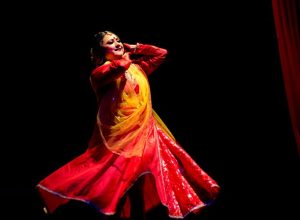
The show also explores how love can turn destructive. How do you draw that line?
Love is powerful energy. When it flows freely, it creates; when it becomes obsession, it destroys. History shows us this clearly—Kurukshetra, the Ramayana, even the COVID era. Obsession over land, power, control, or even people turns love into war. I wanted the audience to reflect: are we loving, or are we controlling? True love liberates. Obsessive love cages. Protecting ourselves from that negative energy is essential.
You also present love as collective strength, especially among women. Could you talk about that?
Absolutely. I call it Sindhu Khela—women lifting women. When women support each other instead of pulling each other down, that itself is divine love. Empowerment does not come from isolation; it comes from solidarity. In Laal Ishq, love is not just personal—it is communal. When we hold each other up, we become unstoppable.
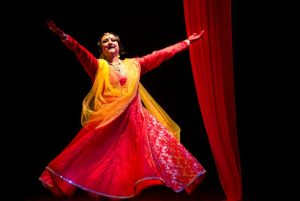
The response of your show was extraordinary—overcapacity, gate crashing, people fighting for seats. How did that moment feel?
Overwhelming, humbling, and emotional. Our auditorium had 636 seats, and we had over 800 people inside. People were pleading, “Please bring it forward, Laal Ishq is coming!” I felt love literally pouring from the audience. That kind of response tells you that the work has touched something raw and real. Eventually, I had to say “House Full” and close the invites—but the love didn’t stop. That’s why we’re returning soon. This journey is far from over.
You are also a cancer survivor. How has that shaped Laal Ishq and your outlook on life?
Cancer changed everything. I realised I am still deeply in love with life. Every sunrise feels like a gift. I live with big smiles, loud laughter, and hard-won work because tomorrow is never promised. Laal Ishq was born from that gratitude. It is my celebration of being alive. The secret to living, I believe, is simple: love yourself first, love others next, and love the life God has gifted you.
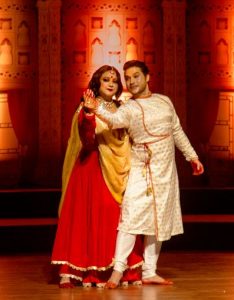
You often speak about your “three loves.” Could you share them?
Yes. Mujhe logon se ishq hai—I love people. Mujhe apne aap se ishq hai—I love myself, and that took time to learn. And mujhe Khuda se ishq hai—I am in love with the Divine. These three loves balance me. Without self-love, you shrink. Without love for others, you harden. Without love for God, you lose direction.
As a Kathak artist trained under legendary gurus, how does tradition meet such bold contemporary themes?
Kathak is timeless. It has always spoken of society, of women, of power, of devotion. I trained under Guru Reba Vidyarthi, Guru Bhairavi Gupta, Guru Munna Shukla, and Pandit Birju Maharaj—my roots are strong. Because my foundation is strong, I can ask difficult questions through my art. Tradition is not a cage; it is a spine. With that spine, you can stand tall and speak truth.
Finally, what do you hope audiences carry home after watching Laal Ishq?
I hope they honour red—not fear it. I hope they respect women’s bodies, recognise obsessive love, and choose compassion over control. Most of all, I hope they fall a little more in love—with themselves, with others, and with life. I surrender my journey to God’s plan. I draft my roadmap, but I always say, “Give me what I truly deserve.” His designs are bigger than mine.
Sandip Soparrkar holds a doctorate in world mythology folklore from Pacific University USA, an honorary doctorate in performing arts from the National American University, He is a World Book Record holder, a well-known Ballroom dancer and a Bollywood choreographer who has been honored with three National Excellence awards, one National Achievement Award and Dada Saheb Phalke award by the Government of India. He can be contacted on sandipsoparrkar06@gmail.com
