

7 decades of dance, discipline, devotion
- SANDIP SOPARRKAR
 Life&More
- 0
- 8 minutes read


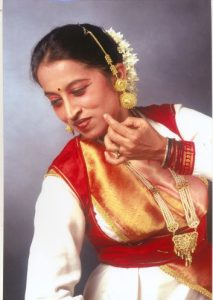
An eminent Kathak exponent, choreographer and guru, who is renowned for her innovative yet deeply rooted approach to the classical form is Shama Bhate. A disciple of legendary Kathak doyen Rohini Bhate, she has made a significant contribution to the evolution and pedagogy of Kathak over several decades. She is a recipient of several prestigious honours, including the Sangeet Natak Akademi Award, recognising her outstanding contribution to Indian classical dance. Her choreographic works are celebrated for their intellectual depth, contemporary relevance and strong rhythmic foundation. Through performance, teaching and creation, Shama Bhate continues to shape and inspire generations of dancers. Excerpts from the interview with the iconic artist:
You turned seventy five, congratulations on a remarkable journey in dance, one filled with many ups and downs. How did it all begin?
I think, like everyone else of my generation, I was shaped by the atmosphere of the time. I was born in 1950, when the country was full of hope, aspiration and ambition. People believed deeply in hard work and in becoming achievers in their chosen fields. I come from a middle-class family with no strong background in classical music or dance, but my parents, despite their limited means, were determined to give their three children as many opportunities as possible. That is how my journey into classical dance began.
I was extremely fortunate to come directly under the tutelage of the legendary Kathak doyen, Rohini ji Bhate. We all know how rare and precious it is to find the right guru at the right time. Rohini ji was the role model for my entire generation. We tried to emulate her in every way—not just her dance, but even her walk, her speech and her sense of dress. She influenced and inspired me so deeply that choosing dance as a career felt almost inevitable.
At that age, I hardly understood the magnitude of what I was stepping into. I only knew that I wanted to learn and absorb everything connected with Kathak. I was young, naïve, ready to work hard and completely in love—not just with Rohini ji, but with Kathak itself. She introduced me to the form, taught me enough to last a lifetime, and gave me the grounding to remain immersed in Kathak well into my seventies.

It is often said that mothers-in-law and daughters-in-law rarely share a strong bond, yet you took over from your mother-in-law. Could you speak about that relationship?
Rohini ji and I shared a very singular focus—Kathak. Beyond that, nothing else really mattered. Because of this, we hardly ever argued or disappointed each other on a personal level. Our bond was built on sur (musical notes), laya (rhythm) and the beauty of lines. Any disagreements we did have were rooted in dance.
I was a young girl eager to spread my wings, and she understood that. She also knew that before I could truly make my own departure, I had to master every facet of Kathak. That understanding created mutual respect and trust, which defined our relationship far more strongly than conventional family roles.
Tell us about the anniversary celebration and the Meera production.
The anniversary celebration was deeply moving for me. I truly believe there could be no better tribute to a guru who has been teaching for more than 38 years. The ideation, curation and execution were flawless—beyond anything one could dream of. My family, students, colleagues, friends and my Guruji, Pt. Sureshji, were all present. It was a moment of shared ecstasy. I felt rewarded, fulfilled and profoundly gratified.
The Meera production at the Nita Mukesh Ambani Cultural Centre was equally special. That grand theatre is a dream venue for any artist—technically sophisticated and aesthetically stunning. For years, one dreamt of presenting work in such a space. The technical and managerial teams were incredibly cooperative, working alongside us with a shared purpose of making the production memorable. It truly felt like a collective artistic effort.
You have witnessed generations of dancers evolve. What changes—good and bad—do you observe?
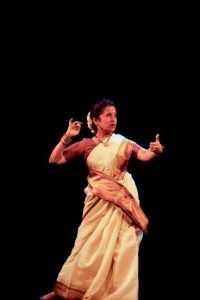
Today, performances are far more professional and expectations are extremely high, largely due to social media. The environment has become formal and demanding. Twenty or twenty-five years ago, things were more informal, cosy and warm. One could experiment freely, even present impromptu work on stage without fear. There were rasikas and connoisseurs who judged work purely on merit.
Now, concerts have become large-scale shows, complete with glamour and paraphernalia, which also makes them expensive. However, the positive side is that dance today is incredibly graceful, vibrant and polished. I believe both streams—the intimate and the grand—are important for Kathak to remain relevant in changing times.
Your choreographies are known for being unconventional. What inspires you to create such works?
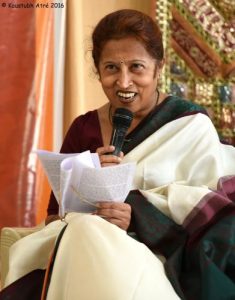
Kathak itself is my greatest inspiration. The form has undergone many transformations, which have enriched it and made it remarkably flexible. Kathak allows experimentation without harming its core values. That is why I have been able to present traditional pieces with contemporary interpretations—whether it is Chaturang ki Chaupal, where the stage becomes a game board, or Krishna the Liberator, where familiar myths are viewed through modern sensibilities like environmental awareness or social freedom.
Kathak, as a composite art form, allows exploration of space, rhythm, literature, abstraction and expression. This openness has helped me interpret modern themes, from Nishabda Bheda, which explores silence inspired by a French documentary on marine life, to portraying social figures like Kasturba Gandhi.
You have celebrated a significant milestone. What lies ahead?
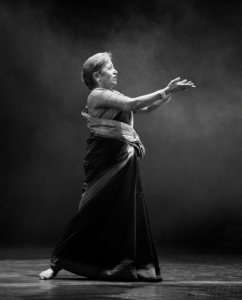
I feel God has been very kind to me—keeping me healthy and energetic throughout this long journey. I hope that grace continues, allowing me to chase new ideas and creative explorations until the time comes to say goodbye.
Finally, what advice would you give to the younger generation of dancers?
My only suggestion is this: do not be only performance-oriented. Keep experimenting and improvising every day. Even failed experiments teach you invaluable lessons and reveal the infinite possibilities within the form. That continuous exploration is what keeps dance alive.
Sandip Soparrkar holds a doctorate in world mythology folklore from Pacific University USA, an honorary doctorate in performing arts from the National American University, He is a World Book Record holder, a well-known Ballroom dancer and a Bollywood choreographer who has been honored with three National Excellence awards, one National Achievement Award and Dada Saheb Phalke award by the Government of India. He can be contacted on sandipsoparrkar06@gmail.com
