

Breaking Borders with Every Step: The Global Dance Journey of Jhinuk Alvares
- ARTS & CRAFT SANDIP SOPARRKAR
 Life&More
- 0
- 7 minutes read


Today I feel overwhelmed to write about this extraordinary girl, Jhinuk Alvares, an internationally acclaimed Indian dancer whose journey spans from classical Odissi and Kathak to competitive Latin ballroom on the global stage. Trained across India, Russia, Europe, and the USA, she has represented India in over 40 international competitions, earning a world ranking and the prestigious U.S. “O” visa for extraordinary talent. Her story is one of passion, resilience, and breaking barriers through the universal language of dance. Excerpts from the interview:
How did your dance journey begin?
My dance journey began when I was just four, under my first guru Mr. Somnath Biswas. Later I formally began learning the Indian classical style of Odissi. My foundational training took place at the Nalanda Research Institute and later at “Smitalay,” founded by the legendary Mrs. Jhelum Paranjapee. I was also fortunate to study Kathak under Mrs. Nutan Patwardhan and train in Indian folk styles with Mr. Biswas. Those early years were deeply rooted in discipline—mornings spent in athletics with my dad and evenings at dance classes with my mum. That combination of physical training and artistic refinement shaped me into the artist and athlete I would eventually become.
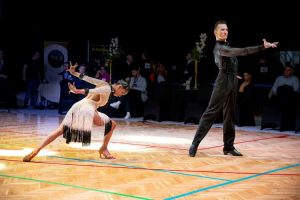
You moved from Indian classical dance to ballroom dancing what ignited that shift?
As I entered my teenage years and became more exposed to Western pop culture, I stumbled upon TV shows like So You Think You Can Dance. It was the first time I saw Latin ballroom, contemporary, hip hop—styles so sharp, fiery, and captivating. I was immediately drawn to the sensual rhythm of two bodies dancing in harmony. My curiosity turned into passion after discovering elite professionals like Anna Melnikova and Anna Matus. Their goddess-like grace, technical precision, and sheer power were intoxicating. I knew I had to chase that level of excellence.
My college years led me to the studio of Sandip Soparrkar, whom I had admired on TV. I became the youngest instructor on his team, learning how to dance socially, teach, and manage events. Around this time, I also began training in ballet at Ashley Lobo’s The Danceworx to improve my ballroom technique. That was when I realised how demanding Western classical forms were—and how badly I wanted to pursue competitive ballroom dancing.


What made you move to the west?
Serious competitive ballroom training is almost non-existent in India. There is more social culture; despite exploring the top schools in Mumbai, I couldn’t find the level of rigor I was looking for. Eventually, a male dancer approached me with a shared dream to compete. We watched YouTube videos, mimicked professionals, trained for hours, incorporated ballet, gymnastics, and even weight training to strengthen our foundation. We performed at events, danced on television, and shot videos—but something was still missing.
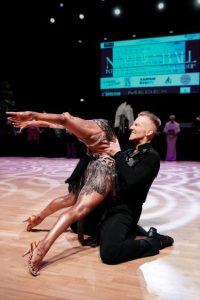
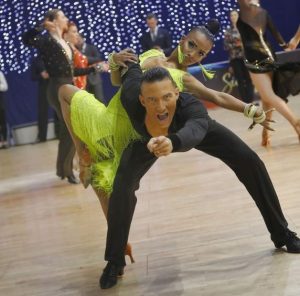
After winning the National Champion title in the Open Latin Category at the All India Dancesport Federation Competitions, I was awarded a 3-month scholarship by the Tata Sports Foundation, which allowed me to train and compete in Moscow. That experience was life-changing. I saw firsthand what a high-level competitive dance culture looked like, and I knew that staying in India would never give me the same growth. I eventually parted ways with my first partner and began a new chapter with my current dance partner—and now husband—Vlad. We trained in Russia, then Romania, Hungary, and now represent India on the global stage at World DanceSport Federation, World Dance Council, IDO, and NDCA competitions.
How was your journey to the west?
The journey in the West wasn’t easy, there were fears—about not being good enough, not looking the part, being from a different culture, and being older than many competitors. Everything made me feel vulnerable. But Vlad stood by me through it all. I learned new languages to attend lessons and camps. I trained under world-class coaches like Anastasia Selivanova, Martina Varadi, and Andrea Silvestri, who taught me to move in ways I never thought possible. Support often came from strangers—audiences cheering me on even when I didn’t have familiar faces in the crowd.
There were financial struggles, injuries, and moments of serious doubt. But I kept going. And today, looking back, I feel immense pride. From Indian folk dances to securing a world ranking in international ballroom, being awarded the “O” type visa by the U.S. government for excellence in arts, and working with Maks and Val Chmerkovskiy from Dancing with the Stars—life has indeed come full circle.

Today you a rising stars of Dance, how does it feel when you look back?
Even now, I don’t consider myself an expert. That would be foolish for any true artist to claim. But I’ve learned, grown, and evolved through experiences I could never have had if I’d stayed home.
When people ask me which form of dance I prefer—competitive, social, or club—I say all of them. Competitive dancing is like a spiritual discipline—it breaks and builds me every day. Social dancing lets me connect with people in a light, joyful way. Club dancing is pure freedom—no rules, no partner, just me and the music. Dance is an expression, not a performance. If someone is impressed by your authenticity, that’s a bonus. If not, it shouldn’t change how you feel about your own dancing.
What advice do you have for Indian dancers who wish to make it big in the western dance world?
To all aspiring Indian dancers: be ready to fail, be ready to grow, and never stop learning. Stay open to critique, challenge your limits, and most importantly, remember where you came from. Your roots will give you the strength to fly. And as for me—this journey has just begun. There’s still so much more to dance, to discover, and to share with the world.
Sandip Soparrkar holds a doctorate in world mythology folklore from Pacific University USA, an honorary doctorate in performing arts from the National American University, He is a World Book Record holder, a well-known Ballroom dancer and a Bollywood choreographer who has been honored with three National Excellence awards, one National Achievement Award and Dada Saheb Phalke award by the Government of India. He can be contacted on sandipsoparrkar06@gmail.com
