

Echoes of Banaras with Jayantimala Mishra
- ARTS & CRAFT SANDIP SOPARRKAR
 Life&More
- 0
- 6 minutes read


Legendary performer, guru, and cultural icon, Jayantimala Mishra, fondly known as Urvashi, is one of the most celebrated exponents of Kathak and a torchbearer of the Banaras Gharana. Born into the illustrious family of Acharya Pandit Sukhdev Maharaj, she represents the tenth generation of this legendary lineage. Trained under stalwarts such as Sitara Devi Ji, Tara Devi Ji, Chaube Maharaj Ji, and Ustad Allah Rakha Khan Sahab, she embodies both depth and brilliance in rhythm and expression. With over five decades of dedicated service to Kathak, she has enriched the art form through performance, teaching, and choreography. As the chairperson of Kala Kriti Kendra, she continues to inspire generations while preserving the purity and grandeur of classical Kathak. Excerpts from the interview:
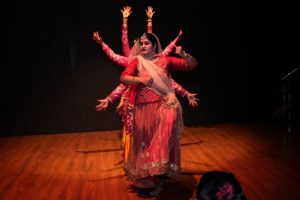
Your recent Chaube Maharaj Mahotsav was a grand success. How did you feel performing on such a significant occasion celebrating both Chaube Maharaj Ji and your revered mother, Sitara Devi Ji?
It was an extremely emotional and sacred experience for me. The Chaube Maharaj Mahotsav is not just a festival; it is a tribute to a lineage, a parampara, and a lifetime of tapasya. Celebrating the 105th birth anniversary of my mother, Sitara Devi Ji, alongside the 31st Chaube Maharaj Mahotsav made the evening deeply personal. Rangshila Theatre was filled with rasikas, especially young listeners, and that gave me immense hope and joy. I felt as though my gurus and ancestors were present with us throughout the evening.
The Banaras Gharana tradition was beautifully presented through dance and music. How important is it for you to preserve and present these traditional lineages?
For me, Kathak is not merely performance—it is inheritance and responsibility. I belong to the 10th generation of the Banaras Gharana founded by Acharya Pandit Sukhdev Maharaj. Preserving compositions, layakari, bols, and abhinaya styles handed down through generations is my dharma. At the same time, I believe tradition must be alive, not stagnant. When audiences connect emotionally and intellectually with these traditional elements, the lineage truly survives.
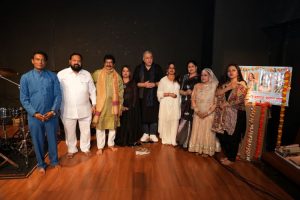
Your performance included rare compositions from Sukhdev Maharaj Ji’s Dadra collection. Could you share why these old compositions are so special?
These compositions are treasures. They carry the fragrance of an era when music and dance were lived experiences, not just staged ones. Pieces like “Kanhaiya Ji, Ye Kya Jaadu Daala Re” reflect bhakti, shringara, and simplicity in their purest form. Presenting them on stage today is my way of ensuring they are not lost to time. Each bol, tihai, and paran has a soul, and I feel blessed to bring them alive.
You were trained by legendary gurus including Sitara Devi Ji, Tara Devi Ji, Chaube Maharaj Ji, and even tabla maestro Ustad Allah Rakha Khan Sahab. How did this diverse training shape you as an artist?
I consider myself incredibly fortunate. From my mother Sitara Devi Ji, I imbibed power, confidence, and expressive abhinaya. Tara Devi Ji taught me discipline and grace. Chaube Maharaj Ji shaped my understanding of classical purity and depth—he was my guru and my guiding force. Learning tala and layakari from Allah Rakha Khan Sahab gave me a mathematical clarity that is essential for Kathak. This blend of dance, rhythm, and emotion formed the foundation of who I am today.
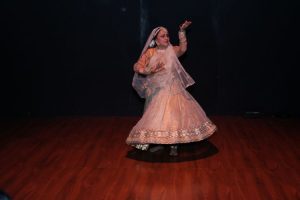
You have mastered both the temple-oriented mythological style and the Mughal Darbari style of Kathak. How do you balance these contrasting aesthetics?
Kathak itself is a confluence. The temple style connects us to devotion and storytelling, while the Darbari style brings finesse, nazakat, and grandeur. I do not see them as opposites but as complementary energies. A complete Kathak dancer must be able to move seamlessly between both. Balance comes from understanding the spirit behind each style and presenting them with honesty.
As the chairperson of Kala Kriti Kendra, what is your vision for the next generation of dancers?
My vision is to create dancers who are rooted yet fearless. At Kala Kriti Kendra, we emphasize strong fundamentals, respect for gurus, and deep knowledge of tradition. At the same time, I encourage students to explore, question, and innovate responsibly. Seeing young audiences filling theatres reassures me that classical arts have a strong future if nurtured with sincerity.
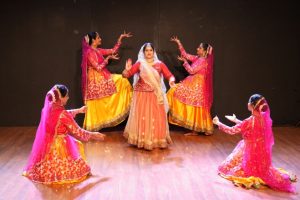
You have performed across the globe and worked with legends in music and cinema. What continues to inspire you after more than five decades of dedication to Kathak?
Inspiration comes from rasa—from the moment when dance transcends technique and becomes prayer. Every time I step on stage, I feel like that 2½-year-old child who first performed under Sukhdev Maharaj Ji’s guidance. As long as I can convey beauty, rhythm, and emotion, I will continue. Kathak is my life force.
Finally, how would you like history to remember Jayantimala Mishra?
Not just as a performer, but as a guardian of tradition. If people say that I upheld the dignity of Kathak, enriched it with sincerity, and passed it on honestly to the next generation, that will be my greatest achievement.
Jayantimala Mishra, truly the Kathak Queen, stands as a living bridge between legacy and evolution—an artist whose rhythm, grace, and devotion continue to illuminate the world of Indian classical dance.
