

“INTANGIBLE CULTURAL HERITAGE LIVES THROUGH COMMUNITIES”
- CULTURE & HERITAGE SANDIP SOPARRKAR
 Life&More
- 0
- 7 minutes read


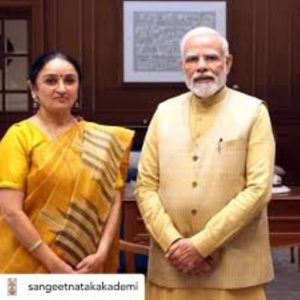
India’s hosting of the 20th Session of the Intergovernmental Committee for the Safeguarding of the Intangible Cultural Heritage marked a defining moment in the country’s cultural diplomacy. Held at the historic Red Fort under the leadership of Prime Minister Narendra Modi, the session highlighted India’s deep civilisational commitment to living traditions. As the nodal agency, Sangeet Natak Akademi played a central role in shaping both the deliberations and the cultural narrative of the Committee. The occasion gained special significance with the inscription of Deepavali on UNESCO’s Representative List of the Intangible Cultural Heritage of Humanity. The Prime Minister was unable to attend in person and shared his message via a video address. In this interview, Dr Sandhya Purecha, Chairperson of Sangeet Natak Akademi, reflects on the vision, process, and larger meaning of this landmark event.
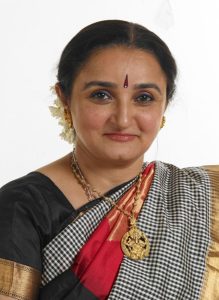
India recently hosted the 20th Session of the Intergovernmental Committee for the Safeguarding of the Intangible Cultural Heritage at the Red Fort. How significant was this moment for the country?
Hosting the 20th Intergovernmental Committee (IGC) was a moment of immense cultural and diplomatic significance for India. It was not merely an international meeting; it was a recognition of India’s long-standing civilizational commitment to living traditions. Under the visionary leadership of Hon’ble Prime Minister Shri Narendra Modi, culture has been placed at the centre of national discourse and global engagement. This session reaffirmed India’s role as a responsible custodian of Intangible Cultural Heritage (ICH), where traditions are not preserved in isolation but live and evolve within communities.
What was the role of the Sangeet Natak Akademi in this global event?
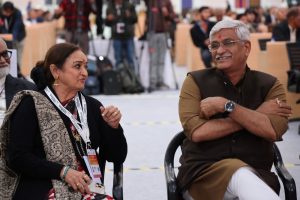
Sangeet Natak Akademi (SNA), as India’s designated national authority for the implementation of UNESCO’s 2003 Convention on the Safeguarding of Intangible Cultural Heritage, functioned as the nodal agency for the IGC session. The Akademi worked in close coordination with the Ministry of Culture, Government of India, under the leadership of Hon’ble Minister of Culture Shri Gajendra Singh Shekhawat ji and the guidance of Shri Vivek Agarwal ji, Secretary, Ministry of Culture, whose contributions were instrumental in the planning, development, and execution of the event at Lal Quila.
In line with its statutory mandate and expertise, SNA coordinated with UNESCO, prepared official interventions for the Indian delegation, and curated the cultural and Intangible Cultural Heritage programme of the Committee. The emphasis throughout was to ensure that delegates not only engaged in policy deliberations but also experienced India’s living traditions in an authentic and meaningful manner.
The inscription of Deepavali on UNESCO’s Representative List has drawn global attention. What does this recognition mean?
The inscription of Deepavali in 2025 is a historic and deeply emotional moment for India. Deepavali is not just a festival; it is a collective expression of values—light over darkness, knowledge over ignorance, hope over despair. Its recognition by UNESCO acknowledges the festival’s living traditions, community practices, rituals, crafts, and shared social meanings across regions and cultures. This achievement reflects the Government of India’s sustained efforts under Prime Minister Narendra Modi to bring India’s intangible heritage onto the global platform with dignity and authenticity.
How does SNA ensure that community voices remain central to UNESCO nominations?
Community participation is the foundation of the UNESCO Convention and of our approach at SNA. Every element must first be examined at the national level and included in India’s National Inventory of Intangible Cultural Heritage. The Advisory Body on Intangible Cultural Heritage and Diverse Cultural Traditions of India (ABICHU) carefully reviews community-submitted proposals. Only then are elements considered for UNESCO nomination. Today, India has 54 elements in its National Inventory, of which 16 are inscribed on UNESCO’s Representative List. This process ensures that safeguarding is not top-down but rooted in community consent and participation.
The cultural programming during the IGC was widely appreciated. What was the vision behind it?
Our vision was to reflect the diversity, depth, and continuity of India’s living traditions. From the Ambience Procession featuring folk and classical forms to curated “India Moments” within plenary sessions, the idea was to weave culture into the daily rhythm of the Committee. Performances such as Kudiyattam, Vedic Chanting, Nata Sankirtana, Chhau, and Garba were not staged as spectacles but presented as living practices. The special programme “Rhythms of Heritage – A Cultural Confluence” commemorating Deepavali’s inscription was particularly symbolic, held at the Diwan-i-Aam within the Red Fort.
Hosting the IGC at a World Heritage Site carried symbolic weight. How do you see the relationship between tangible and intangible heritage?
The Red Fort provided a powerful setting. Tangible and intangible heritage are not separate domains; they coexist and enrich one another. Monuments gain meaning through living traditions, and traditions draw strength from historic spaces. Hosting the IGC at Lal Qila symbolically linked India’s architectural legacy with its living cultural practices, reminding the world that heritage is a holistic ecosystem connecting past, present, and future.
Beyond performances, what other dimensions of ICH were highlighted?
We consciously included non-performing forms of ICH—craft traditions, ritual practices, and knowledge systems. Exhibitions on Mehndi, musical instrument making, Thatera metal craft, and ICH documentation processes showcased the breadth of India’s intangible heritage. These practices are integral to community identity and livelihoods and safeguarding them is essential for cultural sustainability.
What message did India convey to the international community through this IGC?
India conveyed that Intangible Cultural Heritage is not ornamental—it is essential to human survival, social cohesion, and dialogue. In a country as diverse as ours, the peaceful coexistence of multiple traditions demonstrates the power of culture to foster mutual respect. The bilateral meetings held during the IGC further strengthened international cooperation and opened avenues for multinational nominations and shared safeguarding efforts.
Looking ahead, what lies at the heart of SNA’s mission?
At the heart of Sangeet Natak Akademi’s mission is the belief that heritage lives through people. Artists, practitioners, and communities are the true custodians of culture. Our role is to support, document, and enable transmission across generations. The 20th IGC reaffirmed that safeguarding Intangible Cultural Heritage is not about preserving the past—it is about nurturing living traditions so they continue to give meaning, identity, and purpose to human life.
Sandip Soparrkar holds a doctorate in world mythology folklore from Pacific University USA, an honorary doctorate in performing arts from the National American University, He is a World Book Record holder, a well-known Ballroom dancer and a Bollywood choreographer who has been honored with three National Excellence awards, one National Achievement Award and Dada Saheb Phalke award by the Government of India. He can be contacted on sandipsoparrkar06@gmail.com
