

Carlito Catalano: Taking Odissi Across Oceans With Devotion & Resilience
- ARTS & CRAFT SANDIP SOPARRKAR
 Life&More
- 0
- 8 minutes read


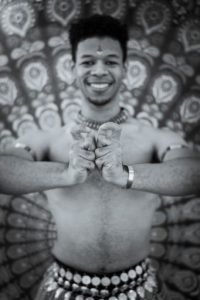
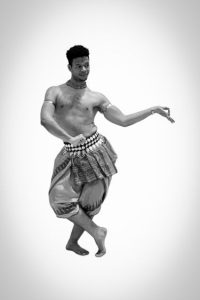
From the verandas of the National Art Gallery of The Bahamas to international Odissi stages, Carlito Catalano’s journey is one of devotion, resilience, and cultural bridge-building. A short chat with artist:
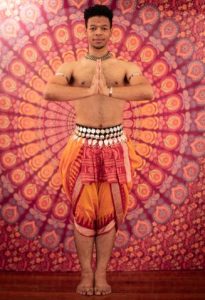
Tell us about your dancing journey, your teachers and training.
My first encounter with Indian classical dance happened by chance. As a shy, introverted, and deeply curious child growing up in the early 2000s, I spent a lot of time exploring the internet. Around the age of 11 or 12, I stumbled upon a video of a young girl performing Bharatanatyam. I was instantly captivated—the vivid costume, the precision of the movements, the music, and the way she told an entire story without speaking a word. It felt magical, unlike anything I had seen before.
I returned to that video again and again, then began searching for more performances. Without access to a teacher, I taught myself by observing videos and participating in online forums, slowly piecing together an understanding of the form. A few years later, when I was about 15 or 16, I discovered Odissi in much the same way. While I initially believed Bharatanatyam would remain my primary focus, Odissi’s lyrical quality and soulful music resonated deeply with me. Once again, I began learning on my own.
By 2019, I realised that self-training could only take me so far. When I learned that Bijayini Satpathy was conducting an Odissi workshop in Atlanta, I decided—hesitantly—to attend. I had never travelled alone before, but with encouragement from a friend, I went. Those three days were transformative. Meeting one of my idols in person and learning directly from her changed everything. Bijayini Didi was surprised to learn that I had taught myself entirely through online resources and even shared my story on social media.
When the pandemic began, she started teaching online, and I officially became her student in May 2020. Since then, I have continued training under her guidance and have travelled to India three times to attend her workshops in person—experiences that still feel surreal.
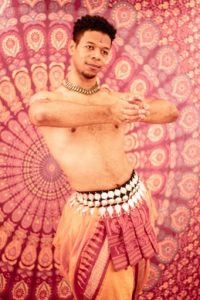
What is it like pursuing Indian classical dance in The Bahamas?
To be honest, it is extremely challenging—almost impossible. As far as I know, I am the only practitioner of any Indian classical dance form in the country. Dance schools here focus primarily on Western styles such as ballet, jazz, and contemporary. There is no infrastructure, community, or local expertise for Indian classical traditions.
Technology has been essential to my growth. The internet has been my classroom and my link to teachers, resources, and inspiration, but it has its limits. To truly progress, I have had to travel abroad for in-person training and workshops. These experiences are vital not only for technical refinement but also for cultural immersion.
Locally, I’ve invested in recording equipment to document and analyse my practice, and I’ve had to be resourceful in finding spaces to dance. One of the most meaningful developments has been finding a home for my practice on the verandas of the National Art Gallery of The Bahamas. It’s an open, creative space that nurtures my artistic spirit. While heat, humidity, and sudden rain showers can interrupt sessions, the environment makes those challenges worthwhile.
Odissi is often seen as a female-dominated form. How do you navigate that as a male dancer?
Initially, I was conscious of how my movements might be perceived and tried to maintain a sense of “masculinity” in my body. Over time, however, I realised that such concerns were limiting. Odissi is not about gendered expression; it is about embodying the form’s grammar, beauty, and emotional depth.
When I dance now, my focus is not on how I am perceived but on whether I am doing justice to the style. If the audience walks away appreciating the complexity and beauty of Odissi, then I have succeeded. In that sense, the dance transcends personal identity and becomes an act of service to the tradition itself.
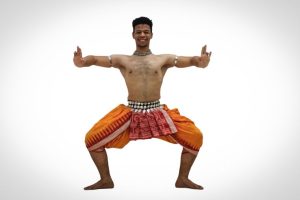
How has Bahamian society responded to your choice of a foreign dance form?
For a long time, my relationship with Indian classical dance was very private. I spent years dancing quietly in my bedroom. It was only during the pandemic that I began practising outdoors, where neighbours and passers-by could see me.
My family knew that I danced, but they didn’t initially grasp the depth of my commitment. That began to change when I started travelling internationally and when my work gained visibility online. Seeing the level of dedication involved helped them understand that this was not a passing interest.
While I haven’t yet built strong collaborations with local dancers, I remain hopeful. Many of my strongest connections are with Indian classical dancers abroad, who understand the discipline the form requires.
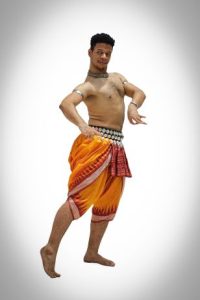
How are you promoting Odissi in The Bahamas?
At present, my most consistent form of outreach is my public practice sessions at the National Art Gallery. People often stop, watch, ask questions, and engage in conversation. In a way, I’ve become a living, performative artwork within the gallery grounds.
I’m also interested in future collaborations that blend Odissi with Bahamian culture—whether through local music or poetry. While organising performances independently is financially and logistically challenging, these ideas remain very much alive.
What are your future goals?
My immediate focus is continuing my training and deepening my understanding of Odissi. Recently, I performed with the Bijayini Satpathy Dance Collective in the world premiere of Akara in Salt Lake City, a milestone experience for me. I am also collaborating with Mandala Arts Chicago on a new work titled Homeward, which explores cultural and historical intersections through dance.
In the long term, I hope to share my art more widely through performance, teaching, and collaboration—and to spark an interest in Indian classical dance within The Bahamas and the wider Caribbean. If I can help plant those seeds of appreciation, I would consider my journey truly meaningful.
Who do you admire most in Odissi?
My greatest admiration is for my Guru, Bijayini Satpathy. Beyond her brilliance as a dancer, she is a holistic artist and a lifelong learner. Her willingness to integrate diverse disciplines and experiment within the classical framework inspires me deeply. From her, I am learning not just technique, but how to be a confident, versatile artist who honours tradition while remaining open to possibility.
Sandip Soparrkar holds a doctorate in world mythology folklore from Pacific University USA, an honorary doctorate in performing arts from the National American University, He is a World Book Record holder, a well-known Ballroom dancer and a Bollywood choreographer who has been honored with three National Excellence awards, one National Achievement Award and Dada Saheb Phalke award by the Government of India. He can be contacted on sandipsoparrkar06@gmail.com
