

BREATHING ARTS, LIVING TRADITIONS
- ARTS & CRAFT SANDIP SOPARRKAR
 Life&More
- 0
- 7 minutes read


On person whose work stands as a quiet yet powerful commitment to preserving and revitalising India’s artistic heritage is Anurag Chauhan. Through Breathing Arts, he has created meaningful spaces where classical and folk traditions meet young minds with freshness and relevance. His approach goes beyond performance, fostering deep cultural engagement rooted in experience and authenticity. By seamlessly integrating art into everyday life, he reminds us that tradition can be both timeless and contemporary. Anurag’s dedication continues to inspire a renewed appreciation for the transformative power of the arts. Excerpts from the interview:
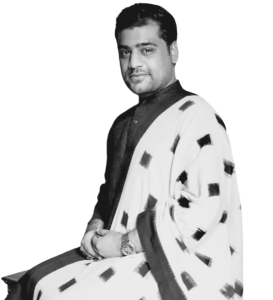
Breathing Arts is often described as more than an organisation. How do you personally define it?
For me, Breathing Arts is an evolving movement rather than a fixed institution. It is deeply personal. Over the years, it has become my way of responding to a responsibility I feel toward our cultural heritage. The idea has always been to reconnect young people with Indian classical and folk arts in a way that feels alive, accessible and relevant to their lives today. Breathing Arts exists wherever there is an honest intention to experience art—not just on grand stages, but in classrooms, homes, farms, and quiet, intimate spaces.
Your journey with the arts began at a very young age. Can you take us back to that defining moment?
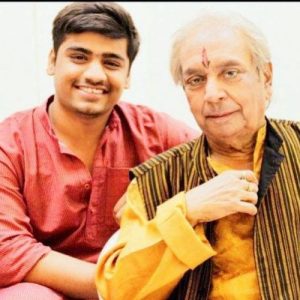
I was 14, when I saw Pandit Birju Maharaj perform at my school auditorium. I still remember the silence in the room, the sound of his ghungroos, and the sheer poetry of his movement. It was transformative. After the performance, I gathered the courage to speak to him and asked why he was still performing at an age when most people retire. He spoke about India once being Sone ki Chidiya and about preserving whatever remained of our culture and traditions. That conversation quietly altered the direction of my life.
What impact did that interaction have on you as a young person?
It planted a seed of responsibility. When I asked him what someone like me could do, he suggested volunteering. I remember telling him that while great minds like his carried immense wisdom, people of my generation could become the wheels that carried their vision forward. His smile in response remains with me even today. It gave me a sense of purpose before I fully understood what that purpose would become.
Soon after, you began working with SPIC MACAY. How did that shape you?
Those years were my first real gurukul. Through SPIC MACAY, I attended countless concerts, lecture demonstrations, workshops and baithaks. As a volunteer, I had the rare privilege of spending time with legendary artists—observing their discipline, humility, devotion and surrender to their art. Every artist revealed a different dimension of Indian arts: the power of silence, the energy of rhythm, the spirituality embedded in movement. It was an education far beyond textbooks.
You’ve spoken about misconceptions young people often have about Indian classical arts. What do you think causes this gap?
A large part of it comes from not having experienced the arts firsthand. I once asked Dr Kiran Seth what we really mean by Indian art and culture, and he gave a beautiful metaphor—he said art forms are like ice cream. Unless you taste them, you’ll never know which flavour you love. Many young people dismiss classical arts as outdated without ever encountering them. There’s a difference between modernisation and westernisation. Embracing global ideas is wonderful, but it shouldn’t come at the cost of disconnecting from one’s own roots.
Is that realisation what led to the birth of Breathing Arts?
Yes, very organically. I felt the need to create spaces where young people could encounter the arts with curiosity rather than intimidation. We began by taking performances and interactive sessions to schools, then colleges and universities. The emphasis was always on experience, not instruction. When students were allowed to feel the art rather than be taught about it academically, their response was remarkable. Many discovered a genuine connection with forms they had never imagined enjoying.
Breathing Arts has hosted artists in very diverse spaces. Was this a conscious choice?
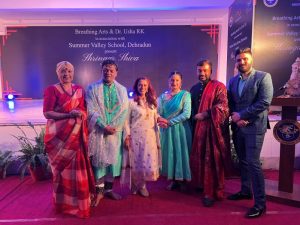
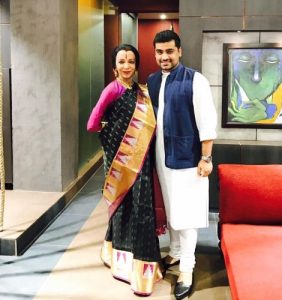
Absolutely. I realised over time that art doesn’t require a stage or an auditorium—it requires intention. Whether it was Bharatanatyam at Dr Vandana Shiva’s farm, an intimate baithak in a friend’s living room, or large productions at institutions, each space carried its own energy. Artists like Dr Sonal Mansingh, Sanjukta Sinha, Satyanarayan Raju, Abhimanyu Lal, Varsha Dasgupta and many others have reminded us that art can transform any environment into something sacred.
What does it mean to you to host and support these artists?
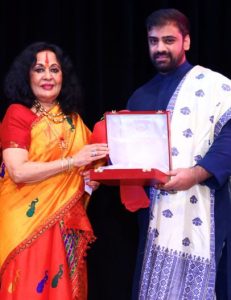
It is an honour. By creating these spaces, I see myself playing a small role in preserving and celebrating traditions that might otherwise fade from public consciousness. Breathing Arts has become a platform of awareness and appreciation—one that keeps the arts alive by bringing them into everyday life, especially for younger audiences.
Looking back, what continues to motivate you?
My journey began with a question I asked at fourteen, and it continues because of the answer I received that day. Every time a young person discovers beauty in an art form they once dismissed, that belief is reaffirmed. Indian arts are not relics of the past. They speak to our present and shape our future. Through Breathing Arts, I hope to ensure they remain living, breathing traditions—experienced, understood and celebrated.
Sandip Soparrkar holds a doctorate in world mythology folklore from Pacific University USA, an honorary doctorate in performing arts from the National American University, He is a World Book Record holder, a well-known Ballroom dancer and a Bollywood choreographer who has been honored with three National Excellence awards, one National Achievement Award and Dada Saheb Phalke award by the Government of India. He can be contacted on sandipsoparrkar06@gmail.com
