

From Forest to Global Markets: How Tribal India is Redefining Sustainable Enterprise
- L&M SPECIAL
 Life&More
- 0
- 13 minutes read


Team L&M
There are some stories you read about—and then there are stories you experience.
When I began exploring how India’s tribal communities are evolving, I expected to see preservation of tradition. What I discovered instead was something far more powerful—a quiet but determined transformation from forest-based livelihoods to global enterprise.
This wasn’t just about craft. It was about identity, dignity, and a reimagining of what growth can look like when it is rooted in Indian culture.
Walking Through a Living Story at Bharat Tribes Fest

As I walked through the vibrant spaces of the Bharat Tribes Fest 2026 at Sunder Nursery, New Delhi, it felt less like an exhibition and more like stepping into a living, breathing narrative.
Every stall had a story. Every product carried a sense of place.
What struck me most was not just the craftsmanship, but the confidence. Artisans were no longer just showcasing their work—they were owning their identity as entrepreneurs.
There was a quiet pride in the way they spoke about their products, their communities, and their journeys. It was clear—this was not about survival anymore. This was about growth.
Understanding the Shift: From Producers to Brand Builders
As I dug deeper, I began to understand the larger ecosystem driving this change.
Initiatives like TRIFED and the Tribes India network are doing more than providing market access—they are reshaping how tribal economies function.
Through Van Dhan Vikas Kendras, communities are not just collecting forest produce; they are processing, packaging, and branding it. The shift from raw material suppliers to value creators is subtle but transformative.
It made me reflect on something simple yet profound—access changes everything.
When artisans are given the tools to connect with markets directly, the entire equation of power shifts.
Where Tradition Meets Aspiration
One of the most compelling aspects of this journey is how seamlessly tradition and ambition coexist.
I met stories—real, human stories—that stayed with me.
Young entrepreneurs who are determined to ensure that their culture is not left behind in the race for modernity. Women who are not just contributors but leaders of economic change. Artisans who are preserving centuries-old techniques while adapting them for a global audience.
What I saw was not nostalgia. It was evolution.
Another major initiative driving this shift is RISA (Timeless Tribal), designed to position Indian tribal crafts in premium domestic and international markets.

Women at the Heart of Change
If there is one thread that runs consistently through this transformation, it is the role of women.
In many of these communities, women are the backbone of production, the keepers of quality, and increasingly, the decision-makers.
I found myself deeply moved by how economic participation has translated into something more—confidence, independence, and voice.
For many, this is the first time their work is being recognised, valued, and fairly compensated. And that shift is as emotional as it is economic.
Reimagining Tradition Through Enterprise

Debongshi Chakma, a young entrepreneur from Mizoram, is redefining how indigenous knowledge can power sustainable livelihoods. Through her collective, she brings together over 500 members—many of them women—to create products rooted in culture yet designed for modern markets.
Her work spans textiles, bamboo crafts, and traditional food practices, creating a model where ecology, culture, and enterprise intersect.
Weaving Identity into Design
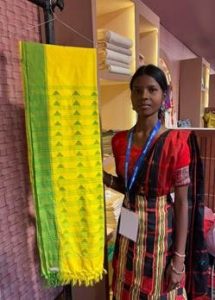
At just 23, Urmila Sonwar is turning her cultural heritage into contemporary handloom designs. Inspired by local rituals and landscapes, her sarees represent not just craftsmanship but a distinct cultural identity reaching wider audiences.
Preserving Fragile Traditions
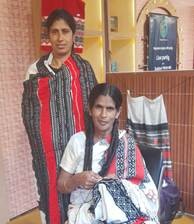
For Sangeetha, embroidery is a generational legacy. Her intricate work reflects the fragile yet resilient traditions of the Toda community, ensuring that ancient crafts continue to find relevance in modern markets.
Sustainability Through Indigenous Knowledge
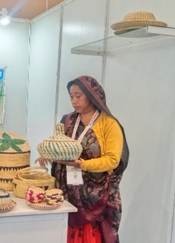
Anita Rana exemplifies how sustainability and enterprise can go hand in hand. By transforming Munja grass into eco-friendly products, she is not only preserving tradition but also creating viable, environmentally conscious livelihoods.
The Power of Sustainable Thinking
Another thing that stood out to me was how naturally sustainability is embedded in these ecosystems.
What the world today calls “eco-friendly” or “conscious consumption” has always been a way of life here.
From biodegradable materials to zero-waste processes, these practices are not trends—they are traditions. The difference now is that the world is finally paying attention.
And in that attention lies opportunity.
More Than Products—Stories That Travel
As I interacted with different artisans and observed the journey of their products—from forest produce to retail shelves—I realised something important.
People are not just buying products anymore. They are buying stories, authenticity, and meaning.
A handcrafted textile, a piece of jewellery, or even a food product carries with it a narrative of place, people, and process. And in a world of mass production, that uniqueness has become invaluable.
A New Definition of Growth
What stayed with me long after I left was a shift in perspective.
We often define growth in terms of scale, speed, and numbers. But what I witnessed here offered a different lens—one where growth is measured in inclusion, sustainability, and dignity.
Tribal India is not just catching up with the modern economy. In many ways, it is leading by example, showing how development can be both rooted and progressive.
Final Thoughts: A Story Still Unfolding
This journey is far from complete. But it is already powerful.
From forests to global markets, what is emerging is not just an economic shift—it is a narrative of resilience, identity, and possibility.
And as I reflect on it, one thought stays with me—
Perhaps the future of India’s growth does not lie in leaving traditions behind, but in taking them forward, with purpose.
