

Historic Forts in Mumbai: Exploring the City’s Forgotten Defensive Heritage
- CULTURE & HERITAGE TRAVEL & LEISURE
 Life&More
- 0
- 14 minutes read

Team L&M
Did you know that Mumbai was once a cluster of islands collectively known as Bombay? Over centuries, it witnessed the rule of the Maratha Empire, Mughal Empire, Portugal, and the British East India Company—each leaving behind a rich legacy.
To defend this strategic port city from enemy attacks, several forts were built across the region. While many have faded with time, these historic forts in Mumbai still stand as powerful reminders of its glorious past.
Here’s a look at some of the most fascinating forts that shaped Mumbai’s history.
Bassein (Vasai) Fort: A Portuguese Stronghold
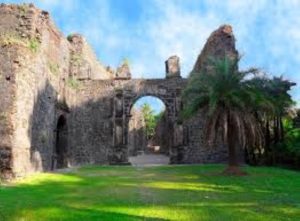
Located in Vasai, the Bassein Fort, also known as Vasai Fort, was built by the Portuguese in 1536 and spread across 110 acres. It is one of the finest examples of Indo-European military architecture in India.
Once a thriving hub, the fort housed:
- Churches, convents, and a cathedral
- A hospital, college, and library
- Administrative buildings and a bustling marketplace
For nearly 300 years, it served as a major Portuguese commercial and military base.
In 1739, Chimaji Appa, brother of Bajirao I, captured the fort. Later, the British took control after the Treaty of Bassein.
Today, despite its ruins, the fort remains a popular filming location and is protected by the Archaeological Survey of India.
Sion Fort: A Colonial Boundary Marker
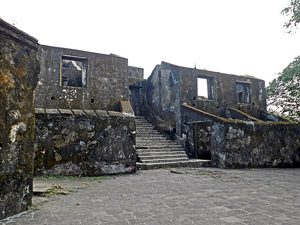
Built between 1669 and 1677 by the British, the Sion Fort marked the boundary between Parel Island and the Portuguese-held Salsette Island.
Perched on a hill, the fort offers:
- Panoramic views of the eastern coast
- Remnants of old rooms and pathways
- A historic cannon at the top
At its base lies a garden named after Jawaharlal Nehru. Though declared a Grade I heritage structure, restoration efforts have faced delays.
Belapur Fort: A Strategic Maritime Defence
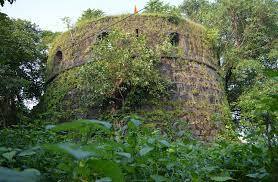
Situated near Navi Mumbai, the Belapur Fort was built by the Siddis of Janjira between 1560 and 1570.
The fort changed hands multiple times:
- Captured by the Portuguese in 1682
- Taken over by the Marathas in 1737 under Chimaji Appa
- Later destroyed by the British in 1817
Legend has it that a secret tunnel connects the fort to Elephanta Caves. Despite its historical importance, the fort remains largely neglected today.
Arnala Fort: Guardian of the Coast
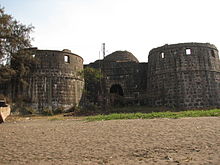
Located near the Vaitarna River, the Arnala Fort was built in 1516 by Sultan Mahmud Begda of Gujarat. It later became a crucial naval base for the Marathas.
After defeating the Portuguese, Chimaji Appa strengthened the fort’s strategic importance. A victory plaque from 1737 still exists on its walls.
The fort features:
- Temples dedicated to Tryambakeshwar, Bhavani Mata, and Mahadev
- Intricately carved entrances with animal motifs
Today, it stands as a nationally protected monument under the Archaeological Survey of India.
Ghodbunder Fort: A Trade and Defence Hub
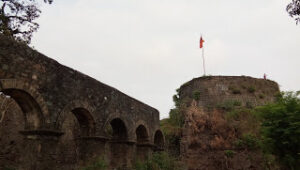
Located in Mira Road, the Ghodbunder Fort was built by the Portuguese in 1550 and originally named Cache de Tanna.
The area earned its name from the Portuguese horse trade (ghoda meaning horse). The fort later came under Maratha control and was eventually taken over by the British in 1818.
Key highlights:
- Strong ramparts and bastions
- Watchtowers overlooking the Ulhas River
- Remains of historic churches
Restoration efforts are currently being undertaken by government authorities.
Riwa Fort: The Black Fort of Dharavi

Also known as Kala Qilla, the Riwa Fort is located in Dharavi along the Mithi River.
Built during British rule, the fort:
- Marked the northern boundary of Bombay
- Was designed to defend against naval threats from Kanhoji Angre
- Features unique black laterite stone construction
It also includes an underground tunnel designed to regulate river flow. Today, it is a state-protected monument.
Sewri Fort: A Birdwatcher’s Paradise with History
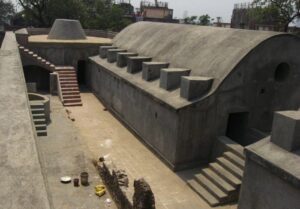
Constructed in 1680, the Sewri Fort played a crucial role in defending British Bombay. It witnessed invasions, including one by the Siddis in 1689.
Later used as a prison, the fort is now:
- A Grade I heritage structure
- Part of the Mumbai Fort Circuit restoration project
Overlooking mudflats, it is also famous for sightings of migratory birds like flamingos, making it a unique blend of history and nature tourism in Mumbai.
Discover Mumbai’s Hidden Heritage
Beyond its fast-paced urban life, Mumbai holds a treasure trove of history waiting to be explored. These historic forts in Mumbai not only narrate tales of battles and empires but also showcase remarkable architectural brilliance.
From Portuguese strongholds to Maratha victories and British fortifications, each fort offers a glimpse into the city’s layered past—making them must-visit destinations for history lovers and explorers alike.
