

Power Global Content Growth Through a Multilingual AI Video Agent


Team L&M
Video has become the primary means through which the global audience consumes information. Short forms take over social feeds in various regions and platforms. The audience scrolls rapidly and desires to watch something within a few seconds. This revolution makes video the most appropriate means of international communication. The overly textual content does not necessarily play well across borders. Video bridges the literacy gaps and reduces the mental effort. The video-based brands reach more people within a limited duration. Global competition also tends to add to the pressure to publish. A robust video strategy is now used to define the digital relevance in markets.
A globalized world should not limit content based on language. The audience desires something that is in their language. Even the second language native speakers prefer to see localized messages. Trust, retention, and emotion are parameters of language. There is no localization, which minimizes potential impact. The traditional localization methods are unable to react to speed demands. Manual translation, voiceover coordination, and repetitive editing processes are used by teams. Such actions delay publication and overprice. Pippit changes this dynamic by embedding multilingual creation into a single workflow through its video agent, enabling faster and more consistent global output.
The Real Barriers to Scaling Content Across Languages
Scaling across languages has some inherent problems. Time is the most critical setback. Semi-mechanical translation and editing make production pipelines slow. The various language versions are likely to require redundant creativity. The cost increases with every new market. Smaller teams cannot justify such widespread localization. There are also regional differences. Translated captions may vary in tone. Timing can be uncomfortable to look at. Brand messages have no direction or control. These issues compromise the global identity. AI simplifies the process of getting used to the world as it automates translation, time, and formatting. Pippit avoids repetition and maintains the creative aim. This equilibrium allows growth without overworking.
How Pippit Handles Multilingual Video Creation Natively
Pippit supports the application of multilingual video on the lower level. Language selection is either triggered directly or contextually. Maker Before generation, creators define a language set (one or multiple languages). Captions and text on the screen are interpreted by the system simultaneously. Visual aspects change along with the language. It is synchronized with the reading speed and syntax. This keeps versions on par with each other. Languages are similar in tone and intent. Pippit does not adhere to a word-for-word translation. Instead, it deals with contextual accuracy. This native approach will reduce after-processing. It also renders each version meaningful compared to versions that had been changed later.
Designing Videos That Feel Native, Not Translated
Good localization is not just translation. The circulation of culture is more significant than particular words. Pippit insists on message clarity in culture. Sentence structure is language-adjusted. Visual clues are also important. Icons, gestures, and layouts may be universal. To the extent possible, Pippit balances text and visual narration to reduce the employment of language. AI-enhanced localization is not smoothed out. This is a way of making videos appear to be created for the audience. The viewer will also spend more time watching the content when he or she is aware of its content. Videos that become native are more trusting and brand-perception-enhancing in these areas.
Steps To Power Global Content Growth Through A Multilingual AI Video Agent
Step 1: Prepare multilingual video input
Access Pippit and complete the signup to begin. Navigate to the “Video generator” tab and open “Choose a model”. Select “Agent mode” from the drop-down menu. Add a detailed text prompt that specifies language preferences and tone. Upload reference visuals or language-specific assets through the “Add media” tab. Upload from a local device, phone, Dropbox, or link, or choose assets if needed. Click the up arrow tab to continue.

Step 2: Generate localized video versions
The AI video generator in Pippit automatically edits and generates your video using the provided text prompt and reference media.
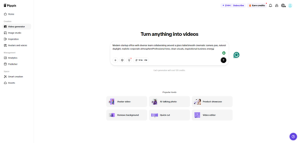
It manages transitions, pacing, and video enhancements across language variations. To adjust phrasing or visuals, revise the text prompt and click the up arrow again. For precise localization edits, click the video and choose the “edit more” tab in the top right corner to enter the main editing interface of Pippit.

Step 3: Publish across global platforms
Edit captions manually to refine translations and readability. Add text and customize size, color, and alignment for each market. Enhance visuals with filters, effects, background music, or remove background noise.
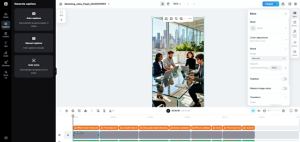
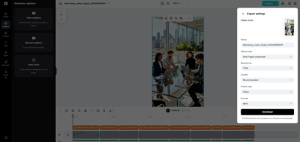
When ready, click the “Export” tab in the top right corner. Use “Publish” to post on TikTok, Instagram, or Facebook, or click the “Download” tab to save files with custom resolution, format, frame rate, quality, and naming.
Managing One Message Across Many Markets
This top-down control is necessary to ensure that there is only one message in the markets. Pippit permits one content management. It is always possible to update every version of the language. This abolishes fragmented communication. There are no conflicting regional interpretations of teams. The voice of the brand is the same everywhere. There are standardized visual standards. Centralization also makes approvals easy. Stakeholders do not look at many files, but only one project. It enables scalability and brand protection. The transparency and cohesion are present in international campaigns.
Scaling Output Without Scaling Complexity
Conventionally, the workload is compounded by content creation in different languages. Pippit defies this trend. Multiple versions of the language are developed concurrently. Manual re-editing cycles are eliminated in teams. There are multiple responses to one stimulus. This productivity accelerates the publishing schedules. The short turnaround encourages timely campaigns. The content is sent to regional teams in a shorter time. The simplicity is that repetition is automated. Pippit functions as a free AI video editor within this workflow, reducing dependency on multiple tools. This ease of use allows lean teams to be scaled.
Preparing Content for Global Platforms Instantly
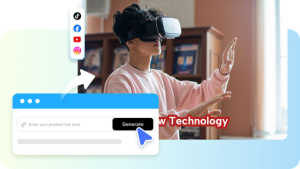
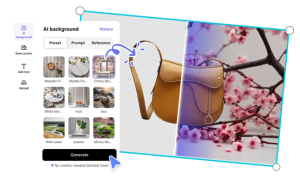
There are specific formats that are favored by international networks. The global interaction is dominated by vertical video. Platforms vary in caption location and aspect. Pippit packages videos according to every market. Platform-specific optimization is performed by generation. This saves on post-production. Simultaneous global launches become possible. The communication of campaigns to audiences is not in sequence but rather simultaneous. Visual consistency supports the recognition between feeds. Advanced features like the AI background generator further enhance adaptability. Backgrounds follow fashion in culture or platform. Such flexibility brings about readiness for different markets immediately.
Conclusion
Development-oriented brands are adopting the option of multilingual video. The viewers require relatability and ease of understanding. AI eliminates the hindrances that limited growth in the past. Pippit can bypass localization friction by developing it internally. Teams attain quality and speed. Centralized workflows ensure consistency. Scalable systems also replace manual work. This plan offers a clear path into international existence. The global video growth can now become efficient and sustainable with smart automation.
