

Tamsa river rejuvenation becomes a role model for tributary conservation
- CLIMATE & NATURE
 Life&More
- 0
- 5 minutes read

Team L&M
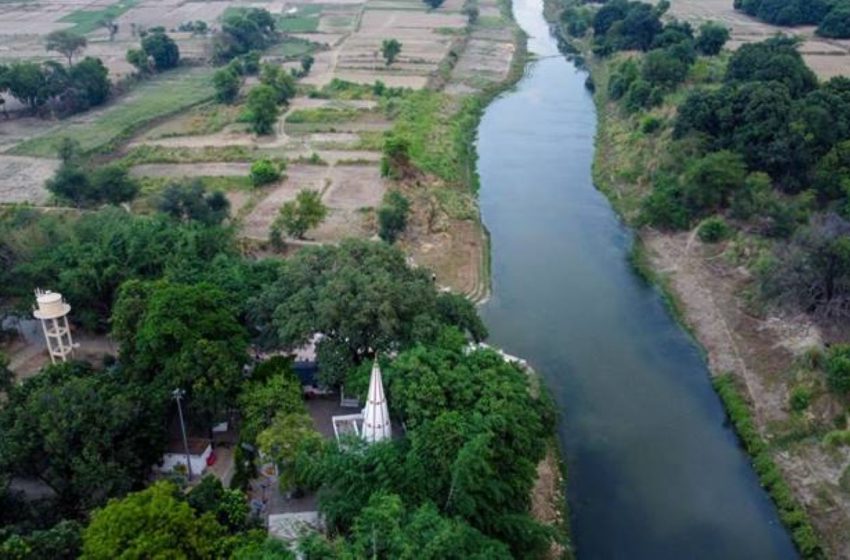
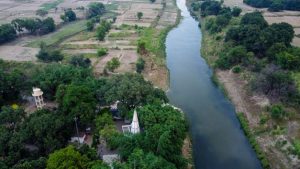
Flowing through the heart of eastern Uttar Pradesh the Tamsa River — an ancient and significant tributary of the Ganga River — has witnessed a remarkable transformation. Once facing challenges of siltation, waste accumulation and encroachments, the river today stands revitalised. This has been achieved through coordinated administrative efforts and strong community participation under the Namami Gange Programme.
The Tamsa flows through Ambedkar Nagar, Ayodhya and Azamgarh districts before merging with the Ganga. Recognising its ecological and cultural importance, a special conservation and cleanliness campaign was launched in Azamgarh. THis was actively supported by the District Ganga Committee and local communities.
Community-Led Planning Across 111 Gram Panchayats
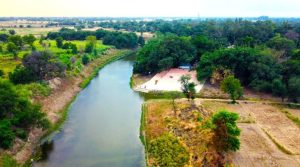
The rejuvenation of the Tamsa required structured planning at the grassroots level because of its long route. Covering a stretch of 89-kilometre stretch in Azamgarh district, it passes through 111 Gram Panchayats.
Azamgarh District Magistrate Ravindra Kumar, shared that meetings were held at the district level with all Gram Pradhans. This was to sensitise them about river cleanliness and its long-term environmental and economic benefits.
A clear action plan was drawn up, focusing on:
- Desilting of shallow stretches of the river
- Removal of garbage and debris from riverbanks
- Measurement of vacant riverbank land and removal of illegal encroachments
- Plantation of fruit-bearing trees along available land parcels
The plantation drive contributes to ecological restoration. Further, it also provides economic value, as produce from fruit-bearing trees can be utilised by the respective Gram Panchayats.
Shramdaan and Public Awareness Drive Change
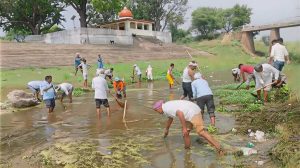
Under Namami Gange, coordinated efforts were undertaken with the State Mission for Clean Ganga and the District Ganga Committee. This, in turn, ensured sustained implementation. Cleanliness drives and awareness campaigns mobilised school children, youth, women’s self-help groups, Gram Panchayats, voluntary organisations and local residents.
Through Shramdaan, plastic, polythene and other solid waste were removed from riverbanks and ghats. Sanitation workers were deployed, and dustbins were installed at key locations. Awareness campaigns were conducted to promote segregation of wet and dry waste and prevent dumping into the river.
The initiative has positively impacted religious and cultural activities along the riverbanks. Now, devotees visiting the river banks for rituals and sacred bathing experience a cleaner and more organised environment.
Environmental Gains and Livelihood Support
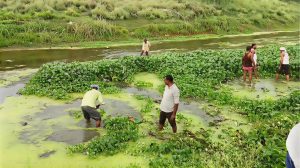
Tamsa being a tributary of Ganga its cleanliness is critical for ensuring the purity and uninterrupted flow of the Ganga. Continuous efforts have led to improvements in water quality, revival of biodiversity. Further, soil fertility and irrigation potential in nearby agricultural areas has also got enhancced.
Azamgarh Deputy Commissioner (Labour & Employment) Ram Udrej Yadav says that Gram Panchayats play an important role in this. Convergence with MGNREGA helped too. Elected representatives, MGNREGA workers and community volunteers collectively worked for desilting, cleaning and plantation activities. The participatory model of river restoration goes a long way in keeping it clean.
A Replicable Model for Tributary Conservation
The rejuvenation of Tamsa River shows that sustained administrative commitment & public participation can restore river ecosystems. The initiative stands as a replicable example for conservation of tributaries and smaller rivers across the Ganga basin.
Efforts to conserve and regularly clean the Tamsa, along with ganga’s other tributaries will continue under Namami Gange programme, strengthening the vision of a clean, healthy and sustainable river system.
