

‘Eco-friendly homes cost a bit high, but are economical in the long run’
- CLIMATE & NATURE INTERVIEWS PROPERTY & HOUSING
 Life&More
- 0
- 8 minutes read

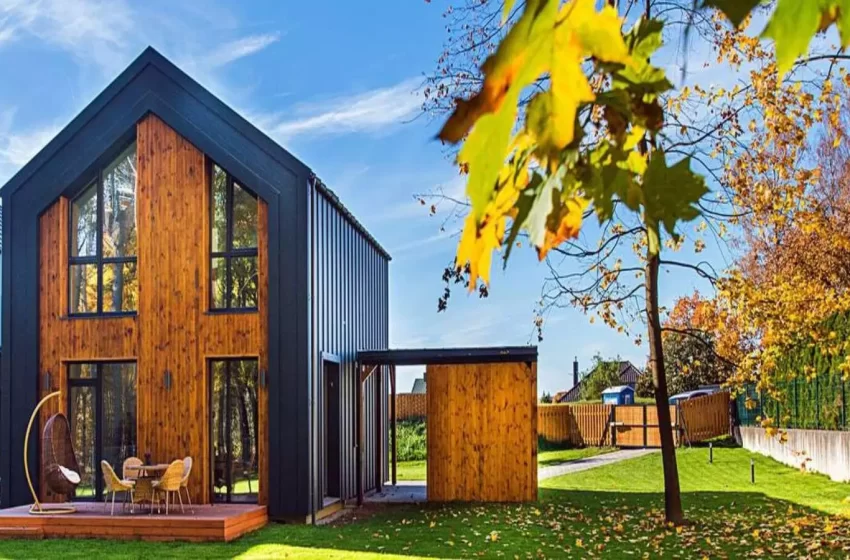
An eco-friendly home
Rajkumari Sharma Tankha
Despite several disruptions caused due to the first and second Covid wave, buildAhome a Bengaluru-based real estate company bagged several projects during the period.
Most of the demand came from salaried employees, especially those working in the IT sector who switched to WFH mode following the pandemic. Significantly, about 30 per cent of the people wanted eco-friendly structures.
This is a welcome news considering the extreme weather conditions that we have been experiencing following environment degradation.
“Eco-friendly homes are the need of the hour. The construction cost is a bit higher but in the long-term these are far better options than normal homes,” says Abhijith R Priyan, CEO, buildAhome. Excerpts from an interview:
How many people are going in for these, percentage and numbers?
Out of 400+ homes, it’s been observed that around 30 per cent of our clients have opted for the construction of eco-friendly homes.
What age group people prefer these homes, and where are these located?
The concept of green/eco-friendly sustainable homes has been widely chosen by all the age sectors, but it’s most likely a construction & architectural concept which the millennial group between 30-50 years are more inclined to, nowadays.
It is very pleasant to witness this drift towards leading the life with more traditional & sustainable mind-set at the same time having concerns about the environmental protective factors for the betterment of the future generation by being more conserved and implementing eco-technologies.
Construction of eco homes is usually widely opted by clients from Chennai, Mangalore due to the high temperatures in these regions and also in few scattered parts of southern parts of Karnataka.
What is the difference between the construction cost of a normal home vs. eco-friendly one?
Eco-friendly homes are generally Rs.100/- to Rs.120/- per Sqft higher in cost when compared to that of a conventional construction (i.e., normal home). Our conventional home construction costing starts from Rs.1590/- per sqft whereas our eco-friendly home construction costing starts from Rs.1700/- per Sqft.
Though the eco-friendly construction is slightly expensive during the initial stage, over a period of time through the stay it shall provide a great savings as the house has natural methods of power generation, water storage & reuse etc. Moreover, it also caters towards the process of contribution & protection of the mother earth.
What does an eco-friendly home entail.
An eco-friendly or a green home is an environmentally low-impact house, and built using materials and technology that reduces carbon footprint and requires less energy consumption.
Features of an eco-friendly home are:
Thermal insulation – This can be achieved by various means such as walls using materials like porotherm blocks, earth compressed blocks etc.
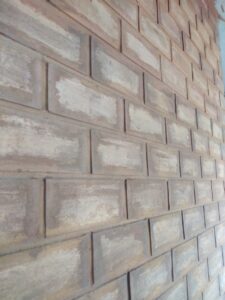
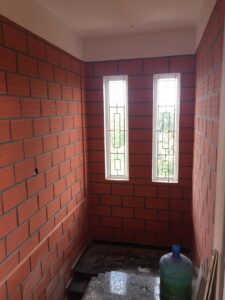
Ceiling using filler materials like earthen pots, clay tiles etc.
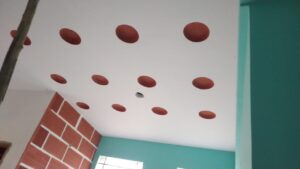

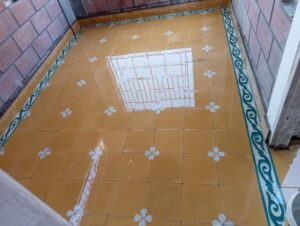
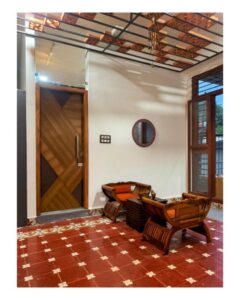
Flooring using oxide flooring, Athangudi, clay tiles etc.
Terrace flooring – using white paint or reflective tiles.
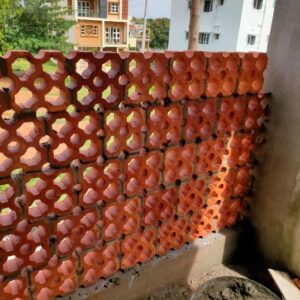
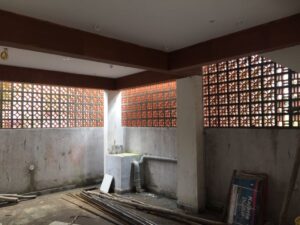
Jaali blocks – can be used as internal partition walls and externally it can be used as a screening system for blocking the harsh sunlight.
Water conservation
like rainwater harvesting, rainwater recharge, grey water filter. The water that is conserved can be used for watering plants, washing cars, flushing etc.
Energy source
like solar panels, biomass boilers, heat pumps, photovoltaic power system etc.
Natural light and ventilation
A houses needs to be designed in such a way that it utilises the natural source of light and ventilation to the fullest. Large windows, clear storey ventilators, wall punctures etc. Help for the same purpose.
Reducing Cement & Concrete
Reducing cement and concrete which releases the maximum carbon into the atmosphere-one of the means to achieve of this is leaving the wall materials exposed without plastering or using mud plastering.
Using refurbished door and windows
This contributes substantially in saving a lot of trees from being cut. The additional advantage of refurnished wood is that it is rot-resistant, more stable and more termite resistant.
Compound Walls
Compound walls could be made out of hedges with chain link fence, bamboo etc.
Landscaping
Hydroponics, terrace gardening, kitchen garden etc.
Can an existing house be converted into an eco-friendly home. If yes, how much are expenses involved in this conversion?
There are possible ways to convert non- eco-friendly houses to eco-friendly houses.
These include:
Switching to CFL and LED light fixtures which are more energy efficient
Using light coloured curtains on the existing windows to extract maximum natural light
Growing indoor plants which helps in air circulation
Composting kitchen leftovers serves as a great source of mature for plants; installing rainwater harvesting system, solar panels etc
Installing reflective white tiles for the terrace which reflects light and helps in thermal insulation, among others. The costing shall depend on the scale of the modification.
How much does an eco-friendly home cost?
Like other homes, eco homes need repainting every 5–6 years to maintain a fresh look. Since the wall materials are exposed, they require extra care. Some maintenance is also needed for rainwater systems, greywater systems, and PV cells. However, the benefits of these systems outweigh the effort.
Apart from this, eco-friendly homes do not require any additional maintenance compared to conventional homes during occupancy.
Be sure to check out Policrete for more information about epoxy flooring Melbourne
