

Exploring Hidden Gems Around Jabalpur: Fossil Parks, Ancient Temples and Historic Forts
- CULTURE & HERITAGE
 Life&More
- March 14, 2026
- 1
- 19 minutes read

Taruna Sharma
Located in the heart of Madhya Pradesh, Jabalpur is the third-largest urban agglomeration in the state. It is an important gateway to the Mahakaushal region. The city has widely known for attractions such as Madan Mahal Fort, Dhuandhar Falls, Marble Rocks at Bhedaghat, Rani Durgawati Museum. But, the region also hides several lesser-known historical and natural treasures waiting to be explored.
This travel story of mine takes you beyond the popular tourist spots to discover ancient temples, fossil parks and forgotten forts around Jabalpur.
A Long Road Trip to the Heart of Mahakaushal
Our road journey to Jabalpur turned out to be far longer than expected. What was supposed to be a 16-hour drive stretched to nearly 26 hours, as my photographer friend Pradeep and I travelled across Haryana, Rajasthan and Uttar Pradesh.
The 850-kilometre journey passed through historic cities like Mathura, Agra, Gwalior, and Jhansi, each with its own fascinating history.
We also made unexpected stops along the way to explore lesser-known landmarks such as the Datia Palace and the historic battlefield town of Jajau, where the sons of Aurangzeb fought for the Mughal throne in 1707.
The Historic Roots of Jabalpur
The name Jabalpur is believed to have been derived from the word jabal, meaning mountain. According to legend, it may also be linked to the mythological sage Jabalie.
Historically known as Tripuri, the region was once ruled by the Hayahaya dynasty and later became part of the great Mauryan Empire and Gupta Empire.
The region is also closely associated with the brave Rani Durgavati, the Gond queen who died fighting the Mughal forces of Akbar. Eventually, Jabalpur came under Maratha rule in 1789 before being taken over by the British in 1817.
Nohta: A Thousand-Year-Old Temple Town
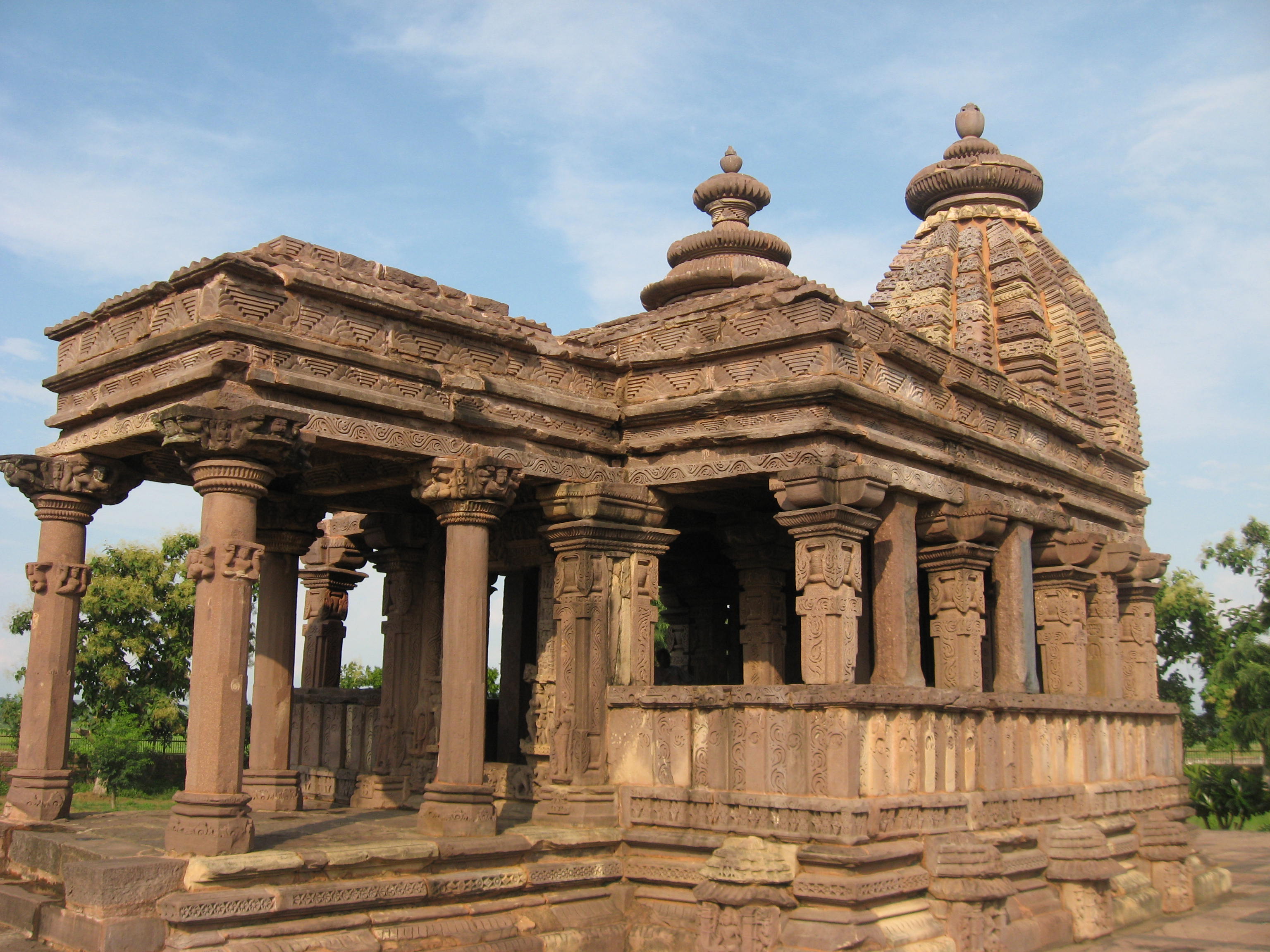
One of the most fascinating yet lesser-known places near Jabalpur is Nohta, located around 90 km away on NH-37.
Believed to have been the capital of the Chandela rulers in the 12th century, Nohta sits at the confluence of the Gorayya and Vyarama rivers.
The village is home to several ancient temples, including a 10th-century Shiva temple built by Maharani Nohola, wife of King Yuvaraj Deva I of the Kalchuri dynasty.
Archaeological discoveries in the region include Stone Age tools and ancient coins, indicating the presence of powerful dynasties such as Chandragupta, Samudragupta, and Skandagupta.
The Jain temple complex in Nohta is particularly remarkable. It features a unique eight-statue pillar, believed to be the only one of its kind in the world, along with a massive statue of Mahavira, showcasing the region’s rich Jain architectural heritage.
Choupara: Ancient Jain Temples
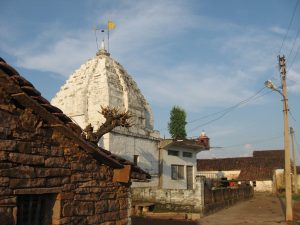
Just 5 km from Nohta lies the small settlement of Choupara, home to two important Jain temples.
The Shanti Digambar Jain Bada Mandir houses statues of revered Jain saints including:
-
Vrishabhnath
-
Shantinath
-
Sambhavnath
-
Adinath
-
Vimalnath
Nearby stands a 10-foot marble statue of Lord Mahavira, another highlight for visitors interested in Jain history and architecture.
Ghughua Fossil National Park: A Window into Prehistoric India
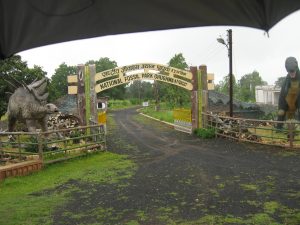
Around 130 km from Jabalpur lies Ghughua Fossil National Park, one of the most unique fossil parks in India.
Located in Mandla district, the park contains plant fossils dating back 40–150 million years.
Spread across 274,100 square metres, the park covers fossil sites in several villages including Ghughua, Umaria, Deorakhurd and Chanti Hills.
Scientists have identified 31 genera from 18 plant families, including fossils of:
-
woody plants
-
climbers
-
leaves
-
flowers
-
fruits and seeds
These fossils were first discovered by Dr Dharmendra Prasad, with further studies conducted by Dr SR Ingle and Dr MB Bande.
Interestingly, many fossil species have living relatives in the Western Ghats, northeast India, Africa, Madagascar and Australia, supporting the geological theory of continental drift and the ancient Gondwana landmass.
Mandla Fort: A Riverside Fortress
Our final stop was the historic Mandla Fort, located about 80 km from Jabalpur.
Built in the late 17th century by Gond kings, the fort stands strategically within a loop of the Narmada River, allowing the river to act as a natural defence from three sides.
Also known as Moti Mahal, the fort features a three-storey structure and offers visitors a glimpse into the architectural brilliance of the Gond rulers.
A Journey Worth the Effort
After exploring ancient temples, prehistoric fossils and historic forts, the long journey finally came to an end with a relaxing lunch at the Madhya Pradesh Tourism motel in Mandla.
The trip proved that Jabalpur is not just about famous attractions like Bhedaghat or Dhuandhar Falls. The region is dotted with hidden historical sites and natural wonders that remain largely unexplored.
For travellers seeking offbeat destinations in Madhya Pradesh, the areas around Jabalpur offer a fascinating mix of history, archaeology, geology and culture.

1 Comment
Hey there I am so delighted I flund ypur blog, I really found you by error, while I was looking on Bing for something else, Nonetheless I amm here now
and would just like to say hank you for a incredible post and a all round enjoyable blog
(I also love the theme/design), I don’t have time to look over it all
at the moment but I have book-marked it and also addedd your RSS feeds,
so when I have time I will be back to read much more, Please
do keep up the great b.
pendaftaran kuyliah online 2016